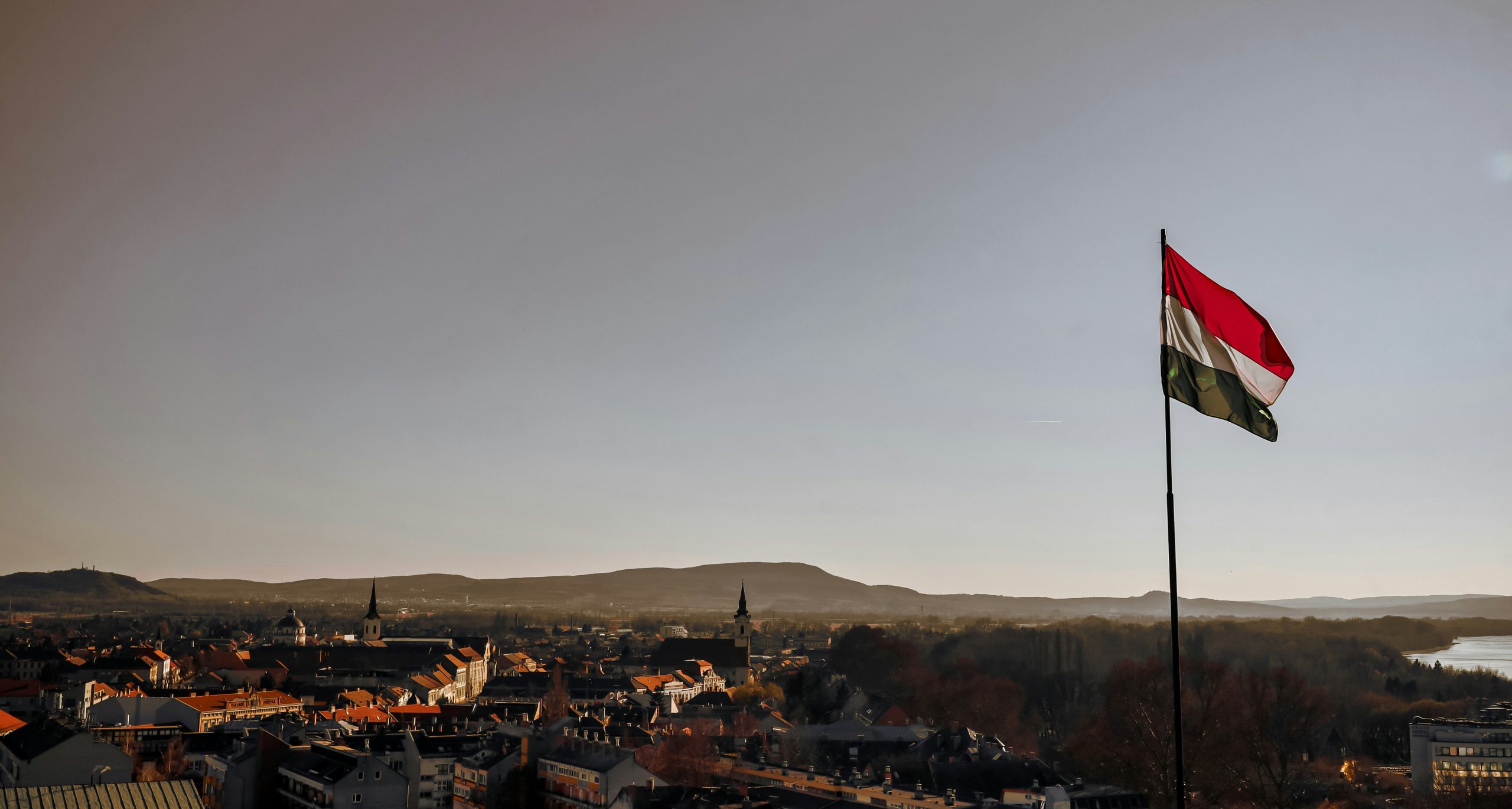
In the historic election that saw record turnout, autocrat Viktor Orbán was ousted after 16 years, and opposition leader Péter Magyar won a landslide victory.
The results, based on more than 98% of counted votes, put his Magyar Tisza party on course for an incredible 138 seats, with Orbán’s Fidesz on 55 and the far-right Our Homeland on six.
Following the victory, Péter Magyar told a crowd of his jubilant supporters, “We did it,”… “Together we overthrew the Hungarian regime.”
This election was not between the traditional left-right dichotomy, but between democracy and autocracy. Magyar is himself a conservative who had once been part of Orbán’s circle. However, like many Hungarians, he became disillusioned with the direction the autocrat was taking the country. As a result, he gained support across the political spectrum in his bid to undo the damage and restore democracy.
What had Orban done?
During Orbán’s 16 years of rule, he restructured Hungary’s state institutions, limiting the powers of the constitutional court, reducing the number of parliamentary seats from 386 to 199 and redrawing district lines to benefit his party, expanding executive influence over the judiciary and taking control of and censoring the media.
On the international stage, he has isolated Hungary from Europe by pursuing a sovereigntist and eurosceptic foreign policy. He was an ally of Russian President Vladimir Putin, and regularly blocked funds to Ukraine and opposed sanctions against Russia.
Sky News Moscow correspondent Ivor Bennett described Mr Orban as a “Russian Trojan horse acting in Moscow’s interest”, whom EU leaders will be glad to see the back of.
He was also a close ally of President Donald Trump and has been a model for other far-right figures across Europe and the US, hence the endorsements of these leaders, including an official visit by the US vice-president, JD Vance, just days before the election. Orbán’s government also frequently clashed with the EU over judicial independence, migration, and LGBTQ+ rights.
What was Magyar promising?
Magyar ran a campaign promising to crack down on corruption, repair Hungary’s dwindling healthcare system, and lower the cost of living. He also promised to distance the country from Ukraine and restore ties with the EU and Ukraine. He took his campaign around villages, town squares and cities, rallying Hungarians who had enough of the corruption.
He said Hungary would “never again be a country without consequences” and promised to establish a national asset recovery office that would ensure the “political and economic criminals” who “stole from the country” would be held responsible.
Orbán’s campaign, on the other hand, centred on the Ukraine war. His main tactic was stoking fear that the country could be dragged into the Ukraine war if Fidesz did not win. This, however, proved insufficient as most Hungarian voters were no longer afraid that the country could be drawn into the conflict: according to polls by the independent political research institute Policy Solutions, the number of Hungarians who fear they could be dragged into the war has halved in recent years.
Why is this important?
This is a blow to the wider far-right movement across Europe. It is a warning to those groups that policies of hate and division are limited: they will run out of enemies to defeat and lose the trust of voters who aren’t receiving any benefits from their rule. Over time, the focus shifts and the leader becomes subject to more scrutiny. Eventually, it becomes clear that their policies aren’t tools to help the people but to consolidate their own power and erode the institutions that hold them accountable. Therefore, it signals to Orbán’s admirers on the right that rhetoric can only get them so far; if their actions are detrimental to the people, their power will run out.
This is a major victory, not just for Magyar but for democracy. It shows that the brand of far-right politics that devalues and erodes liberal democracy is going out of fashion. Magyar himself wasn’t exactly the perfect upstanding candidate, as mentioned above; he was a part of Orbán’s circle up until 2024. Additionally, he has his own history of controversies, which include domestic violence charges. He wasn’t a candidate on the opposite side of the spectrum, promising left-wing socialist policies; rather, he was someone who, like many Hungarians, had realised that enough was enough. This really puts into perspective just how detrimental Orbán’s rule was, and how desperate the Hungarian people were for change.
The road will not be easy, and there is no guarantee that it will be successful. Democracy will not be restored overnight. However, the result is a starting point; it’s a genuine chance to undo past mistakes and shows that perceived unlimited power has its limits.
Leave a Reply