Category: Opinion

  • Local Election Results: Why Reform UK’s Local Success Is Not a National Certainty

    Local Election Results: Why Reform UK’s Local Success Is Not a National Certainty

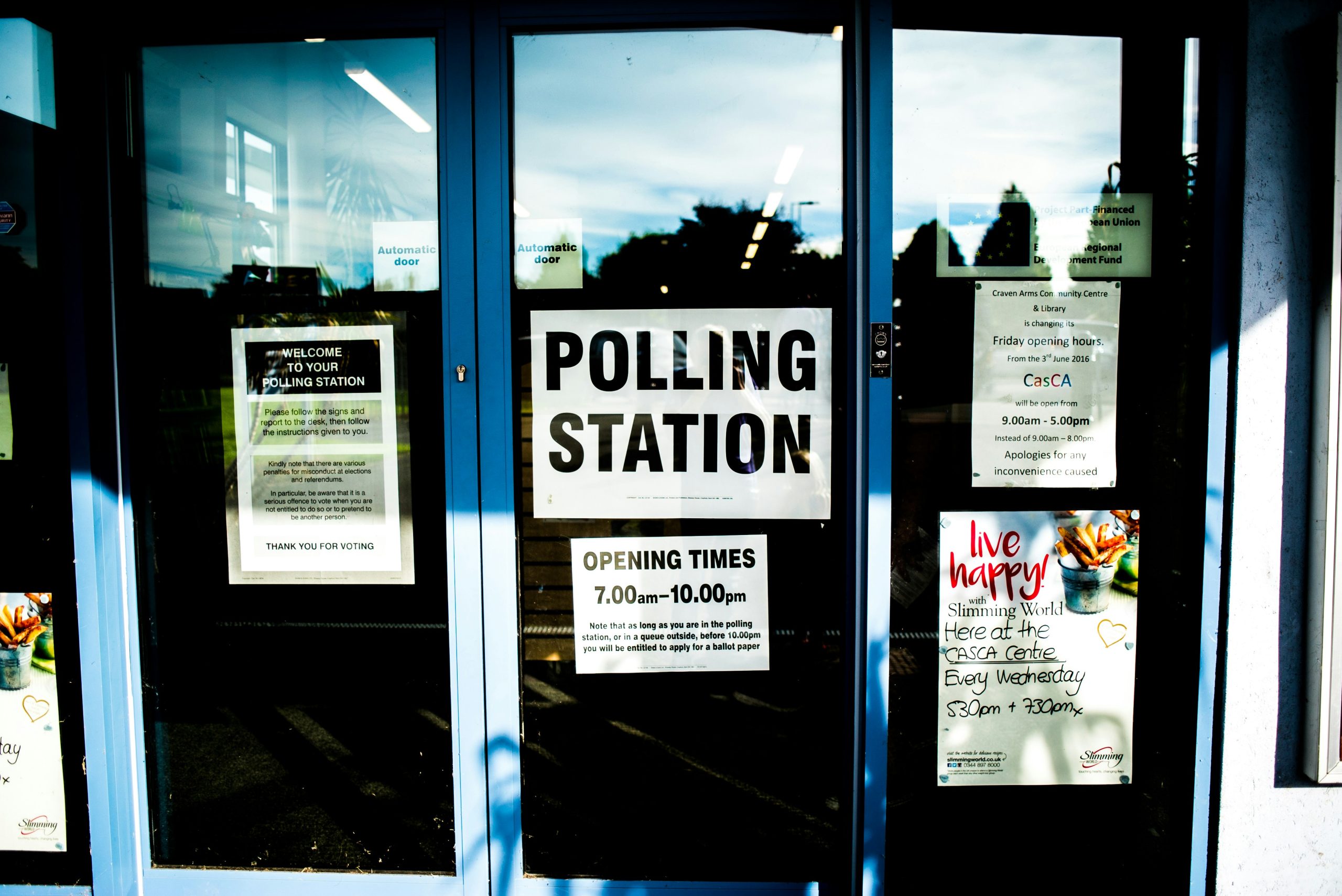
    Much of the discussion that has followed last week’s local elections has centred on Reform’s staggering success. The party’s increased support saw them win 1453 councillors and take control of councils from Labour, including Barnsley, Wakefield, Sunderland and Gateshead.

    For many of Reforms critics, these results are discouraging. To them, it indicates that the UK is moving towards a dangerous path of far-right politics characterised by exclusion and intolerance. Several of the elected Reform candidates are already under fire due to racist, Islamophobic, and anti-Semitic comments and social media posts.

    While the results were an enormous feat for the party, a closer look at these results paints a picture that not enough people are talking about.

    Within hours of the polling stations closing, multiple media outlets were declaring victory for Reform. They were suggesting even more potential success at the next general election. In an interview about Reform’s electoral success, Sky News’s Beth Rigby even asked Farage if he sees himself as a Prime Minister in waiting.

    These results are favourable for the Reforms’ hopes of forming a government. However, leaving it at this conclusion is somewhat of an oversimplification of the results. To properly understand these results and what they mean, we first need to understand what local elections are and how they work.

    How do the local elections work?
    Local councils provide the facilities and services in your area. The type of council you have, and the responsibilities they have, vary depending on where you live. Local councillors oversee the council’s work, setting the strategies and priorities. Things such as council tax, local services, planning, local climate change commitments, and policing commitments are all overseen by the local council. Within this are issues such as roads, potholes, maintaining public spaces, affordable housing, bin collection, etc., and these tend to be the most concerning issues for voters at these elections.

    Boroughs across the country are divided into areas called wards, and in each ward, residents can vote for as many council seats as are contested. The candidate you vote for does not have to be attached to a political party, and you can vote for a mix of candidates. In most London boroughs, the council leader is chosen by the political group with the most councillors. In the five boroughs—Croydon, Hackney, Lewisham, Newham and Tower Hamlets— residents can also vote for a mayor as well as their ward councillors.

    If a party dominates the seats in one borough, it takes control of the council; if there is no outright majority, then the borough has no overall control, and coalitions are formed.


    Turnout at local elections tends to be lower than in general elections because voters’ priorities differ. A vote for a particular candidate in a local election does not guarantee a vote for the party they represent in national elections.

    ‘Get Starmer Out’
    This particular local election revealed misconceptions surrounding local elections and how they work. This is something that Nigel Farage and his party took advantage of. The central messaging of Reforms campaign was to oust Prime Minister Keir Starmer and to take control of illegal immigration.

    According to YouGov, Reform voters were the exception when it came to the typical local issues that tend to be most important to voters, with immigration being their number one local issue. Immigration, however, is typically a national issue, and so major changes can only be made through the national government. There were even some Reform voters left confused when they did not see Farage on their ballots. Reform UK were therefore able to successfully campaign on national issues to mobilise voters at the local level. Perhaps this is because they aren’t delivering on their promises for the local councils already in their control, and so stoking fear over national issues was a more beneficial tactic.

    How are Councils Already Under Reforms Control Faring?
    Despite promising to cut council tax, the Reform-led council in Kent voted through a 3.99% council tax increase, one percentage point under the limit before a referendum is required.

    In Derbyshire, the Reform-led council planned to shut eight care homes, but it was eventually abandoned following backlash. In West Northamptonshire, there has been a sharp increase in complaints about potholes since Reform took power.

    In the past year, the party has lost more than 70 of its elected local councillors, according to research by Liberal Democrat peer Mark Pack, with some being sacked or forced to resign.

    It appears that cracks are already forming, and there is a chance that the party will self-implode. Their local success puts pressure on them because they are now expected to deliver, and if they don’t, the blame may shift towards them. Their present success may have long-term consequences. As of now, there are still 3 years until the next general election, and so failure at the local level could cause resentment nationally.

    Farage’s ‘Cause for Concern’
    Furthermore, the local election results show that a large majority of the population did not actually vote for Reform. In the overall vote share, Reform received around 26%.

    Pollster Peter Kellner said that, despite the significant gains, there is cause for Nigel Farage to be “privately worried”.

    In an article on Substack, Kellner wrote that: “In last year’s local elections, Reform won 41% of all seats contested across England.

    “On the basis of the overnight figures, this year’s tally is around 33%.

    “If there were no polls, and there had been no elections last year, this year’s figure would be astonishing.

    “But we do have the record on recent polls and elections, and it seems clear that Reform has peaked.”

    He added, “Under first-past-the-post, this matters. Our voting system helped Reform last year, when it won a much higher proportion of seats than votes.

    “Its support is now at the point where that bonus has started to shrink. If more voters desert the party, it could suffer badly – falling short in many councils and parliamentary seats that it would have won last year.”

    Additionally while Reform dominated the number of seats won, Labour still had the most overall control of the councils with 28. In contrast, Reform had 14, more than the Conservatives with 9 but less than the Liberal Democrats with 15.

    Therefore, as it stands, if there were a general election, Reform would fail to win a majority, resulting in a hung parliament. In this outcome, they would have to enter a coalition.

    Historic Strides for Greens not Just Reform
    The downward trend in support for Reform indicates a potential ceiling, whereas the Green Party’s gains suggest a burgeoning political force.

    The Greens didn’t see the numbers that Reform did. Some experts have even said they didn’t do as well as expected. However, they have taken great strides and can continue to build upon their success. Unlike Reform’s politics of exclusion and division, the Green Party is offering hope to voters, a genuine alternative to Labour, and this can be seen through their results.

    Polling expert Sir John Curtice said the Greens had recorded their “best-ever performance”, with their projected national vote share being 18% as he revealed the projected national share of the vote for Britain, behind Reform but ahead of Labour and the Tories, who were both on 17% and the Liberal Democrats on 16%.

    Winning 587 seats, they took control of Norwich, Hastings and the London borough of Waltham Forest, as well as winning the mayoral contests in Hackney and Lewisham—former Labour strongholds— for the first time.

    Speaking after the Hackney mayoralty victory, Green Party Leader Zack Polanski said: “Two-party politics is not just dying, it is dead, and it is buried.

    “And actually, whether it’s here that Labour have been rejected, or whether we’re seeing around the country, it’s very clear that the new politics is the Green Party versus Reform.”

    Another incredible statistic for the Greens from this election is that they received 1.95 million votes (excluding mayoral votes). This is approximately 1 million more than their best record in 2023. It also means that more people voted for them at this year’s local elections than at the 2024 general election, which is a remarkable outcome.

    It is clear to see that the picture hasn’t been fully completed yet; there is still a long way to go until the next election, and so much can happen in that time. Starmer may very well be ousted, but that would result in a Labour Party leadership contest rather than a general election. There are positives that Reform can take from this election, but the pressure is now on them to deliver for their residents. Looking at the results at face value can feel somewhat demoralising for those fearing Reform’s rise. However, a closer look reveals that their future national electoral victory is nowhere near guaranteed, and there is still room for hope to prevail.

  • Could the Local Elections be the End for Starmer?

    Could the Local Elections be the End for Starmer?

    Sir Keir Starmer’s premiership has been anything but smooth sailing; if anything, he has been tiptoeing on the edge of his demise for a large majority of it. It does, however, feel as though the end could be near for him, as the local elections that are set to take place this week may be the final nail in the coffin.

    What do the polls say?

    The polls for the upcoming elections do not paint a pretty picture for Labour, with several expected losses. Pollsters have predicted that the party could lose an astonishing 1850 council seats.

    A potential outcome of such a loss of seats is the party losing control of the Welsh Parliament, the Senedd, which it has dominated since its creation in 1999.

    Polling shows Labour’s vote share in Wales falling by more than half. This would push them into third place with Reform and Plaid Cymru competing for first.

    Starmer already has the poorest local election performance of modern prime ministers, losing 66% of seats in 2025. This year could be even worse, with projections suggesting a 74% loss of seats. Such a catastrophic result will put immense pressure on the PM and raise several questions about the future and viability of his leadership.

    Rumblings of a Leadership Contest

    There have already been rumblings around the Labour Party that candidates are lining up to take the Prime Minister’s place. According to the Telegraph, Health Secretary Wes Streeting is ready to launch a leadership contest, having secured the 81 MPs needed to trigger a contest.

    The PM was reportedly made aware of Streeting’s potential plans after a staff member accidentally texted details of his plans.

    Streeting denied these plans, reportedly dismissing them as a “fishing expedition” by journalists in a WhatsApp chat of Labour MPs.

    Additionally, a spokesperson for the Health Secretary told the Telegraph, “Wes has said repeatedly that he supports the Prime Minister.

    “He is completely focused on his job, in which he has cut waiting lists to their lowest level for three years and got ambulances arriving faster than for half a decade.”

    Additionally, Angela Rayner and Andy Burnham are emerging as potential opponents.

    There have been reports that Burnham is preparing another attempt at securing a Commons seat to oust Sir Keir Starmer as Labour leader.

    Why is Starmer so Unpopular?

    Starmer’s 2024 landslide was a paradox: a major electoral victory built on a weak foundation of public popularity. Furthermore, he has only continued to fall further out of favour due to several controversies, most notably his appointment of Peter Mandelson, the former Labour Party politician, lobbyist and diplomat who had continued his friendship with the infamous convicted child sex offender Jeffrey Epstein.

    A YouGov poll shows that as of April this year, 70% of adults in the UK believe that Starmer is doing badly as Prime Minister.

    Alongside Starmers’ growing disapproval, there has been growing approval for Reform UK and the Green Party. The Green Party has seen a historic increase in membership under Zack Polanski’s leadership. Nigel Farage’s approval has decreased since 2024, but the party remains in a strong position to take several seats from Labour.

    Notably, there is a general lethargy towards Starmer because he has trapped himself in a centrist corner. A lot of people find him quite boring and do not know what he stands for, and so there is no enthusiasm towards him. His respective competitors, however, have a much clearer spot on the political spectrum. Love or hate what Zack Polanski and Nigel Farage stand for, but they very clearly stand for something, and this is proving to be a major advantage.

    It would be historic levels of success for what we traditionally refer to as ‘minor parties’ and signal the growing disillusionment with the two-party system. It is a peek at the future of the British government and even the potential outcome of the next general election. For example, Reform is estimated to win 2,260 councillors, and if they do, the potential for a Reform government is no longer unfathomable. 

    For so long, the two-party system has held steadfast. It has been hard to envision its end. As a result, for years, people have tactically voted for the two main parties to keep the other out of power because that was the only way the system could operate. 

    However, we now have a situation where people are so fed up with the system that they are willing to take a risk and abandon it. As a result, Reform and the Greens are likely to be very successful, and it will be Starmer who bears the consequences for Labour.

  • Hungary’s Democratic Transition and the Limits of EU Action on Palestine.

    Hungary’s Democratic Transition and the Limits of EU Action on Palestine.

    Written by Fatmah Alotaibi

    The veto that survived

    On 12 April 2026, Péter Magyar’s Tisza party, a conservative, centre to centre-right, pro-European populist party, won a major victory in Hungary’s parliamentary elections, bringing Viktor Orbán’s 16 years in power to an end. Magyar pledged to restore the rule of law, rebuild democratic institutions, and reintegrate Hungary into the European mainstream. One policy was left untouched. The day after his victory, Magyar told reporters he would block EU proposals to sanction Israel. Days later, he invited Benjamin Netanyahu to Budapest, a gesture sharpened by the fact that Netanyahu remains the subject of an International Criminal Court (ICC) arrest warrant and that Magyar has separately pledged to reverse Orbán’s withdrawal from the Court. Hungary is changing direction on almost everything. It is not changing direction on Israel.

    Orbán’s veto shield

    Fidesz, the Christian nationalist party led by Viktor Orbán, was re-elected in 2014. Following that re-election, the Ministry of Foreign Affairs was restructured and renamed to the Ministry of Foreign Affairs and Foreign Trade. A new vice-undersecretariat covering ‘the South’, including the Middle East, Africa, and Asia, was given the same organisational weight as the entire Euro-Atlantic portfolio. Roughly 70% of the ministry’s staff were replaced with young, inexperienced recruits, a majority of whom were regarded as loyal to Fidesz. Political loyalty and personal ties to the party leadership, rather than diplomatic skills or technical expertise, became the currency of advancement. This was a foreign policy apparatus that answered to the party rather than to the professional diplomatic service or to the norms of the EU’s Common Foreign and Security Policy.

    The instrument Orbán fashioned from this apparatus was, above all, a veto. Under the Common Foreign and Security Policy unanimity rules, any single member state can block collective EU foreign policy action. Hungary used this power systematically to shield Israel from EU accountability: blocking sanctions on settlers implicated in violence against Palestinians in the West Bank, obstructing review of the EU-Israel Association Agreement under its Article 2 human rights clause, and, in April 2025, Hungary announced its planned withdrawal from the ICC on the same day Netanyahu, who was subject to an ICC arrest warrant, arrived in Budapest. As the European Council on Foreign Relations analysis observed, Hungary stood as ‘the main exception’ to a gradually consolidating European consensus on differentiating between Israel and its settlements: that is, on treating settlement activity and settler violence as conduct the EU will not underwrite.

    As the Heinrich Böll Stiftung’s study of Orbán’s alliance building concluded, these relationships were tied to parties, and political actors selected on grounds of interest and ideology rather than to durable state-to-state architecture. There is no pact or permanent bilateral mechanism that would outlast the government that created it, and many loyalist staff in the Ministry of Foreign Affairs and Trade hold their positions at the party’s discretion. A new government would keep Hungary’s formal EU veto power under unanimous decision-making in foreign policy, but it would not necessarily share the same political intent or supporting staff to use it in Israel’s favour. As a result, the effectiveness of that veto depends largely on Orbán remaining in power.

    What changes and what does not

    Magyar’s retention of the Israel veto is not an ideological inheritance but a low cost position within an existing coalition. The Arab Reform Initiative categorises Austria, the Czech Republic, Germany, and Hungary as states that have backed Israel unconditionally, against a second group including Belgium, Ireland, and Spain pressing for stronger EU action on Palestinian self-determination. Magyar’s position is not isolated; he has signalled alignment with Germany rather than continuation of Orbán’s disruptive posture. The absence of a domestic cost is itself a product of the Orbán years: more than a decade of alignment with Netanyahu made pro-Israel positioning the Hungarian political default rather than a contested choice, and the regime’s own outlets framed it as part of a broader civilisational project against what Orbán has called ‘Wokeism and mass migration’. No Hungarian opposition formation, Tisza included, campaigned against that framing. Maintaining the veto brings no reward for Magyar, but it also incurs no cost.

    Magyar’s broader position supports this interpretation. He has pledged to reverse Orbán’s decision to withdraw from the ICC, bringing Hungary back under the Court that issued the arrest warrant for Netanyahu, and has also invited Netanyahu to Budapest. The division is clear: on international accountability institutions, Magyar appears to be moving closer to the European mainstream, but this is not matched in Hungary’s wider EU positioning. If the veto were a matter of principle, these positions would shift together, but they do not. This suggests the veto is driven more by political positioning, which continues to bring benefits.

    Orbán used Hungary as a disruptive force in the EU, including on Israel-related issues. This is unlikely to continue under a government that wants to align more with EU rules, meaning Hungary would act less independently and more in line with other member states.

    For those who wanted stronger EU action on Palestinian rights, there is little cause for optimism. Removing Hungary from the blocking coalition changes the balance but does not break it. Even under qualified majority voting, the Czech Republic, Germany, Hungary, and Italy together represent roughly 36% of the EU’s population, which is enough to prevent collective measures. Remove Hungary from that grouping, and the remaining states still command significant blocking weight. Meanwhile, settlement expansion and settler violence in the Gaza Strip and West Bank continue to deepen, moving faster than the EU can respond.

    The lesson for the Arab world

    EU’s paralysis on Israel-Palestine predates Orbán and will outlast him; Hungary’s veto was symptomatic of that paralysis, not its cause. The temptation will be to see Magyar’s return to the EU’s mainstream position, rejoining the ICC, and a more moderate spoken tone as evidence that European policy on Palestine is changing. What is shifting is the tone. As the Al-Shabaka roundtable on the 2024-25 wave of European recognition of Palestinian statehood argues, European symbolic actions have often served as substitutes for real policy changes rather than leading to them. Arab governments can work with the EU as a whole and with member states that have gone beyond symbolic recognition.

    The clear conclusion from Orbán’s departure is that a very visible obstacle has gone, but a deeper structural limit has become more visible. The period after Orbán is likely to be calmer, but based on current evidence, it will not bring a real change in EU policy on Palestine.

    References

    Hawari, Y. and Buttu, D. (2025) Statehood without liberation: Europe’s response to genocide. Al-Shabaka: The Palestinian Policy Network, 14 August. Available at: https://al-shabaka.org/roundtables/statehood-without-liberation-europes-response-to-genocide/

    Arab Reform Initiative (2025). ‘Paralyzed into Irrelevance: How Divisions on Palestine Eroded the EU’s Normative Claims’. Available at: https://www.arab-reform.net/publication/paralyzed-into-irrelevance-how-divisions-on-palestine-eroded-the-eus-normative-claims/

    Dworkin, A. and Barnes-Dacey, J. (2020). ‘Promoting European strategic sovereignty in the southern neighbourhood’. European Council on Foreign Relations. Available at: https://ecfr.eu/publication/promoting-european-strategic-sovereignty-in-the-southern-neighbourhood/

    Faro Sarrats, M. (2025). ‘Hold the line: EU actions must counter Orban and Netanyahu’s defiance of the ICC’. European Council on Foreign Relations. Available at: https://ecfr.eu/article/hold-the-line-eu-actions-must-counter-orban-and-netanyahus-defiance-of-the-icc/

    Greilinger, G. (2026). ‘Hungary Replaced Orbán – But Can It Replace His Foreign Policy Legacy?’. Review of Democracy (CEU). Available at: https://revdem.ceu.edu/2026/04/16/hungary-replaced-orban/

    Heinrich Böll Stiftung / Political Capital (2023). ‘The building of Hungarian political influence – The Orbán regime’s efforts to export illiberalism’. Available at: https://cz.boell.org/en/2023/01/20/building-hungarian-political-influence-2

    Hungarian Conservative (2026). ‘The Strategic Significance of Hungary’s Israel Policy in Europe’. 10 January. Available at: https://www.hungarianconservative.com/articles/politics/strategic-significance-hungary-pro-israel-policy-europe/

    Lovatt, H. (2020). ‘The end of Oslo: A new European strategy on Israel-Palestine’. European Council on Foreign Relations. Available at: https://ecfr.eu/publication/the-end-of-oslo-a-new-european-strategy-on-israel-palestine/

    Müller, P. (2022). ‘Populist Capture of Foreign Policy Institutions: The Orbán Government and the De-Europeanization of Hungarian Foreign Policy’. JCMS: Journal of Common Market Studies. Available at: https://onlinelibrary.wiley.com/doi/10.1111/jcms.13377

    Mustafa, T. (2025). ‘Expansion in the shadows: The dangers of Israeli aggression in the West Bank’. European Council on Foreign Relations. Available at: https://ecfr.eu/article/expansion-in-the-shadows-the-dangers-of-israeli-aggression-in-the-west-bank/

    The National (2026). ‘Hungary to stick with veto on EU Israel sanctions following Orban election defeat’. 13 April. Available at: https://www.thenationalnews.com/news/2026/04/13/hungary-to-stick-with-veto-on-eu-israel-sanctions-following-orban-election-defeat/

    The Times of Israel (2026). ‘Hungary’s PM-elect vows return to ICC, but stresses “special relationship” with Israel’. 13 April. Available at: https://www.timesofisrael.com/no-time-to-waste-pro-eu-magyar-vows-new-era-in-hungary-after-ousting-orban/

  • When Obedience Becomes a Weapon: How Regimes Make Repression Feel Normal 

    When Obedience Becomes a Weapon: How Regimes Make Repression Feel Normal 

    Written by Fatmah Alotaibi 

    In December 2024, one of the longest-standing authoritarian regimes in the modern world collapsed. The  Assad dynasty had ruled Syria for over fifty years. It fell in a matter of days. State television, which for decades had broadcast loyalty rituals, presidential speeches, and celebrations of military “victories over terrorism,” abruptly changed its tone. The same outlet that had framed peaceful protesters as foreign agents and state violence as patriotic duty was suddenly raising the Free Syria flag. 

    The shift happened almost overnight. Which raises an uncomfortable question: if so many people had not truly believed, why had it held for so long? 

    What Syria revealed was not that its people had believed the propaganda. Many had not. What it revealed is that you do not need people to believe. You just need them to comply. 

    This is the central insight that political theorist Hannah Arendt captured in her concept of the “banality of  evil.” Evil, she argued, is not always the product of monsters. It is often carried out by ordinary people who follow orders, perform their roles, and stop asking questions. The danger is not the true believers. It is the quiet majority who normalise what is happening around them simply by going along with it. 

    Authoritarian regimes understand this better than anyone. 

    The playbook is consistent across contexts. First, language is weaponised. Protesters become terrorists. Dissent becomes betrayal. Violence becomes defence. Once the vocabulary shifts, the moral framework shifts with it. It becomes possible to justify almost anything if it is framed as protecting the nation,  defending the homeland, or fighting an existential threat. 

    Second, emotions are mobilised. Fear, pride, and outrage are not incidental to authoritarian propaganda;  they are its engine. State funerals become loyalty performances. Elections become displays of unity.  Religious ceremonies become endorsements of state violence. These rituals are not designed to persuade.  They are designed to make a particular emotional and moral reality feel inevitable, to shrink the space in which doubt is even possible. 

    Third, and most insidiously, repetition does the work that force alone cannot. When the same narrative is broadcast continuously that protesters are criminals, that the state is protecting you, that there is no legitimate alternative, it does not need to be believed. It just needs to be present. It fills the air until it becomes the background against which all other information is assessed. 

    Look at the world right now, and the pattern is not hard to find. When Supreme Leader Khamenei was killed in February 2026, months after the 12-day US-Israeli war on Iran that began in June 2025, Iranian state media did not present a system in crisis. It presented a system proving its strength. The Tehran Times  ran the headline “Trump is gone, Khamenei remains.” Hardline outlets Kayhan and Tasnim framed the succession of Mojtaba Khamenei not as a rushed, pressure-filled process, in which the IRGC reportedly pressured Assembly of Experts members to vote quickly, but as a demonstration of the Islamic Republic’s resilience.

    Front pages were dominated by pledges of allegiance from military commanders, clerics, and political figures. Wartime posters merged the faces of Khomeini, Ali Khamenei, and Mojtaba, projecting an unbroken line of divine authority. The new supreme leader’s first statement was read aloud by a state television anchor over a still photograph, with no video or audio of the new leader himself released. In it,  Khamenei called the conflict an act of aggression by external enemies and demanded “effective and  regret-inducing defence.” Analysts noted that focusing on armed resistance allowed the new leadership to avoid discussing the economic hardships and domestic unrest, including violent protests in December and January that had divided Iranian society long before the strikes began. 

    Meanwhile, Iran was firing hundreds of missiles and drones at Gulf states, striking civilian infrastructure,  residential areas, and energy facilities. Qatar’s foreign ministry called it a crossing of all red lines. Yet none of this appeared in Iranian state media as aggression. It was resistance. It was a duty. The mechanism is the same one that sustained Assad for fifty years: attach moral language to power, keep the population looking outward at enemies, and those carrying out the violence never have to question it. They are simply doing their duty. 

    What is striking is how little this depends on outright lying. The most effective propaganda does not fabricate reality wholesale. It selects, frames, and repeats. It decides what is shown and what is not. It determines which deaths are mourned and which are invisible. Over time, what is omitted becomes unthinkable, and what is repeated becomes common sense. 

    That is both reassuring and alarming. Reassuring because manufactured consent is more fragile than it looks, as Syria showed, it can collapse quickly once the coercive structure behind it falls. Alarming because it means we can live inside systems of repression for a very long time without fully registering what is happening, precisely because those systems are designed to make repression feel normal. 

    The question worth asking, not just about Syria or Tehran or the waters of the Gulf, but about any political environment, is a simple one: what are we accepting as normal that we have not actually chosen to accept? 

    Propaganda works best when nobody calls it propaganda, when violence is a duty, when silence is loyalty and when obedience has become so routine that it no longer feels like a choice. 

    That is the moment to start paying attention. 

    Sources 

    Arendt, H., 1964. Eichmann in Jerusalem: A Report on the Banality of Evil. London: Faber & Faber. 

    BBC News. ‘All red lines have been crossed’: Gulf states weigh response to Iranian strikes. Available at:  https://www.bbc.co.uk/news/articles/cjrqqd8lw2wo 

    Al Jazeera. Iran’s Mojtaba Khamenei vows to fight in first statement as supreme leader. Available at:  https://www.aljazeera.com/news/2026/3/12/irans-mojtaba-khamenei-issues-first-statement-as-supreme leader-amid-war Iran International. After first message, Iranian media cast Khamenei Jr as wartime leader. Available at:  https://www.iranintl.com/en/202603125397

  • Opinion: The UK’s Two-Party System Is Fragmenting

    Opinion: The UK’s Two-Party System Is Fragmenting

    One can no longer say, with absolute certainty, that the UK maintains a strong two-party system. The Conservative-Labour dominance that has been a staple feature of post-war British politics has never looked weaker. In recent years, we have seen the fragmentation of the two-party system as people have become increasingly apathetic and disillusioned towards the two mainstream parties. Smaller, less established parties have moved to the forefront of British politics. This rejection of the status quo was further reinforced by the Gorton and Denton by-election result last week. 

    The Green Party, which has gained significant momentum since Zack Polanski became leader, won the by-election with more than 40% of the vote. Hannah Spencer garnered 14,980 votes, Reform UK’s Matt Goodwin came second with 10,578, while Labour’s Angeliki Stogia was third with 9,364. This win by the Greens is extremely significant and historic because the seat had been held by Labour for nearly 100 years, making it one of Labour’s safest seats. In the 2024 General Election, Labour took the Greater Manchester seat with more than 50% of the vote. By winning the seat with 40% of the vote, Hannah Spencer overturned a massive 13,000-vote Labour majority. It is the first time that candidates from two parties other than Labour and the Conservatives have taken both first and second place in a Westminster by-election in England.

    Safe seats have long helped entrench the two-party system. The UK’s winner-takes-all, first-past-the-post electoral system means that larger, more well-established parties are rewarded as they have more concentrated support. With their support concentrated, they can secure seats with only a plurality of the vote. Smaller parties tend to have dispersed support spread too thinly across constituencies to translate into strong parliamentary representation. It is because of this that only Labour and the Conservatives have consistently been able to form governments. The Gorton and Denton result, however, suggests that this order is dwindling.

    The Green Party overturning a safe seat in such dramatic fashion signals great dissatisfaction with the Labour Party and suggests that Britain’s move toward a more fragmented, multiparty political landscape can no longer be dismissed or ignored.

    The signs of these seismic shifts were evident in the 2024 election results. While the Labour Party won an extremely significant majority, they only obtained 34% of the national vote share,  meaning that roughly two-thirds of voters opted for other parties. This was one of the lowest vote shares for a majority government in British history. It was also the most disproportionate election ever. The result, therefore, highlighted that even though large, established parties enjoy a structural advantage under the electoral system, they are not as dominant as they once were. Their ability to govern was down to the mechanics of the electoral system rather than securing majority support from the electorate. While Labour achieved decisive institutional power, the relatively low vote share signalled a weaker voter base and a more divided and volatile political landscape. The by-election confirmed this message, as it showed that two of the key foundations of Labour’s traditional electoral coalition have crumbled. 

    Angela Rayner, the former deputy leader of the Labour Party, said the result was a “wake-up call” that illustrated the party needed to be “braver”. She seemed to voice that Labour needs to move more to the left. Arguably, the Labour Party has lost itself in its attempts to neutralise the threat of Reform UK. Reform UK continues to lead the polls with a policy platform focused on immigration. Labour’s attempts to counter Reform UK have involved adopting elements of its opponent’s agenda and rhetoric. When the Labour government announced its immigration proposals, around 40 Labour MPs raised concerns about the impact they would have on migrants already living here, describing the retrospective approach as “un-British” and “moving the goalposts”.

    Labour’s approach, therefore, has contributed to shifting the Overton window, normalising ideas that were once considered fringe and creating political space for Reform UK’s platform. This has left many long-time Labour voters feeling disconnected from the party. The by-election confirmed this as the result shows that the Greens, who position themselves as the progressive left, can mobilise ethnic minorities and more left-wing Labour voters who feel politically homeless in Starmer’s Labour. Ultimately, Labour’s core voter base has been on the decline, but this recent result only reaffirmed this. 

    Exclusive polling following the election shows the Green Party have leapfrogged Labour in voting intention polls, as the second most popular UK party. The Greens, like Reform, are emerging as a serious, seat-winning electoral force. The old left and right no longer define politics – cultural issues are now a key factor. This further reinforces the UK’s shift towards a multiparty system. In a letter to his MPs, the Prime Minister said that the Green Party was no longer made up of “harmless environmentalists”. He recognises the electoral threat Labour now faces from both sides of the political spectrum. Despite this loss of a party stronghold and calls for him to resign, the Prime Minister pledged to“keep on fighting”.

    The Conservatives are faring even worse than the Labour Party, as they are struggling to maintain support. With several high-profile defections to Reform UK, it appears that the traditional political order, long defined by the Conservatives as the dominant right-wing party, is clearly eroding. There is still time for both parties to regroup before the next general election, but current trends suggest they cannot solely rely on their traditional bases. The threat of the minor parties is very real. Ultimately, the Gorton and Denton by-election is an urgent signal of the need to prepare UK democracy for a multi-party future. Many agree that a new electoral system is needed to reflect this new political reality. 

  • Opinion: Vinícius Júnior And The Fight Against Racism In Football

    Opinion: Vinícius Júnior And The Fight Against Racism In Football

    There is and never will be any justification for racist abuse towards black people in society. Often dubbed the beautiful game, football brings millions of people together in celebration of a shared love. Yet its beauty has always existed alongside something deeply uncomfortable. Like most things, football is a microcosm of society; even the beautiful game is plagued by political, social, and cultural tensions that create division and conflict. Despite football being a global and diverse sport, racism and discrimination remain embedded in the sport. This reality was made extremely clear during yesterday’s Champions League clash between Real Madrid and Benfica, where there was a 10-minute stoppage after Vinícius Júnior alleged racist abuse. 

    After scoring a sensational goal that put his team one-nil up, Real Madrid forward Vinicius Junior danced in the corner of the Estádio da Luz. In celebration and in the confrontations that followed, Benfica’s Gianluca Prestianni said something to him while covering his mouth. Vinícius immediately ran to the referee, François Letexier, who stopped the match and crossed his arms to signal that he was activating the anti-racism protocol. A Real Madrid statement said Vinicius told the referee he had been racially abused by the Argentina winger.

    In an interview after the match, Kylian Mbappé, who witnessed the ordeal, stated: “I’m going to explain what happened, Vinícius scores a goal, a goal of the host, he’s going to dance and then people whistle is something normal, and then number 25 has said 5 times monkey to Vinícius, you have to explain it calmly.” All throughout his career, Vinicius Junior has faced racist abuse. It is something that has come to define his football career. In 2021, when he was only 20 years old, fans at Camp Nou were recorded shouting “Macaco” (Monkey) at him near the touchline. 

    It is important to note that this comes just a couple of weeks after Donald Trump, the President of the country holding the 2026 FIFA World Cup, reposted a video depicting the Obamas as Gorillas. Black people have long been compared to animals and primates. This dehumanising trope was used to justify the violent processes of colonialism and slavery. In the nineteenth century, scientific racism promoted the false notion that Black people were biologically inferior and animalistic. 

    The suffering and subjugation of black and brown people seemed less ethically important because, in the eyes of white supremacists, they were animals, not humans. When figures in very powerful positions circulate or amplify that imagery, even indirectly, it normalises and signals to some people that such depictions are acceptable in public discourse. Whilst these two incidents are not directly related, they exist within the same wider cultural context where racism is increasingly becoming once again normalised.

    Vinícius Júnior has consistently been vocal about his experiences of racist abuse. However, whenever he has, a troubling narrative has persisted- that he provokes the racism he receives. This illogical idea that his celebrations and personality invite such horrific treatment completely shifts responsibility away from the perpetrators and onto the victim. This rhetoric resurfaced again yesterday in the commentary by Mark Clattenburg, who said Vinicius Junior hasn’t “made it difficult”, and by Benfica manager José Mourinho, who gave his response to the chaos that had unfolded during the match.  In an interview after the game, Mourinho said, “Vini Jr’s goal should be the main thing about the game. But when you score a goal like that… you should celebrate in a respectful way. But I will be independent; I will not say I believe Prestianni or Vini, I was not there. Prestianni denies it, but I will not pick a side. The biggest legend in this club is Eusebio. This club is not racist.”

    For Mourinho to suggest that, by celebrating in the way that he did, Vinicius Junior provoked a racist reaction is completely unacceptable. Celebrating in front of opposition fans is not something that was invented yesterday; it is a part of the game, and players should not have to suffer racist abuse for it. Given that Mourinho himself is well known for his antagonising celebrations on the touchline, he is the last person who should be dictating to a player how to celebrate. Dancing by the corner-flag should not be seen as controversial. Some of the most iconic goal celebrations have come in this way. By perpetuating this lazy narrative, it diverts attention away from the real issue of racism, which isn’t just a football problem but a wider societal problem. 

    Also, what’s even more outrageous is Mourinho saying the club cannot be racist because their biggest legend is a black player. It’s the sporting equivalent of saying, “I can’t be racist, I have Black friends.” Just because an iconic black figure has been celebrated and elevated does not mean that discriminatory behavior, biased structures, or the lived experiences of other players and fans have been completely erased. Benfica players and fans are not immune to racism simply because they have a statue of a black player outside of their stadium. Ultimately,  representation at the top does not automatically equal equality throughout the institution. Admiration for an exceptional individual does not dismantle bias. In fact, in some instances, it perpetuates bias. 

    This is because if that player fits the mold of what is “acceptable”-being humble, hardworking, and quiet- they are celebrated, and the underlying structures that allow discrimination to persist go unchallenged. Meanwhile, Black players like Vinícius Júnior, who are outspoken and expressive, are judged more harshly and subjected to abuse. Former Manchester United midfielder Paul Pogba was treated in a similar way, particularly from sections of the British media, for being different and outspoken. 

    He was often compared to N’Golo Kanté for his actions off the pitch as well as on the pitch. The difference between the two players fundamentally lies in how closely they conformed to socially comfortable and acceptable stereotypes. Kanté was often portrayed as humble and uncontroversial. His reserved personality and lack of public political statements contributed to a media image that was “acceptable” and non-threatening to mainstream audiences. The difference in the reception of these players highlighted that black athletes are more readily celebrated when they fit a narrow mold of quiet excellence rather than being outspoken and different. This could not be clearer today when we look at how Vini is treated.

    In recent years, there have been several anti racism campaigns by football’s governing bodies, but it is evident that more needs to be done. Punishments for racist abuse need to be stricter, and more education is needed. It is not enough to signal awareness. The deeper cultural attitudes and unconscious biases need to be confronted, and people need to face serious consequences for their actions. Kylian Mbappe has called for Prestianni to be banned from playing in the Champions League. While some may see this as extreme, perhaps this is precisely the kind of punishment that is needed to send a clear message that there is no room for racism in football.

  • The Hidden Costs of Generative AI: Why You Should Rethink Your Usage

    The Hidden Costs of Generative AI: Why You Should Rethink Your Usage

    Photo by Solen Feyissa on Unsplash

    The use of Generative Artificial Intelligence (AI) has massively increased in recent years, making it hard to imagine the world before it. Whether it be for homework assignments, university essays, advice, or information, people are running to AI bots such as ChatGPT, Gemini, and Grok to get the answers. Given how useful it appears to be, the question right now is, why wouldn’t you use it? After all, it can make life a lot easier, and everyone is using it. While this is true, there are costs and consequences of its use that more people need to be aware of and concerned about.

    Generative AI vs Traditional AI: Understanding the Difference 

    AI has been a longstanding feature of daily life and a cornerstone of technology for years. Many of the tools and platforms we rely on today have integrated AI to improve efficiency long before the current generative AI boom. However, the rise of generative AI has marked a dramatic shift in traditional uses of AI and our understanding of it. 

    Traditional AI is task-oriented intelligence, which means it is rule-based AI that relies on pre-programmed rules and algorithms to perform specific tasks. It analyses data, identifies patterns, makes predictions and makes decisions based on logical reasoning, which allows it to carry out tasks such as recognising images, recommending products or answering specific queries. Voice assistants such as Siri and Alexa, recommendation engines on Netflix or Amazon, or Google’s search algorithm are all examples of traditional AI. They follow specific rules to carry out a specific task; they don’t create anything new. 

    Generative AI, on the other hand, does create something new. As opposed to traditional AI, which merely analyses and predicts, generative AI innovates and creates entirely new outputs from its training data. It goes beyond recognising patterns by learning them and using them to generate text, images, music or even code. For example, platforms like ChatGPT and Gemini can mimic human behaviour and creativity by engaging in conversation and producing new content from simple prompts. 

    A lot of people find it useful for completing menial tasks such as writing emails, cover letters or resumes. It can make life easier and improve productivity. For university students, generative AI can be a massive help with heavy workloads and reading lists. Instead of stressing about deadlines, you can get ChatGPT to provide a summary of required reading, an outline for an essay or even the whole essay. 

    For some people, it can even be a useful tool for advice or support, given that therapy can be hard to access. ChatGPT can provide help instantly. Furthermore, it can improve workplace efficiency. Gen AI is already being integrated into our daily learning and work tools, such as Copilot within Microsoft Office, or the AI content generator in Grammarly. There are clear benefits of generative AI; however, alongside these benefits, there are downsides to the tool that should cause concern to those who use it.

    Sexual Abuse

    One of the major harms caused by generative AI is its ability to create indecent images of children and women, as it has made it easier for people to create images and videos that qualify as sexual abuse and sped up the rate at which they are spread. Elon Musk’s AI platform Grok has been under fire recently for this very reason. Many users have been entering prompts such as: “Hey @Grok, remove her clothes” into the chatbot, and receiving exploitative images instantly. 

    The Internet Watch Foundation(IWF) which tackles child sexual abuse online have warned that AI is becoming a ‘child sexual abuse machine’ and adding to dangerous record levels of online abuse. 

    According to IWF analysts, new data shows that 2025 was the worst year on record for child sexual abuse material, and there has been a “frightening” 26,362% rise in photo-realistic AI videos of child sexual abuse, often including real and recognisable victims. Of all the AI-generated videos of child sexual abuse discovered by the IWF in 2025, 65% were so extreme that they were categorised as Category A.

    Generative AI has enabled this material to be made by criminals with minimal technical knowledge at an alarming scale. This has extremely harmful effects on children whose likeness is used, as well as further normalising sexual violence against children. There is now increasing pressure on these AI platforms to enforce stricter regulations to prevent such abuse from occurring. Earlier this month, Malaysia and Indonesia blocked access to Elon Musk’s AI chatbot Grok for this very reason.

    The UK government has also taken action following a long week of growing pressure to take the matter seriously. The Secretary of State confirmed that legislation to ban AI ‘nudification’ tools will be brought forward as a priority.

    She also stated that the Online Safety Act already offers significant protections against AI harms, and pledged to address any gaps, including through legislation. ‘

    Cognitive Development

    Another harm concerns cognitive development. A study at MIT found that using ChatGPT may be harming our critical thinking abilities. The study divided 53 subjects aged 18-39 years old from the Boston area into three groups and asked them to write several SAT essays using OpenAI’s ChatGPT, the Google search engine and nothing at all. The researchers used an EEG to record the writers’ brain activity and found that of the three groups, ChatGPT users had the lowest brain engagement and “consistently underperformed at neural, linguistic and behavioural levels’. According to them, those who used ChatGPT became lazier with each subsequent essay over the course of several months, with many simply resorting to copy and paste by the end of the study. 

    The group that wrote essays using ChatGPT all produced very similar essays that were described as “soulless” by the teachers that marked them and lacked original thought. The EEGs revealed low executive control and attentional engagement. 

    The brain-only group, on the other hand, showed the highest neural connectivity, especially in the alpha, theta and delta bands, all of which pertain to creativity ideation, memory load and semantic processing. According to researchers, this group was more engaged and curious and expressed higher satisfaction with their essays.

    The group which used Google Search also expressed high satisfaction and active brain function.

    This suggests that reliance on generative AI platforms at the academic level can harm learning, especially for young users. The paper has not yet been peer reviewed, and its sample size is quite small but its main author, Nataliya Kosmyna, felt that it was important to release the findings in order to elevate concerns about the impact of such a reliance on ChatGPT for immediate convenience, as it is long-term brain development that stands at risk.

    “What really motivated me to put it out now, before waiting for a full peer review, is that I am afraid in 6-8 months, there will be some policymaker who decides, ‘let’s do GPT kindergarten.’ I think that would be absolutely bad and detrimental,” she says. “Developing brains are at the highest risk.”

    Mental Health 

    This risk isn’t limited to our critical thinking skills, as generative AI can be detrimental to our mental health. Other studies have found that generally, the more time users spend talking to ChatGPT, the lonelier they feel. 

    A report by the British Medical Journal highlighted that AI-driven psychosis and suicide are on the rise. It acknowledges the fact that demand for mental health services has increased, and the rise of ChatGPT has provided many with an outlet to discuss their mental and emotional distress. However, according to the report, this use of chatbots in the self-treatment of mental health is becoming more of a problem than a cure. It points to the examples of several US teenagers, including 16-year-old Adam Raine and 14-year-old Sewell Seltzer III, who are known to have died by suicide after conversations with AI chatbots. The parents of these children have alleged that AI chatbots exacerbated or encouraged suicidal ideation.

    Sewell’s mothertold the BBC: “It’s like having a predator or a stranger in your home, and it is much more dangerous because a lot of the time children hide it – so parents don’t know.”

    It was only after he had taken his own life that Ms Garcia and her family discovered a huge collection of messages between Sewell and a chatbot based on Game of Thrones character Daenerys Targaryen.

    She says the messages were romantic and explicit, and, in her view, at fault for her son’s death by encouraging suicidal thoughts and asking him to “come home to me”.

    In another case, Stein-Erik Soelberg committed murder-suicide after spending hours a day talking to the chatbot and sharing his delusions. The 56-year-old allegedly killed his mother and then himself following a parsing spiral as a result of conversations with AI, and now the victim’s estate is suing OpenAI. This is not the only suit that has been filed against OpenAI; five other families have filed wrongful death lawsuits against OpenAI, alleging that ChatGPT encouraged their loved ones to kill themselves.

    The Environment 

    The rapid increase in the use of generative AI also has a devastating impact on the environment. Despite hopes that AI can help tackle some of the world’s biggest environmental emergencies, there is a negative side to the AI boom, according to a growing body of research. This is because the data centres that are needed to house AI servers produce electronic waste and consume large amounts of water. They also rely on critical minerals and rare elements, which are often mined unsustainably and use massive amounts of electricity, which increases the emission of greenhouse gases.

    “There is still much we don’t know about the environmental impact of AI, but some of the data we do have is concerning,” said Golestan (Sally) Radwan, the Chief Digital Officer of the United Nations Environment Programme (UNEP). “We need to make sure the net effect of AI on the planet is positive before we deploy the technology at scale.”  

    Again, it is generative AI that is driving these concerns as the power density it requires is a lot more than traditional AI. Noman Bashir, lead author of  “The Climate and Sustainability Implications of Generative AI,” co-authored by MIT colleagues, stated: “What is different about generative AI is the power density it requires. Fundamentally, it is just computing, but a generative AI training cluster might consume seven or eight times more energy than a typical computing workload”.

    At the end of last year, figures compiled by Dutch academic Alexis de Vries Gao revealed that the AI boom has caused as much carbon dioxide to be released into the atmosphere in 2025 as emitted by the whole of New York City. He also found that AI-related water use now exceeds all of global bottled water demand. This study used technology companies’ own reporting, and following it, the Dutch academic has called for stricter requirements and for them to be more transparent about their climate impact.

    Additionally, residents in areas near data centres are also significantly impacted. For example, in Texas, where AI data centres used 463 million gallons of water, residents were told to take shorter showers and cut back on water usage due to ongoing drought conditions.

    In rural Georgia, Metallica, Instagram and Facebook’s parent company have built a massive data centre which is spoiling the water in the area. Beverly Morris, a resident, told the BBC that a private well is her only source of water, and since construction began on the data centre, the water has turned murky, with sediment now in her taps that wasn’t there before

    A Final Note

    Generative AI can be useful but there are clear downsides to the tool that can cause significant harm. People need to be aware of and understand the impacts of their AI usage because these consequences negatively impact society. Humans should be able to think for themselves and think critically about the world around them. Students need to be able to do their own work, we should not be so careless towards the environment, and indecent images of children should not be able to be generated online and spread at such a rapid rate.

    It can be incredibly tempting to use ChatGPT to ease the burden of life’s menial tasks, or to ask it for advice, or to create quick, funny images, but when doing that, people need to remember the cost. After all these are tasks we have been doing since before the technology existed so we don’t have to become so reliant on it, we cannot relinquish our minds or our humanity to an artificial machine, because before we know it we will become mindless beings incapable of completing the simplest of tasks mistaking their state of meaningless existence for a comfortable and easily life. 

  • What Orwell’s 1984 Teaches Us about the Dangers of the Trump Administration’s  Lies

    What Orwell’s 1984 Teaches Us about the Dangers of the Trump Administration’s Lies

    “The Party told you to reject the evidence of your eyes and ears. It was their final, most essential command.” —George Orwell, 1984

    This quote from George Orwell’s 1984 has been doing the rounds across social media in light of the actions taken by the Trump administration following the killings by Immigration and Customs Enforcement (ICE) agents in Minneapolis. 1984 is one of the quintessential works within the dystopian genre, as it expertly depicts propaganda, extreme surveillance, totalitarianism, and the erosion of truth. The book follows Winston Smith, a low-ranking member of ‘the Party’, who is frustrated by the pervasive eyes of the party and its ruler, Big Brother. In the book, Orwell depicts a hypersurveillance state, where truth is whatever the Party or Big Brother says it is. 

    ICE in Minneapolis

    Following the Trump administration’s response to the murder of Alex Pretti, more equivalences are being made to Orwell’s novel. 

    Alex Pretti, a 37-year-old American intensive care nurse for the United States Department of Veterans Affairs, was shot multiple times and killed in broad daylight by an ICE agent in Minneapolis. This is the second ICE killing in Minneapolis, as it comes just weeks after Renee Good, a 37-year-old American woman, was also shot and killed by an ICE agent, Jonathan Ross. In both incidents, ICE agents acted out of control and took fatal measures that were not necessary. 

    The Ministry of Truth

    Following Renee’s killing, a statement by the White House deputy chief of staff, Stephen Miller, was reiterated by the Department of Homeland Security account on X. In the statement, Miller says, “To all ICE officers: You have federal immunity in the conduct of your duties. Anybody who lays a hand on you, tries to stop you or obstructs you is committing a felony. You have immunity to perform your duties, and no one—no city official, no state official, no illegal alien, no leftist agitator or domestic insurrectionist—can prevent you from fulfilling your legal obligations and duties”.

    The Trump administration was also quick to label her a ‘domestic terrorist’, with the president taking to Truth Social to claim that she was ‘very disorderly, obstructing and resisting’ and then ‘violently, willfully, viciously ran over the ICE agent who seems to have shot her in self-defence’. Video footage from the incident, however, shows that this was not the case; in fact, the last thing Renee said was “That’s fine, dude. I’m not mad at you”. Renee Good presented no threat, and neither did Alex Pretti.

    Contrary to the defamatory claims made by the Trump administration, Pretti was holding his phone, not a gun, before he was beaten down and pepper sprayed. Alex Pretti was defending a woman who was being manhandled by ICE agents. There are several videos from witnesses that multiple, credible news sources have analysed and verified, which do not support claims made by the administration; in fact, they leave no room for deniability or a different version of events. 

    There are stark parallels between the actions taken by Big Brother’s ‘Ministry of Truth’ and the Trump administration’s response to the ICE killings. In the novel, the Ministry of Truth concerns itself with lies; it is a deliberate contradiction. It is responsible for the propaganda of the Party through rewriting history and controlling the news media, entertainment, education, and the fine arts.

    Trump is a known liar, but what we are seeing here is the erasure of truth at a systemic level. Much like the Ministry of Truth, the entire administration is promoting the same lies that brandish the victims of these shootings as ‘domestic terrorists’ and thus justify the actions taken by these ICE agents. Vice President JD Vance reposted a statement by Stephen Miller claiming that Pretti was ‘an assassin’ who ‘tried to murder federal agents’. 

    What’s worse is that we live in the digital age, governments and law enforcement have great means of surveillance at their disposal, but citizens can also surveil them when things like this happen with their phones. Instead of waiting for bodycam footage from the perpetrator, victims and witnesses can have their own footage. There is an abundance of credible evidence from the people who witnessed Alex Pretti’s execution that contradicts the version of events that the administration has concocted. This strategy of plausible deniability is merely an attempt for ICE as an agency to escape accountability to ensure it can continue carrying out Trump’s mission. 

    Arendt in Orwell and Reality

    Hannah Arendt can help us understand this tactic of lying. She talks about facts being fragile because they are contingent, which means that there is always a possibility for alternative realities. For example, in her book ‘Between Past and Future’, she states: “Since everything that has actually happened in the realm of human affairs could just as well have been otherwise, the possibilities for lying are boundless, and this boundlessness makes for self-defeat”.

    With regards to the ICE killings, the administration is able to lie because many people can conceive an alternative story where the ICE agents were acting in self defense, where Alex Pretti did pull again, where Renee Good was a hired agitator part of a wider left wing conspiracy tasked with assaulting law enforcement. Though the evidence shows that this was the case, it still could have been, the very possibility of it enables this alternative reality to take off.

    We see it in 1984 when the Ministry of Truth constantly contradicts itself through altering historical records, changing wartime alliances from Eastasia to Eurasia, fabricating the existence of “Comrade Ogilvy,” and revising economic forecasts. This is all possible due to the contingency of facts. 

    In 1984, Orwell takes it further by eroding what Arendt labels a rational truth. A rational truth pertains to mathematical, scientific or philosophical truths that are actively discovered and independent of opinion. These truths are harder to erode because there is no alternative imagination. In 1984, Big Brother coerced the citizens in Oceania into believing the mathematical falsehood that 2+2=5. 

    Now the administration has not gone to such extremes yet but it is not hard to imagine a world in which they do because the scale at which they are already twisting the truth is a very slippery slope. The administration cannot be allowed to lie about these killings; ICE agents and the organisation must face accountability. 

  • Opinion: By-elections should be automatically triggered when MPs defect to another party

    Opinion: By-elections should be automatically triggered when MPs defect to another party

    When an MP defects, it means that they leave their original party to join another or become an independent. With Reform UK leading in the polls, many Tory MPs feel like the Conservative Party is getting pushed out of electoral relevancy. In the 2024 general election, the Conservative Party suffered their worst ever electoral defeat, winning just 121 seats. This number has since decreased, with several MPs abandoning the party by defecting to Reform. For so long, the two party system has ensured electoral success only for the Labour and conservative Parties. However, with the declining popularity of the two main parties, many believe that the two party system is fragmenting.

    The past week reinforced this as the Conservative Party was hit with several defections. On Sunday, the MP for Romford, Andrew Rosindell, became the latest Tory to defect to Reform. He stated that Reform UK is “ the only political movement that is genuinely willing to fight for the best interests of the United Kingdom”, and said that he now believes “the Conservative Party is irreparably bound to the mistakes of previous governments and unwilling to take meaningful accountability for the poor decisions made over so many issues”.

    This move came after Robert Jenrick, the former shadow justice secretary and main rival to Kemi Badenoch in the conservative leadership contest, dramatically defected to Reform on Thursday. Jenrick became the most senior Tory MP so far to switch allegiances. Jenrick was unable to announce his defection in the way he had hoped. This is because, earlier in the day, Kemi Badenoch suspended him from the party and removed the Conservative whip after finding “irrefutable evidence” that he was planning to defect. Jenrick became the most senior Tory MP so far to switch allegiances.

    Prior to Jenrick’s defection, on Monday 12 January, Nadhim Zahawi, the former Tory chancellor was the most senior MP to have switched allegiances. Despite criticising Nigel Farage in the past, Mr Zahawi said: “I’ve made my mind up that the team that will deliver for this nation will be the team that Nigel will put together and that’s why I’ve decided that I’m joining Reform.” These events have raised questions about the future of the Conservative party. This is because, if more MPs defect to Reform UK, then Reform UK may take the mantle as the main centre right party in British politics, putting an end to the two party system.

    They have also sparked debate about the wider consequences of political defection. This is because the act of defecting contradicts democratic ideals, as it violates the mandate upon which the defector was elected and betrays the will of the voter. During their campaign they would have promoted party policies and ideas. Ideally, when an MP decides that they want to defect to another political party, a by-election should be automatically triggered to allow the constituents the opportunity to have their democratic right to agree or not with their elected official. It should go both ways. However, there is no rule forcing them to. There is currently a petition, with over 100,000 signatures, for this very issue to be debated in Parliament. 

    Those who oppose this idea point to the way our electoral system works. In theory, at a general election, the electorate votes for an individual, not a political party, to be elected as a member of parliament to represent their constituency. Therefore, individual MPs should be free to develop their own arguments once elected, until it is time to face the voters in the next general election. As Edmund Burke argued, members of parliament are a representative of their constituency, rather than a delegate of a particular party. However, in practice, most of the electorate votes for a political party. Typically they vote for or against the two main political parties. The nature of the two party system forces people to vote tactically for the party they would rather see form government. They form this decision based on the main policies of each party.

    Therefore, it isn’t really fair for an MP to suddenly switch allegiances during a parliamentary term when they would have been elected on a different policy platform from the one they later choose to support. An X post from 2019 shows that Reform UK, who now benefit from these defections, used to hold the same opinion.

    In 2019, the Reform UK X account posted “We need a complete political reform. Voters should be able to use the existing recall system to force by-elections on MPs who change parties mid-parliament.” As it is no longer to their benefit, Reform UK seems to have abandoned this belief. However, in order to ensure accountability and representation are sufficiently upheld, it is imperative that this issue is more widely discussed and considered by Parliament.

    This is a political debate that will not go away. As the petition circulating online has reached 100,000 signatures it will be considered for debate. Ultimately, in a system where party identity plays a pivotal role in shaping the outcomes of elections, sudden changes in party loyalty can be seen as breaching the trust of the electorate and undermining the principle that political power should derive from the informed consent of the electorate.

  • Opinion: Do Andrew Tate Supporters Pose a Threat to Society ?

    Opinion: Do Andrew Tate Supporters Pose a Threat to Society ?

    Data from YouGov in 2023, on male opinions of Andrew Tate by age group, shows that while the majority remain unfavourable, increased awareness is associated with a higher likelihood of favourable views, even as overall unfavourability remains largely unchanged. Greater exposure to social media increases the likelihood of encountering harmful content, particularly for younger users who spend more time in digital spaces and have fewer cognitive and social safeguards against it. Australia’s decision to ban under-16s from social media therefore comes at a salient moment. It reflects growing impatience with platforms that continue to roll out new features, such as X’s Grok, while regulatory frameworks struggle to keep pace.

    Furthermore, a growing body of research links high levels of screen time in children to poorer outcomes in language development, attention, memory, and problem-solving. These concerns are increasingly reflected in clinical practice. The Academy of Medical Royal Colleges (AoMRC), which represents 23 medical royal colleges and faculties, has reported repeated testimony from frontline clinicians encountering severe harms associated with technology use across primary, secondary, and community healthcare settings. Doctors have described rising cases involving impaired concentration, reduced attention spans, and cognitive difficulties observed across multiple medical specialties. In response to the scale and consistency of these cases, the AoMRC has begun formally gathering evidence on the recurring cognitive and psychological impacts that may be attributed to prolonged exposure to digital platforms and devices.

    Therefore, the case for meaningful change to laws on social media no longer rests on the behaviour of a marginal group or a handful of extreme personalities. It is increasingly grounded in concern about how digital environments shape cognition, attention, and susceptibility to simplified narratives at scale. When platforms reward repetition, emotional intensity, and binary thinking, they do more than contain harmful ideas. They create the conditions under which those ideas can move beyond private digital echo chambers and begin to cohere into movements, campaigns, and political identities.

    So, when do these views break out of personal digital echo chambers and into movements and campaigns?

    The link between Andrew Tate’s appeal and wider political dynamics becomes clearer when placed in the context of research on populism and sexism. Recent work by Marcos-Marne, Inguanzo, and de Zuñiga (2024) demonstrates that sexist attitudes are not merely adjacent to populist views but are positively correlated with them, even in cases where populism is otherwise weak. This suggests that misogyny is not simply tolerated within right-wing populism, but is integral to the psychological and ideological worldview it promotes. 

    Tate’s worldview closely mirrors the core components of right-wing populism. Populism is defined by 

    1. People-centrism, which draws a sharp boundary between a morally pure “people” and corrupt or illegitimate outsiders; 
    2. Anti-elitism, which frames institutions, experts, and cultural authorities as immoral or hostile; 
    3. A Manichean logic that reduces politics to a struggle between good and evil. 

    In its exclusionary forms, populism often fuses anti-immigration sentiment with rigid gender hierarchies, positioning feminism and gender equality as threats to social order rather than advances in justice. Tate’s rhetoric follows this template almost perfectly, casting men as victims of a corrupt elite order and women as both prizes and problems within that system.

    Crucially, this ideological package thrives on simplicity. Research from Erisen et al. show that people’s “need for cognition” differs and thus helps explain why such messages resonate unevenly. 

    Individuals with a low need for cognition tend to prefer simple explanations and clear moral narratives over complex, multi-causal accounts of social problems. They are more receptive to slogans, blame attribution, and binary thinking, precisely the style of content that social media algorithms reward and amplify. By contrast, those with a high need for cognition are more likely to tolerate ambiguity, engage with structural explanations, even when they hold strong views.

    This helps explain why Tate’s influence does not persuade the majority, but does consistently mobilise a minority: his ideas offer emotionally satisfying, cognitively economical answers to real feelings of alienation, status anxiety, and loss of control. Social media does not create these dispositions, but it accelerates their formation and hardens them through repetition, affirmation, and isolation within digital echo chambers.

    From this perspective, a simple ban on social media for young people is best understood as a starting point rather than a solution. It may reduce exposure during formative years, particularly for those most vulnerable to simplistic and exclusionary worldviews. But it also forces a more difficult question: if harmful ideas flourish because they are easy, emotionally resonant, and constantly reinforced, then countering them requires investment elsewhere. That means building environments (educational, cultural, and civic) that enrich young people cognitively, rather than merely restricting them technologically. It means fostering critical thinking, media literacy, and social belonging that does not rely on grievance or domination.

    The risk posed by Andrew Tate’s supporters is not that they form a majority, nor that they will inevitably coalesce into organised extremism. It is that a digitally amplified minority can normalise exclusionary ideas, seed broader populist movements, and shape political discourse before institutions are ready to respond. Responsibility therefore lies less with individual users than with the platforms that design, reward, and monetise these dynamics. A social media ban may not solve the problem, but it signals a shift in seriousness. As long as outrage, grievance, and extremism remain profitable, platforms will continue to host them. Regulation is not about silencing speech, but about forcing accountability where market incentives have consistently failed.