Category: Analysis

  • Local Election Results: Why Reform UK’s Local Success Is Not a National Certainty

    Local Election Results: Why Reform UK’s Local Success Is Not a National Certainty

    Much of the discussion that has followed last week’s local elections has centred on Reform’s staggering success. The party’s increased support saw them win 1453 councillors and take control of councils from Labour, including Barnsley, Wakefield, Sunderland and Gateshead.

    For many of Reforms critics, these results are discouraging. To them, it indicates that the UK is moving towards a dangerous path of far-right politics characterised by exclusion and intolerance. Several of the elected Reform candidates are already under fire due to racist, Islamophobic, and anti-Semitic comments and social media posts.

    While the results were an enormous feat for the party, a closer look at these results paints a picture that not enough people are talking about.

    Within hours of the polling stations closing, multiple media outlets were declaring victory for Reform. They were suggesting even more potential success at the next general election. In an interview about Reform’s electoral success, Sky News’s Beth Rigby even asked Farage if he sees himself as a Prime Minister in waiting.

    These results are favourable for the Reforms’ hopes of forming a government. However, leaving it at this conclusion is somewhat of an oversimplification of the results. To properly understand these results and what they mean, we first need to understand what local elections are and how they work.

    How do the local elections work?
    Local councils provide the facilities and services in your area. The type of council you have, and the responsibilities they have, vary depending on where you live. Local councillors oversee the council’s work, setting the strategies and priorities. Things such as council tax, local services, planning, local climate change commitments, and policing commitments are all overseen by the local council. Within this are issues such as roads, potholes, maintaining public spaces, affordable housing, bin collection, etc., and these tend to be the most concerning issues for voters at these elections.

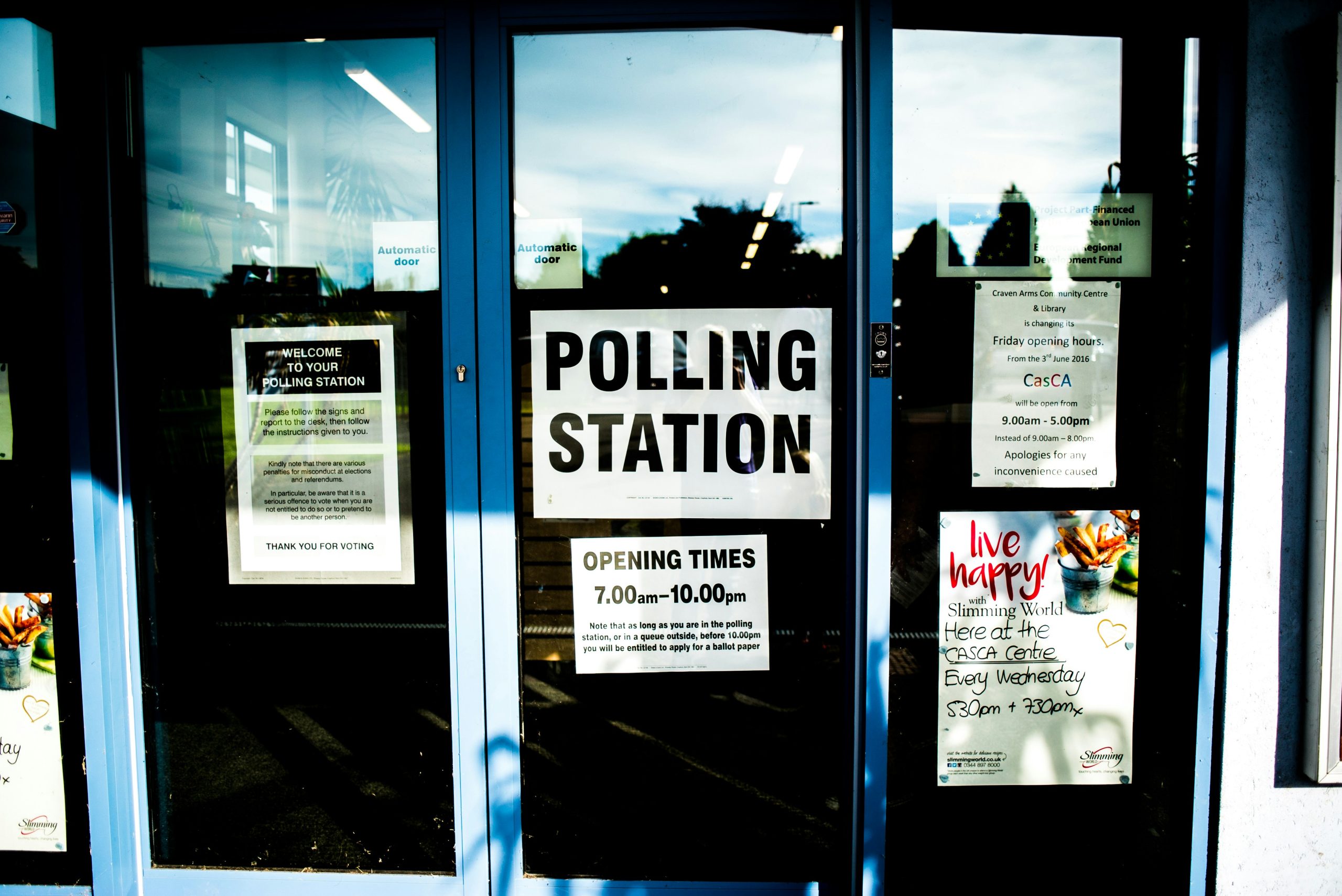
    Boroughs across the country are divided into areas called wards, and in each ward, residents can vote for as many council seats as are contested. The candidate you vote for does not have to be attached to a political party, and you can vote for a mix of candidates. In most London boroughs, the council leader is chosen by the political group with the most councillors. In the five boroughs—Croydon, Hackney, Lewisham, Newham and Tower Hamlets— residents can also vote for a mayor as well as their ward councillors.

    If a party dominates the seats in one borough, it takes control of the council; if there is no outright majority, then the borough has no overall control, and coalitions are formed.


    Turnout at local elections tends to be lower than in general elections because voters’ priorities differ. A vote for a particular candidate in a local election does not guarantee a vote for the party they represent in national elections.

    ‘Get Starmer Out’
    This particular local election revealed misconceptions surrounding local elections and how they work. This is something that Nigel Farage and his party took advantage of. The central messaging of Reforms campaign was to oust Prime Minister Keir Starmer and to take control of illegal immigration.

    According to YouGov, Reform voters were the exception when it came to the typical local issues that tend to be most important to voters, with immigration being their number one local issue. Immigration, however, is typically a national issue, and so major changes can only be made through the national government. There were even some Reform voters left confused when they did not see Farage on their ballots. Reform UK were therefore able to successfully campaign on national issues to mobilise voters at the local level. Perhaps this is because they aren’t delivering on their promises for the local councils already in their control, and so stoking fear over national issues was a more beneficial tactic.

    How are Councils Already Under Reforms Control Faring?
    Despite promising to cut council tax, the Reform-led council in Kent voted through a 3.99% council tax increase, one percentage point under the limit before a referendum is required.

    In Derbyshire, the Reform-led council planned to shut eight care homes, but it was eventually abandoned following backlash. In West Northamptonshire, there has been a sharp increase in complaints about potholes since Reform took power.

    In the past year, the party has lost more than 70 of its elected local councillors, according to research by Liberal Democrat peer Mark Pack, with some being sacked or forced to resign.

    It appears that cracks are already forming, and there is a chance that the party will self-implode. Their local success puts pressure on them because they are now expected to deliver, and if they don’t, the blame may shift towards them. Their present success may have long-term consequences. As of now, there are still 3 years until the next general election, and so failure at the local level could cause resentment nationally.

    Farage’s ‘Cause for Concern’
    Furthermore, the local election results show that a large majority of the population did not actually vote for Reform. In the overall vote share, Reform received around 26%.

    Pollster Peter Kellner said that, despite the significant gains, there is cause for Nigel Farage to be “privately worried”.

    In an article on Substack, Kellner wrote that: “In last year’s local elections, Reform won 41% of all seats contested across England.

    “On the basis of the overnight figures, this year’s tally is around 33%.

    “If there were no polls, and there had been no elections last year, this year’s figure would be astonishing.

    “But we do have the record on recent polls and elections, and it seems clear that Reform has peaked.”

    He added, “Under first-past-the-post, this matters. Our voting system helped Reform last year, when it won a much higher proportion of seats than votes.

    “Its support is now at the point where that bonus has started to shrink. If more voters desert the party, it could suffer badly – falling short in many councils and parliamentary seats that it would have won last year.”

    Additionally while Reform dominated the number of seats won, Labour still had the most overall control of the councils with 28. In contrast, Reform had 14, more than the Conservatives with 9 but less than the Liberal Democrats with 15.

    Therefore, as it stands, if there were a general election, Reform would fail to win a majority, resulting in a hung parliament. In this outcome, they would have to enter a coalition.

    Historic Strides for Greens not Just Reform
    The downward trend in support for Reform indicates a potential ceiling, whereas the Green Party’s gains suggest a burgeoning political force.

    The Greens didn’t see the numbers that Reform did. Some experts have even said they didn’t do as well as expected. However, they have taken great strides and can continue to build upon their success. Unlike Reform’s politics of exclusion and division, the Green Party is offering hope to voters, a genuine alternative to Labour, and this can be seen through their results.

    Polling expert Sir John Curtice said the Greens had recorded their “best-ever performance”, with their projected national vote share being 18% as he revealed the projected national share of the vote for Britain, behind Reform but ahead of Labour and the Tories, who were both on 17% and the Liberal Democrats on 16%.

    Winning 587 seats, they took control of Norwich, Hastings and the London borough of Waltham Forest, as well as winning the mayoral contests in Hackney and Lewisham—former Labour strongholds— for the first time.

    Speaking after the Hackney mayoralty victory, Green Party Leader Zack Polanski said: “Two-party politics is not just dying, it is dead, and it is buried.

    “And actually, whether it’s here that Labour have been rejected, or whether we’re seeing around the country, it’s very clear that the new politics is the Green Party versus Reform.”

    Another incredible statistic for the Greens from this election is that they received 1.95 million votes (excluding mayoral votes). This is approximately 1 million more than their best record in 2023. It also means that more people voted for them at this year’s local elections than at the 2024 general election, which is a remarkable outcome.

    It is clear to see that the picture hasn’t been fully completed yet; there is still a long way to go until the next election, and so much can happen in that time. Starmer may very well be ousted, but that would result in a Labour Party leadership contest rather than a general election. There are positives that Reform can take from this election, but the pressure is now on them to deliver for their residents. Looking at the results at face value can feel somewhat demoralising for those fearing Reform’s rise. However, a closer look reveals that their future national electoral victory is nowhere near guaranteed, and there is still room for hope to prevail.

  • A Look Ahead At The Local Elections With Young Councilor Cylcia Manwa

    A Look Ahead At The Local Elections With Young Councilor Cylcia Manwa

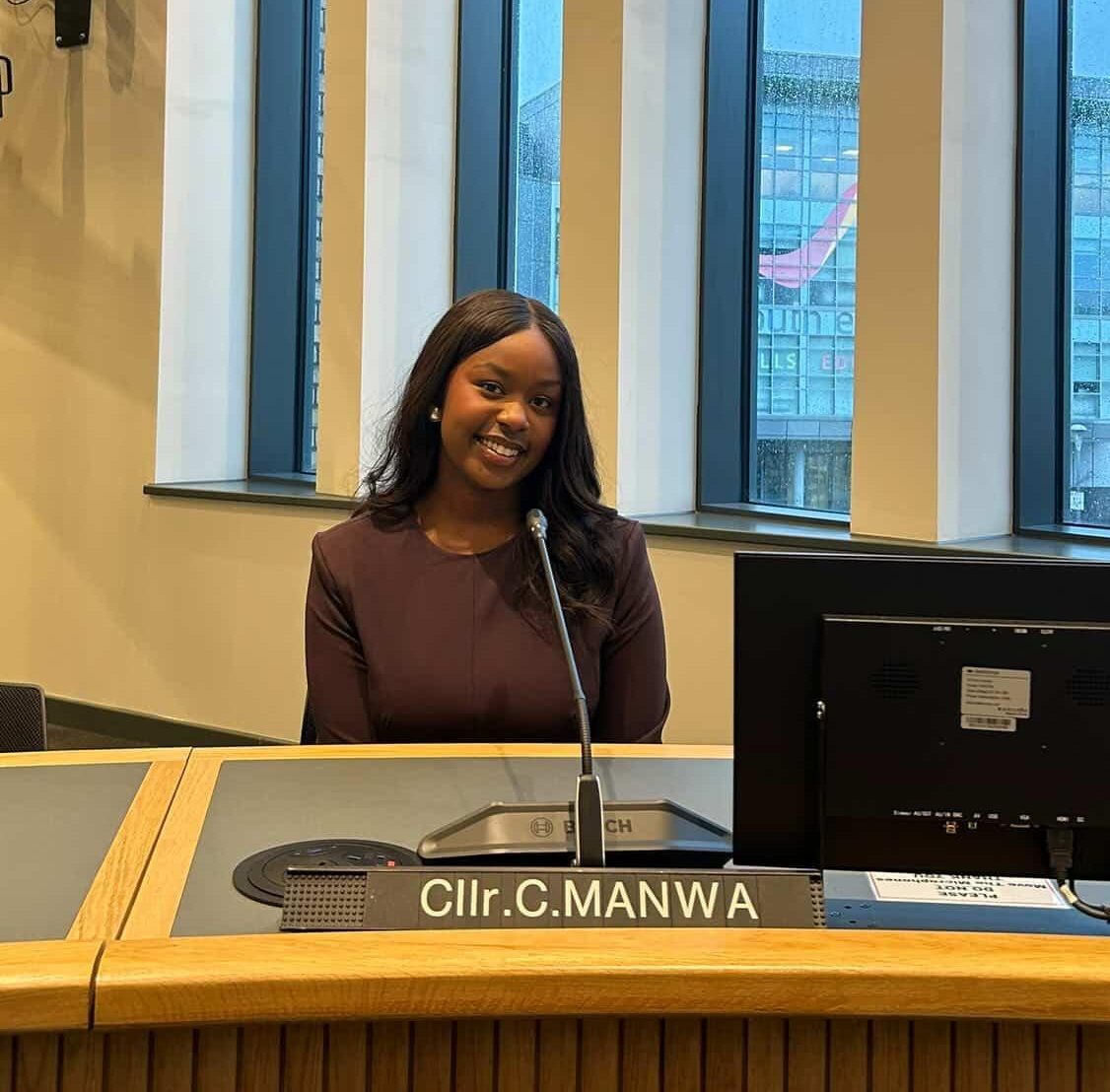
    The local elections are taking place today, and with the pending results, it can be easy to get wrapped up in the party politics of it all. However, given the importance of representation in politics, it is important to remember that there are many individual candidates within these parties looking to represent the people in their area. And so I decided to speak with Cylcia Manwa, a 22-year-old councillor for Thurrock, who is running for re-election, to get her unique perspective on what it’s like to be a young councillor and how she hopes to build on her achievements and further deliver for the residents of Thurrock. 

    I started by asking Cylcia about her campaign and what she thinks are the biggest issues facing Thurrock.

    To this, she replied: “I think the biggest issue facing people in Thurrock is one that we are seeing across the country – the cost of living crisis. With soaring fuel prices, bills and the price of everyday items rising too, that’s definitely a challenge for people across the borough.  For our campaign, we are focusing on getting everyday services right for people, and reducing the council’s debt”.

    Being so young, it can be intimidating to enter such an intense space of politics. Given the issues her residents face, it may be easy to underestimate her ability as a young councillor. However, Cylcia cites her age as one of her unique strengths.

    “I think being a young candidate means you can get underestimated at times, as some people use my age to suggest I’m not capable of doing my role as a councillor. But I think my age is actually my strength – I’m able to connect and represent a demographic that doesn’t always get a say in our local government, and I know that age is by no means a determining factor for competency. I think my record over the past few years is proof enough that young people can hold positions of leadership, and do a good job at it, too!”

    In her role as a councillor, she has also worked on projects that centre on young people and help their development. She proves to be a stellar example of the importance of young people in politics, given that their concerns can often be overlooked in a space where their representation is the exception.

    “I’ve supported the building of a local Youth Zone, which should be completed by early next year – it will give young people in our community access to state-of-the-art sports facilities, extracurricular activities and a space where they can safely enjoy themselves and make new friendships. That’s something I’m really excited about”.

    Looking back on all her achievements so far she shares what she hopes to continue doing if she is chosen by voters once again.

    “In the 3 years I have served, I have sat on several committees advocating for the community, held surgeries and spoken to residents, and helped residents through casework. I bring a fresh perspective as a young person in the borough, and I hope to continue doing that, should I be re-elected”. 

    “I want to continue being a champion for underrepresented communities, and especially with the rhetoric of the far right seeping into our politics, I want to lead with a vision of hope that unites our local community instead of dividing it”.

    No matter their result, it is clear that Cylcia is an inspiration to young people, especially young black women and girls seeking political careers. She has done so much for someone so young and will only continue to do greater things as her career progresses.

  • Could the Local Elections be the End for Starmer?

    Could the Local Elections be the End for Starmer?

    Sir Keir Starmer’s premiership has been anything but smooth sailing; if anything, he has been tiptoeing on the edge of his demise for a large majority of it. It does, however, feel as though the end could be near for him, as the local elections that are set to take place this week may be the final nail in the coffin.

    What do the polls say?

    The polls for the upcoming elections do not paint a pretty picture for Labour, with several expected losses. Pollsters have predicted that the party could lose an astonishing 1850 council seats.

    A potential outcome of such a loss of seats is the party losing control of the Welsh Parliament, the Senedd, which it has dominated since its creation in 1999.

    Polling shows Labour’s vote share in Wales falling by more than half. This would push them into third place with Reform and Plaid Cymru competing for first.

    Starmer already has the poorest local election performance of modern prime ministers, losing 66% of seats in 2025. This year could be even worse, with projections suggesting a 74% loss of seats. Such a catastrophic result will put immense pressure on the PM and raise several questions about the future and viability of his leadership.

    Rumblings of a Leadership Contest

    There have already been rumblings around the Labour Party that candidates are lining up to take the Prime Minister’s place. According to the Telegraph, Health Secretary Wes Streeting is ready to launch a leadership contest, having secured the 81 MPs needed to trigger a contest.

    The PM was reportedly made aware of Streeting’s potential plans after a staff member accidentally texted details of his plans.

    Streeting denied these plans, reportedly dismissing them as a “fishing expedition” by journalists in a WhatsApp chat of Labour MPs.

    Additionally, a spokesperson for the Health Secretary told the Telegraph, “Wes has said repeatedly that he supports the Prime Minister.

    “He is completely focused on his job, in which he has cut waiting lists to their lowest level for three years and got ambulances arriving faster than for half a decade.”

    Additionally, Angela Rayner and Andy Burnham are emerging as potential opponents.

    There have been reports that Burnham is preparing another attempt at securing a Commons seat to oust Sir Keir Starmer as Labour leader.

    Why is Starmer so Unpopular?

    Starmer’s 2024 landslide was a paradox: a major electoral victory built on a weak foundation of public popularity. Furthermore, he has only continued to fall further out of favour due to several controversies, most notably his appointment of Peter Mandelson, the former Labour Party politician, lobbyist and diplomat who had continued his friendship with the infamous convicted child sex offender Jeffrey Epstein.

    A YouGov poll shows that as of April this year, 70% of adults in the UK believe that Starmer is doing badly as Prime Minister.

    Alongside Starmers’ growing disapproval, there has been growing approval for Reform UK and the Green Party. The Green Party has seen a historic increase in membership under Zack Polanski’s leadership. Nigel Farage’s approval has decreased since 2024, but the party remains in a strong position to take several seats from Labour.

    Notably, there is a general lethargy towards Starmer because he has trapped himself in a centrist corner. A lot of people find him quite boring and do not know what he stands for, and so there is no enthusiasm towards him. His respective competitors, however, have a much clearer spot on the political spectrum. Love or hate what Zack Polanski and Nigel Farage stand for, but they very clearly stand for something, and this is proving to be a major advantage.

    It would be historic levels of success for what we traditionally refer to as ‘minor parties’ and signal the growing disillusionment with the two-party system. It is a peek at the future of the British government and even the potential outcome of the next general election. For example, Reform is estimated to win 2,260 councillors, and if they do, the potential for a Reform government is no longer unfathomable. 

    For so long, the two-party system has held steadfast. It has been hard to envision its end. As a result, for years, people have tactically voted for the two main parties to keep the other out of power because that was the only way the system could operate. 

    However, we now have a situation where people are so fed up with the system that they are willing to take a risk and abandon it. As a result, Reform and the Greens are likely to be very successful, and it will be Starmer who bears the consequences for Labour.

  • Hungary’s Democratic Transition and the Limits of EU Action on Palestine.

    Hungary’s Democratic Transition and the Limits of EU Action on Palestine.

    Written by Fatmah Alotaibi

    The veto that survived

    On 12 April 2026, Péter Magyar’s Tisza party, a conservative, centre to centre-right, pro-European populist party, won a major victory in Hungary’s parliamentary elections, bringing Viktor Orbán’s 16 years in power to an end. Magyar pledged to restore the rule of law, rebuild democratic institutions, and reintegrate Hungary into the European mainstream. One policy was left untouched. The day after his victory, Magyar told reporters he would block EU proposals to sanction Israel. Days later, he invited Benjamin Netanyahu to Budapest, a gesture sharpened by the fact that Netanyahu remains the subject of an International Criminal Court (ICC) arrest warrant and that Magyar has separately pledged to reverse Orbán’s withdrawal from the Court. Hungary is changing direction on almost everything. It is not changing direction on Israel.

    Orbán’s veto shield

    Fidesz, the Christian nationalist party led by Viktor Orbán, was re-elected in 2014. Following that re-election, the Ministry of Foreign Affairs was restructured and renamed to the Ministry of Foreign Affairs and Foreign Trade. A new vice-undersecretariat covering ‘the South’, including the Middle East, Africa, and Asia, was given the same organisational weight as the entire Euro-Atlantic portfolio. Roughly 70% of the ministry’s staff were replaced with young, inexperienced recruits, a majority of whom were regarded as loyal to Fidesz. Political loyalty and personal ties to the party leadership, rather than diplomatic skills or technical expertise, became the currency of advancement. This was a foreign policy apparatus that answered to the party rather than to the professional diplomatic service or to the norms of the EU’s Common Foreign and Security Policy.

    The instrument Orbán fashioned from this apparatus was, above all, a veto. Under the Common Foreign and Security Policy unanimity rules, any single member state can block collective EU foreign policy action. Hungary used this power systematically to shield Israel from EU accountability: blocking sanctions on settlers implicated in violence against Palestinians in the West Bank, obstructing review of the EU-Israel Association Agreement under its Article 2 human rights clause, and, in April 2025, Hungary announced its planned withdrawal from the ICC on the same day Netanyahu, who was subject to an ICC arrest warrant, arrived in Budapest. As the European Council on Foreign Relations analysis observed, Hungary stood as ‘the main exception’ to a gradually consolidating European consensus on differentiating between Israel and its settlements: that is, on treating settlement activity and settler violence as conduct the EU will not underwrite.

    As the Heinrich Böll Stiftung’s study of Orbán’s alliance building concluded, these relationships were tied to parties, and political actors selected on grounds of interest and ideology rather than to durable state-to-state architecture. There is no pact or permanent bilateral mechanism that would outlast the government that created it, and many loyalist staff in the Ministry of Foreign Affairs and Trade hold their positions at the party’s discretion. A new government would keep Hungary’s formal EU veto power under unanimous decision-making in foreign policy, but it would not necessarily share the same political intent or supporting staff to use it in Israel’s favour. As a result, the effectiveness of that veto depends largely on Orbán remaining in power.

    What changes and what does not

    Magyar’s retention of the Israel veto is not an ideological inheritance but a low cost position within an existing coalition. The Arab Reform Initiative categorises Austria, the Czech Republic, Germany, and Hungary as states that have backed Israel unconditionally, against a second group including Belgium, Ireland, and Spain pressing for stronger EU action on Palestinian self-determination. Magyar’s position is not isolated; he has signalled alignment with Germany rather than continuation of Orbán’s disruptive posture. The absence of a domestic cost is itself a product of the Orbán years: more than a decade of alignment with Netanyahu made pro-Israel positioning the Hungarian political default rather than a contested choice, and the regime’s own outlets framed it as part of a broader civilisational project against what Orbán has called ‘Wokeism and mass migration’. No Hungarian opposition formation, Tisza included, campaigned against that framing. Maintaining the veto brings no reward for Magyar, but it also incurs no cost.

    Magyar’s broader position supports this interpretation. He has pledged to reverse Orbán’s decision to withdraw from the ICC, bringing Hungary back under the Court that issued the arrest warrant for Netanyahu, and has also invited Netanyahu to Budapest. The division is clear: on international accountability institutions, Magyar appears to be moving closer to the European mainstream, but this is not matched in Hungary’s wider EU positioning. If the veto were a matter of principle, these positions would shift together, but they do not. This suggests the veto is driven more by political positioning, which continues to bring benefits.

    Orbán used Hungary as a disruptive force in the EU, including on Israel-related issues. This is unlikely to continue under a government that wants to align more with EU rules, meaning Hungary would act less independently and more in line with other member states.

    For those who wanted stronger EU action on Palestinian rights, there is little cause for optimism. Removing Hungary from the blocking coalition changes the balance but does not break it. Even under qualified majority voting, the Czech Republic, Germany, Hungary, and Italy together represent roughly 36% of the EU’s population, which is enough to prevent collective measures. Remove Hungary from that grouping, and the remaining states still command significant blocking weight. Meanwhile, settlement expansion and settler violence in the Gaza Strip and West Bank continue to deepen, moving faster than the EU can respond.

    The lesson for the Arab world

    EU’s paralysis on Israel-Palestine predates Orbán and will outlast him; Hungary’s veto was symptomatic of that paralysis, not its cause. The temptation will be to see Magyar’s return to the EU’s mainstream position, rejoining the ICC, and a more moderate spoken tone as evidence that European policy on Palestine is changing. What is shifting is the tone. As the Al-Shabaka roundtable on the 2024-25 wave of European recognition of Palestinian statehood argues, European symbolic actions have often served as substitutes for real policy changes rather than leading to them. Arab governments can work with the EU as a whole and with member states that have gone beyond symbolic recognition.

    The clear conclusion from Orbán’s departure is that a very visible obstacle has gone, but a deeper structural limit has become more visible. The period after Orbán is likely to be calmer, but based on current evidence, it will not bring a real change in EU policy on Palestine.

    References

    Hawari, Y. and Buttu, D. (2025) Statehood without liberation: Europe’s response to genocide. Al-Shabaka: The Palestinian Policy Network, 14 August. Available at: https://al-shabaka.org/roundtables/statehood-without-liberation-europes-response-to-genocide/

    Arab Reform Initiative (2025). ‘Paralyzed into Irrelevance: How Divisions on Palestine Eroded the EU’s Normative Claims’. Available at: https://www.arab-reform.net/publication/paralyzed-into-irrelevance-how-divisions-on-palestine-eroded-the-eus-normative-claims/

    Dworkin, A. and Barnes-Dacey, J. (2020). ‘Promoting European strategic sovereignty in the southern neighbourhood’. European Council on Foreign Relations. Available at: https://ecfr.eu/publication/promoting-european-strategic-sovereignty-in-the-southern-neighbourhood/

    Faro Sarrats, M. (2025). ‘Hold the line: EU actions must counter Orban and Netanyahu’s defiance of the ICC’. European Council on Foreign Relations. Available at: https://ecfr.eu/article/hold-the-line-eu-actions-must-counter-orban-and-netanyahus-defiance-of-the-icc/

    Greilinger, G. (2026). ‘Hungary Replaced Orbán – But Can It Replace His Foreign Policy Legacy?’. Review of Democracy (CEU). Available at: https://revdem.ceu.edu/2026/04/16/hungary-replaced-orban/

    Heinrich Böll Stiftung / Political Capital (2023). ‘The building of Hungarian political influence – The Orbán regime’s efforts to export illiberalism’. Available at: https://cz.boell.org/en/2023/01/20/building-hungarian-political-influence-2

    Hungarian Conservative (2026). ‘The Strategic Significance of Hungary’s Israel Policy in Europe’. 10 January. Available at: https://www.hungarianconservative.com/articles/politics/strategic-significance-hungary-pro-israel-policy-europe/

    Lovatt, H. (2020). ‘The end of Oslo: A new European strategy on Israel-Palestine’. European Council on Foreign Relations. Available at: https://ecfr.eu/publication/the-end-of-oslo-a-new-european-strategy-on-israel-palestine/

    Müller, P. (2022). ‘Populist Capture of Foreign Policy Institutions: The Orbán Government and the De-Europeanization of Hungarian Foreign Policy’. JCMS: Journal of Common Market Studies. Available at: https://onlinelibrary.wiley.com/doi/10.1111/jcms.13377

    Mustafa, T. (2025). ‘Expansion in the shadows: The dangers of Israeli aggression in the West Bank’. European Council on Foreign Relations. Available at: https://ecfr.eu/article/expansion-in-the-shadows-the-dangers-of-israeli-aggression-in-the-west-bank/

    The National (2026). ‘Hungary to stick with veto on EU Israel sanctions following Orban election defeat’. 13 April. Available at: https://www.thenationalnews.com/news/2026/04/13/hungary-to-stick-with-veto-on-eu-israel-sanctions-following-orban-election-defeat/

    The Times of Israel (2026). ‘Hungary’s PM-elect vows return to ICC, but stresses “special relationship” with Israel’. 13 April. Available at: https://www.timesofisrael.com/no-time-to-waste-pro-eu-magyar-vows-new-era-in-hungary-after-ousting-orban/

  • VICTORY FOR EUROPE AND DEMOCRACY?: HUNGARY OUST AN AUTOCRAT

    VICTORY FOR EUROPE AND DEMOCRACY?: HUNGARY OUST AN AUTOCRAT

    In the historic election that saw record turnout, autocrat Viktor Orbán was ousted after 16 years, and opposition leader Péter Magyar won a landslide victory. 

    The results, based on more than 98% of counted votes, put his Magyar Tisza party on course for an incredible 138 seats, with Orbán’s Fidesz on 55 and the far-right Our Homeland on six. 

    Following the victory, Péter Magyar told a crowd of his jubilant supporters, “We did it,”… “Together we overthrew the Hungarian regime.”

    This election was not between the traditional left-right dichotomy, but between democracy and autocracy. Magyar is himself a conservative who had once been part of Orbán’s circle. However, like many Hungarians, he became disillusioned with the direction the autocrat was taking the country. As a result, he gained support across the political spectrum in his bid to undo the damage and restore democracy.

    What had Orban done?

    During Orbán’s 16 years of rule, he restructured Hungary’s state institutions, limiting the powers of the constitutional court, reducing the number of parliamentary seats from 386 to 199 and redrawing district lines to benefit his party, expanding executive influence over the judiciary and taking control of and censoring the media. 

    On the international stage, he has isolated Hungary from Europe by pursuing a sovereigntist and eurosceptic foreign policy. He was an ally of Russian President Vladimir Putin, and regularly blocked funds to Ukraine and opposed sanctions against Russia. 

    Sky News Moscow correspondent Ivor Bennett described Mr Orban as a “Russian Trojan horse acting in Moscow’s interest”, whom EU leaders will be glad to see the back of. 

    He was also a close ally of President Donald Trump and has been a model for other far-right figures across Europe and the US, hence the endorsements of these leaders, including an official visit by the US vice-president, JD Vance, just days before the election. Orbán’s government also frequently clashed with the EU over judicial independence, migration, and LGBTQ+ rights. 

    What was Magyar promising?

    Magyar ran a campaign promising to crack down on corruption, repair Hungary’s dwindling healthcare system, and lower the cost of living. He also promised to distance the country from Ukraine and restore ties with the EU and Ukraine. He took his campaign around villages, town squares and cities, rallying Hungarians who had enough of the corruption. 

    He said Hungary would “never again be a country without consequences” and promised to establish a national asset recovery office that would ensure the “political and economic criminals” who “stole from the country” would be held responsible.

    Orbán’s campaign, on the other hand, centred on the Ukraine war. His main tactic was stoking fear that the country could be dragged into the Ukraine war if Fidesz did not win. This, however, proved insufficient as most Hungarian voters were no longer afraid that the country could be drawn into the conflict: according to polls by the independent political research institute Policy Solutions, the number of Hungarians who fear they could be dragged into the war has halved in recent years.

    Why is this important?

    This is a blow to the wider far-right movement across Europe. It is a warning to those groups that policies of hate and division are limited: they will run out of enemies to defeat and lose the trust of voters who aren’t receiving any benefits from their rule. Over time, the focus shifts and the leader becomes subject to more scrutiny. Eventually, it becomes clear that their policies aren’t tools to help the people but to consolidate their own power and erode the institutions that hold them accountable. Therefore, it signals to Orbán’s admirers on the right that rhetoric can only get them so far; if their actions are detrimental to the people, their power will run out. 

    This is a major victory, not just for Magyar but for democracy. It shows that the brand of far-right politics that devalues and erodes liberal democracy is going out of fashion. Magyar himself wasn’t exactly the perfect upstanding candidate, as mentioned above; he was a part of Orbán’s circle up until 2024. Additionally, he has his own history of controversies, which include domestic violence charges. He wasn’t a candidate on the opposite side of the spectrum, promising left-wing socialist policies; rather, he was someone who, like many Hungarians, had realised that enough was enough. This really puts into perspective just how detrimental Orbán’s rule was, and how desperate the Hungarian people were for change. 

    The road will not be easy, and there is no guarantee that it will be successful. Democracy will not be restored overnight. However, the result is a starting point; it’s a genuine chance to undo past mistakes and shows that perceived unlimited power has its limits. 

  • Trump’s War with Iran and Its Global Effects

    Trump’s War with Iran and Its Global Effects

    During his 2024 election campaign, US President Donald Trump pledged to end US involvement in costly and destructive foreign wars. In December 2025, during the FIFA World Cup draw, Donald Trump was awarded the inaugural FIFA Peace Prize. Gianni Infantino, the Fifa president and a close ally of Trump, presented the award, saying Trump had been selected “in recognition of his exceptional and extraordinary actions to promote peace and unity around the world”.

    His foreign policy this year, however, appears to contradict this. 2026 for Trump has been defined by aggressive military action. In January, the United States captured Venezuelan President Nicolás Maduro and his wife, Cilia Flores, in a military operation in Caracas. Following this, Trump also renewed threats to annex Greenland, leading to severe diplomatic friction with Denmark. Trump also threatened US strikes in Nigeria if the government did not do more to address what Trump said is a “genocide” of Christians in Nigeria by Muslim groups.

    His most aggressive embrace of military action this year comes in Iran, where the United States has been engaged in a rapidly escalating conflict since late February. The conflict started on 28 February 2026, when the United States and Israel launched surprise airstrikes on multiple sites and cities across Iran, killing Supreme Leader Ali Khamenei and several other Iranian officials. Iran responded with missile and drone strikes against Israel, US bases, and US-allied countries in the Middle East.

    The conflict stems from years of tense relations between Iran and the United States. Before the 1979 Islamic Revolution, the United States and Israel were both close allies with Iran’s government. However, U.S. involvement in Iranian affairs became a lasting source of resentment among Iranians, particularly following its role in the 1953 Iranian coup d’état, which helped sustain the widely unpopular Pahlavi monarchy. Many Iranians under the Pahlavi monarchy viewed the Shah as a “puppet” of the US. Therefore, the 1953 intervention was a major catalyst for the 1979 revolution that forced the Shah into exile.

    Since the 1979 revolution, tension between these global actors has continued. Much of this tension is over Iran’s nuclear program, ballistic missile development, and regional proxy network. The 2026 Iran war followed the collapse of the 2025–2026 nuclear negotiations and a 12-day war with Israel in June 2025. Following this 12-day War, sanctions on Iran were reimposed, and this put Iran’s currency into a freefall, prompting a significant outbreak of protests in late December. These protests spread across Iran in January 2026 and became the largest uprising in Iran since the 1979 Islamic Revolution. The US first openly talked in January about potentially attacking Iran when its security forces cracked down on protesters with deadly force.

    This violent crackdown, reportedly carried out under orders by Ali Khamenei and senior officials, resulted in massacres that left thousands of protesters dead, making them the largest massacres in modern Iranian history. But the US and Iran began nuclear negotiations and appeared to be making progress until Trump said he was “not happy” with the way the talks were going on 27 February. Hours after this, the US and Israel launched a surprise attack, killing Khamenei, other Iranian officials, and civilians, abruptly ending any immediate prospect of diplomatic resolution.

    American and Israeli officials have offered conflicting explanations of the attack. Following the attack, US President Donald Trump described it as defensive and suggested that the aim was to eradicate “imminent threats” from Iran. Meanwhile, Israel described it as a “preemptive strike” aimed at neutralising an anticipated missile attack from Iran. Other U.S. officials have said it was aimed at crippling Iran’s ballistic missile infrastructure and preventing Iran from obtaining a nuclear weapon. Israeli Prime Minister Benjamin Netanyahu has repeatedly described the Iranian regime as an “existential threat” to Israel. Marco Rubio, the US secretary of state initially suggested that the U.S. launched strikes partly due to pressure from Israel which was preparing its own attack. These comments were later taken back as he insisted that the strike was a decision made by Trump and that Israel did not force U.S. action.

    Realist international relations theory emphasises that states operate in an anarchic system focused on power maximisation and national security. The justifications offered by the United States and Israel, particularly the need to eliminate Iran’s nuclear capabilities, suggest their actions are consistent with realist logic, in which military force is used to eliminate perceived threats. Ultimately states are selfish, and so anything they do is to maximise their power and position in the global system. Iran is also following the same logic, as its retaliation reflects its need for self-preservation.

    As with any war, the costs have been high. From civilian casualties to rising oil prices, the effects of this conflict have been felt globally. One of the most significant impacts has been the blockage of the Strait of Hormuz. The Strait of Hormuz is a waterway between the Persian Gulf and the Gulf of Oman. It is bordered by several countries, one of which is Iran. It is of great geopolitical importance because about 20% of all oil supplies and about 20% of seaborne gas tankers pass through it, making it one of the most important arteries for global trade. Options to bypass the strait are limited.

    Before the war, each day roughly 20 million barrels of oil and petroleum products moved through the Strait. Around 3,000 ships usually sail through the strait each month, but this has dramatically decreased recently. Iran’s blockage of the Strait has globally impacted energy and fuel prices. Brent crude oil has surged above $100 per barrel, up from roughly $65 when tensions between the United States and Iran began heating up.

    The UK is forecast to experience the largest growth hit among the G20 major economies due to its vulnerability to global energy price shocks. The International Monetary Fund (IMF) has said that Britain’s economy is “especially exposed” to spiralling prices because it relies on gas‑fired power. Elsewhere in the Philippines, the government has declared a national energy emergency over the oil crisis triggered by the war in the Middle East. The Philippines imports almost all of its crude oil from the Middle East, and so it has been significantly impacted by the blockage of the Strait of Hormuz.

    Another state that has been impacted is Russia. The United States temporarily lifted sanctions on Russian oil to contain energy prices. This move has delivered Moscow roughly $150 million per day in additional revenue. This has given the Kremlin a boost as it now has new resources to finance its war against Ukraine. Also, with Iran now taking centre stage, the Trump administration’s attention is inevitably distracted from Ukraine.

    This conflict has also had profound diplomatic consequences, causing significant global friction. On Wednesday, it was reported that Donald Trump is strongly considering leaving NATO over the lack of support shown for his attack on Iran, in another extraordinary attack on US allies. Several European countries, such as Spain, expressed opposition to US actions. Spain refused to allow the US to use its airbases. Similarly, UK Prime Minister Keir Starmer has repeatedly said that he will not be dragged into a war. Trump has been consistent in his criticism of the Prime Minister, stating that he was “very disappointed in Keir” as he “took far too long” to reverse his decision not to let the US use UK bases to bomb Iran.

    It is not clear when this war is likely to end, as reports of negotiations have been conflicting. Trump says talks with Iran are happening, while Iran says there is no negotiation. Progress may be playing out behind the scenes; however, there is little public indication that the war is coming to a diplomatic end.

  • When Obedience Becomes a Weapon: How Regimes Make Repression Feel Normal 

    When Obedience Becomes a Weapon: How Regimes Make Repression Feel Normal 

    Written by Fatmah Alotaibi 

    In December 2024, one of the longest-standing authoritarian regimes in the modern world collapsed. The  Assad dynasty had ruled Syria for over fifty years. It fell in a matter of days. State television, which for decades had broadcast loyalty rituals, presidential speeches, and celebrations of military “victories over terrorism,” abruptly changed its tone. The same outlet that had framed peaceful protesters as foreign agents and state violence as patriotic duty was suddenly raising the Free Syria flag. 

    The shift happened almost overnight. Which raises an uncomfortable question: if so many people had not truly believed, why had it held for so long? 

    What Syria revealed was not that its people had believed the propaganda. Many had not. What it revealed is that you do not need people to believe. You just need them to comply. 

    This is the central insight that political theorist Hannah Arendt captured in her concept of the “banality of  evil.” Evil, she argued, is not always the product of monsters. It is often carried out by ordinary people who follow orders, perform their roles, and stop asking questions. The danger is not the true believers. It is the quiet majority who normalise what is happening around them simply by going along with it. 

    Authoritarian regimes understand this better than anyone. 

    The playbook is consistent across contexts. First, language is weaponised. Protesters become terrorists. Dissent becomes betrayal. Violence becomes defence. Once the vocabulary shifts, the moral framework shifts with it. It becomes possible to justify almost anything if it is framed as protecting the nation,  defending the homeland, or fighting an existential threat. 

    Second, emotions are mobilised. Fear, pride, and outrage are not incidental to authoritarian propaganda;  they are its engine. State funerals become loyalty performances. Elections become displays of unity.  Religious ceremonies become endorsements of state violence. These rituals are not designed to persuade.  They are designed to make a particular emotional and moral reality feel inevitable, to shrink the space in which doubt is even possible. 

    Third, and most insidiously, repetition does the work that force alone cannot. When the same narrative is broadcast continuously that protesters are criminals, that the state is protecting you, that there is no legitimate alternative, it does not need to be believed. It just needs to be present. It fills the air until it becomes the background against which all other information is assessed. 

    Look at the world right now, and the pattern is not hard to find. When Supreme Leader Khamenei was killed in February 2026, months after the 12-day US-Israeli war on Iran that began in June 2025, Iranian state media did not present a system in crisis. It presented a system proving its strength. The Tehran Times  ran the headline “Trump is gone, Khamenei remains.” Hardline outlets Kayhan and Tasnim framed the succession of Mojtaba Khamenei not as a rushed, pressure-filled process, in which the IRGC reportedly pressured Assembly of Experts members to vote quickly, but as a demonstration of the Islamic Republic’s resilience.

    Front pages were dominated by pledges of allegiance from military commanders, clerics, and political figures. Wartime posters merged the faces of Khomeini, Ali Khamenei, and Mojtaba, projecting an unbroken line of divine authority. The new supreme leader’s first statement was read aloud by a state television anchor over a still photograph, with no video or audio of the new leader himself released. In it,  Khamenei called the conflict an act of aggression by external enemies and demanded “effective and  regret-inducing defence.” Analysts noted that focusing on armed resistance allowed the new leadership to avoid discussing the economic hardships and domestic unrest, including violent protests in December and January that had divided Iranian society long before the strikes began. 

    Meanwhile, Iran was firing hundreds of missiles and drones at Gulf states, striking civilian infrastructure,  residential areas, and energy facilities. Qatar’s foreign ministry called it a crossing of all red lines. Yet none of this appeared in Iranian state media as aggression. It was resistance. It was a duty. The mechanism is the same one that sustained Assad for fifty years: attach moral language to power, keep the population looking outward at enemies, and those carrying out the violence never have to question it. They are simply doing their duty. 

    What is striking is how little this depends on outright lying. The most effective propaganda does not fabricate reality wholesale. It selects, frames, and repeats. It decides what is shown and what is not. It determines which deaths are mourned and which are invisible. Over time, what is omitted becomes unthinkable, and what is repeated becomes common sense. 

    That is both reassuring and alarming. Reassuring because manufactured consent is more fragile than it looks, as Syria showed, it can collapse quickly once the coercive structure behind it falls. Alarming because it means we can live inside systems of repression for a very long time without fully registering what is happening, precisely because those systems are designed to make repression feel normal. 

    The question worth asking, not just about Syria or Tehran or the waters of the Gulf, but about any political environment, is a simple one: what are we accepting as normal that we have not actually chosen to accept? 

    Propaganda works best when nobody calls it propaganda, when violence is a duty, when silence is loyalty and when obedience has become so routine that it no longer feels like a choice. 

    That is the moment to start paying attention. 

    Sources 

    Arendt, H., 1964. Eichmann in Jerusalem: A Report on the Banality of Evil. London: Faber & Faber. 

    BBC News. ‘All red lines have been crossed’: Gulf states weigh response to Iranian strikes. Available at:  https://www.bbc.co.uk/news/articles/cjrqqd8lw2wo 

    Al Jazeera. Iran’s Mojtaba Khamenei vows to fight in first statement as supreme leader. Available at:  https://www.aljazeera.com/news/2026/3/12/irans-mojtaba-khamenei-issues-first-statement-as-supreme leader-amid-war Iran International. After first message, Iranian media cast Khamenei Jr as wartime leader. Available at:  https://www.iranintl.com/en/202603125397

  • Iran protests slow after brutal crackdown by the regime 

    What has happened?

    Since 28 December 2025, Iran has been marred by unrest, as a series of protests, aimed at the Islamic Republic Government, erupted across the country. Whilst it is now being reported that protests have slowed, it is important to recognise that this is due to the callous crackdown, as opposed to citizens having their voices heard and demands met. 

    According to the US-based Human Rights Activists News Agency, more than 3000 people have been killed in the regime’s violent response to anti government protests. This brutal response has suppressed many Iranians, silencing dissent through fear and force, while leaving their grievances unresolved. This ruthless attack on freedom of expression underscores the authoritarian character of the regime and highlights the urgency needed to address the country’s deep social and political issues.

    Protest and uprising have been prominent features of Iran, shaping the political structure that it acquires today. The Islamic Revolution that occurred in 1979 is fundamental for understanding Iran’s current political landscape. This revolution was a widespread uprising against the Western backed autocratic monarchy of Shah Mohammad Reza Pahlavi. After successfully removing Pahlavi, Iran became an Islamic theocracy led by Ayatollah Ruhollah Khomeini. This significantly changed Iran’s political structure and ushered in decades of clerical rule and significant geopolitical shifts. 

    Why are Iranians protesting?

    Decades on from this, Iran finds itself in another unstable political climate. The recent protests have been described as the most serious bout of unrest the government has faced since the 1979 revolution. But what sparked such a movement in the first place? As with any large scale uprising, there are a multitude of factors that intersect to cause it. The catalyst for this movement, however, has strong roots in economics. 

    Many Iranians began taking to the streets after a sudden collapse in the value of the country’s currency. Over the past few years Iranians have been suffering with deep economic issues. Their purchasing power has fallen by more than 90 percent and food prices have soared by an average of 72 percent. Due to this, public frustration only intensified further. It is this frustration that culminated in shopkeepers and bazaar merchants in Tehran staging a strike as a response to the Iranian currency hitting an all-time low against the US dollar. These strikes led to the protest movement that has spread to all 31 provinces. These protests initially focused on the economic crisis, but quickly expanded to demand political reform and an end to the rule of Iran’s supreme leader.

    The Iranian government has called the protests “riots” backed by Iran’s enemies. The regime’s response has been marked by a significant scale of violence which has so far succeeded in quashing protests and driving people off the streets. Protesters were met with lethal force and videos of security forces shooting at protestors have been authenticated by the BBC. Many relatives overseas have been slow to find out whether their family members are victims of this abhorrent violence, as the Iranian regime shut down the internet. 

    Why has the regime shut down the internet? 

    The significance of the internet shutdown cannot be understated. It represents a deliberate attempt by the regime to cut off a vital tool that has, in the past, stimulated mass mobilisation, the documentation of power abuse and global solidarity. The Arab spring is often referred to as the “Facebook Revolution” because social media platforms acted as a pivotal tool for organising demonstrations, spreading information and building international awareness of uprisings that were happening. Social media platforms, therefore, remain a vital tool for resistance. The Iranian regime recognised this and imposed a near total internet and communications shutdown to regain control of the narrative and to stop first hand accounts of what’s going on.

    This is not the first time that Iran has adopted this strategy. During the demonstrations in 2019 and 2022 there were nationwide internet shutdowns. Freedom campaigners at Access Now say Iran has consistently used shutdowns as a way to mask mass violence and brutal crackdowns on protesters. However, the current internet blackout has lasted longer than any previous shutdown.

    Will there be US intervention?  

    The events in Iran have been met with significant international scrutiny. In the past few weeks US President Donald Trump has spoken a lot on the matter. He threatened “very strong action” if the Iranian authorities executed 26-year-old protester Erfan Soltani. On Tuesday 13 January, Trump urged Iranians to “keep protesting”, telling them “help is on its way”. Many people suspected that there would be military intervention from the US. However, 24 hours later, the US President told reporters that he had received assurances that planned executions of protesters would not now proceed and so retreated from military intervention in Iran. 

    Despite Trump’s aggressive foreign policy at the start of this year, US intervention works directly against Trump’s promise to not engage the US in new wars. It is important to note that Iran is not Venezuela. Iran has significant military capabilities, allies who are very anti-US and they have already stated that if the US intervenes they will retaliate and target military bases. It also goes without saying that US intervention would not necessarily benefit Iranians as the US has little credibility when it comes to protecting innocent lives in the middle east. Whilst it may be in Trump’s interest to not intervene, many Iranian protestors feel abandoned as killings have continued.

    On Saturday 17 January, Iran’s supreme leader, Ayatollah Ali Khamene, publicly acknowledged the thousands of killings that have occurred during the protests and blamed them on the US. “Those linked to Israel and the US caused massive damage and killed several thousand,” Khamenei said, quoted by Iranian state media. He also labelled the US President a “criminal” for the “casualties, damages and slander he inflicted on the Iranian nation.”

    In Iran, many protesters remain unsure about taking to the streets again. The future of the country remains uncertain. Reza Pahlavi, the son of Iran’s former pro-western monarch, has predicted the fall of the Islamic regime and has claimed he is “uniquely” placed to head a successor government. However, this has been questioned s has not been in Iran since his family fled the country at the beginning of the 1979 Islamic revolution. A wide range of paths exist, from continued stagnation and authoritarian consolidation, to prolonged instability or, eventually, meaningful transformation.

  • TRUMP’S GREENLAND MISSION

    TRUMP’S GREENLAND MISSION

    Home to just 56,000 people, Greenland finds itself at the centre of a geopolitical storm. After carrying out a controversial military operation in Venezuela, which resulted in the capturing of Nicolás Maduro and his wife Cilia Flores, President Trump has renewed calls for the US takeover of Greenland. This has raised questions about the future of NATO and the rules based international system that has facilitated global cooperation since the end of World war two.

    Speaking to NBC News on Monday evening, the US president said “We need Greenland for national security.” He said, “It’s so strategic. Right now, Greenland is covered with Russian and Chinese ships all over the place.” He stated that he is “very serious” in his intent of acquiring the country. The White House has further reinforced this stance, saying that Trump has been discussing “a range of options” to obtain Greenland, including military action. While Trump has previously expressed interest in acquiring Greenland, these latest remarks are being treated with greater seriousness due to his recent actions in Venezuela.

    Greenland is a region that sits off the northeastern coast of Canada, and has more than 80 per cent of its territory lying within the Arctic Circle. It is an autonomous territory within the Kingdom of Denmark, governing its own affairs while Denmark retains control over defence and security. As Denmark is a member of NATO– the intergovernmental military alliance whose purpose is to guarantee the freedom and security of its members through political and military means- Trump’s ambitions are especially concerning. 

    Article 5 of the treaty dictates that “an armed attack against one or more” in Europe or North America shall be considered “an attack against them all”. But what happens if the threat comes from the treaty’s most powerful member? The US explicitly and forcibly challenging the historical sovereignty of Denmark, an ally, would surely signal the US’s departure from, and potentially the end of, the alliance. It would create a highly unstable international system that would only benefit rival powers such as Russia and China. Russia may feel emboldened to make further advances in Europe while NATO is in chaos. The Danish Prime Minister, Mette Frederiksen, has expressed this and has also made it clear that the US has no right to Greenland.

    The Prime Minister stated, “If the U.S. chooses to attack another NATO country militarily, then everything stops, including NATO and thus the security that has been established since the end of the Second World War”. She also said, “the US has no right to annex any of the three countries in ​the Danish Kingdom.” The Danish Prime Minister and Greenland has received the support of several European leaders including French President Emmanuel Macron and United Kingdom Prime Minister Keir Starmer, who issued a joint statement on Tuesday saying that “Greenland belongs to its people. It is for Denmark and Greenland alone to decide on matters concerning Denmark and Greenland”.

    Given Greenland’s small population and relatively low profile in global affairs, some might ask why Trump is so interested in it and why the issue has gained such attention. The answer lies in its strategic location and natural resources, which make it attractive to the US. It is strategically located in the Arctic Ocean, between the US and Russia, in the midst of major shipping routes. Climate change is causing the Arctic ice to melt, potentially creating a Northwest Passage for international trade and reigniting competition with Russia and China. Greenland is also rich in natural resources. It has rare earth minerals that are a key component of mobile phones, computers, batteries and other hi-tech gadgets. As well as this, it has billions of untapped barrels of oil and a vast supply of natural gas that used to be inaccessible but is becoming increasingly accessible due to melting ice sheets caused by climate change. Therefore, this is not solely a matter of national security, but also one of economic security.

    Ultimately, Trump and the US are acting as powerful states traditionally do under realist theory. 

    Realism holds that states are power seeking actors, operating in an anarchic world, with no central authority to enforce rules. This compels states to prioritise survival, security, and the accumulation of power. Whilst there are international organisations that attempt to enforce international norms and rules, as realist theory argues, these institutions remain subordinate to state interests and power politics. Trump’s latest actions and comments reinforce this idea.

    His desire to acquire Greenland reflects a rational attempt to strengthen strategic positioning in the Arctic, secure access to emerging trade routes and resources, and prevent rival powers such as Russia and China from gaining influence. 

    Trump’s behaviour can therefore be understood as a continuation of great-power politics, where strategic advantage outweighs legal norms, alliances, and the rules-based international order.

    It appears that the rules-based international order is increasingly giving way to a system governed more by capability than by law. This shift risks accelerating great-power competition and undermining international security.

  • TRUMP ATTACKS VENEZUALA: Is this the end of the rules based international system?

    TRUMP ATTACKS VENEZUALA: Is this the end of the rules based international system?

    When questioned by a reporter what his new year’s resolution was, President Trump responded “Peace. Peace on Earth”. Three days later he launched an unprecedented attack on Venezuela. On Saturday 3 January, the FIFA peace prize recipient announced a large-scale US strike on Venezuela and the capturing of Nicolás Maduro, and his wife, Cilia Flores. The couple have now been indicted in New York on terrorism and drugs charges. Trump says the US is going to “run” Venezuela “until such time as we can do a safe, proper and judicious transition”. The attack saw at least 40 people, including civilians and Venezuelan soldiers, die. Therefore it appears Mr Trump is going to have to find another new year’s resolution.

    No one will mourn the removal of Nicolas Maduro. In fact, many Venezuelan immigrants in the US and the UK have celebrated his capture, saying “it is impossible not to feel relief”. The Venezuelan leader is seen by many as a dictator as he relied on the secret police, disappearances and persecution to keep his grip on power. He has run an authoritarian state since 2013 with the help of elections widely regarded as rigged and fraudulent. Over seven million Venezuelans fled the country during his rule. So now there is one less dictator in the world terrorising its people. Whilst some people may consider this to be a victory, it cannot be denied that the manner in which he was removed is deeply troubling and raises significant geopolitical concerns about international law and state sovereignty.

    This military operation appears to have little to no legal or constitutional authority. The US has ultimately invaded a sovereign nation without UN authorisation, kidnapped a sitting head of state and has done so acting not on the basis of international law but on its own domestic law. State sovereignty is the principle that a state holds supreme and independent authority over its territory and people, free from external control. The US’s actions, therefore, are a serious cause for concern because it sends a message that as long as you have the military clout you can do what you want, to whoever you want, on the international stage. It highlights the erosion of the rules based international order, where law is increasingly overshadowed by power. The geopolitical implications of this are very dangerous. Other powerful nations such as China may feel empowered to pursue their own territorial and strategic ambitions by force.

    The public justification of this military operation by the Trump administration has been about drugs. Trump has been focused on fighting the influx of drugs – especially fentanyl and cocaine – into the US. He has framed this attack on Venezuela as a broader war on narcotics and has accused Maduro of running a “narco terrorist organisation”. Without providing evidence, Trump has also accused Maduro of “emptying his prisons and insane asylums” and “forcing” its inmates to migrate to the US. From the justification some may argue that Trump is simply acting in the national interest to protect the American population from the alleged flow of drugs and criminal networks linked to Maduro. Framed this way, the operation can be presented as a defensive measure aimed at safeguarding public health and domestic security, rather than as an overtly aggressive act against a sovereign state.

    However, it would be illogical to think that this is the only reason for the attack. In fact, many of Trump’s claims about drugs have been criticised as there is little evidence.

    For example, counternarcotic experts have explained that Venezuela is a minor player when it comes to global drug trafficking. Cocaine is mainly produced in Colombia and most of it is said to enter the US through other routes, rather than Venezuela. Fentanyl, the other drug that Trump has raised concerns about, is mainly produced in Mexico and enters the US almost exclusively via land through its southern border. 

    Therefore, it would appear that the central basis of justification for this attack is very weak. Realist international relations theory teaches us that states are self-interested, power-seeking actors driven by survival in an anarchic world. This means that they will use any means necessary to achieve their aims. In this case, the US has ignored the principle of state sovereignty in order to achieve its objectives. For some, its objectives extend beyond the stated aim of combating drug trafficking. Maduro and political commentators have accused the US of using the so-called “war on drugs” as a pretext to secure access to Venezuela’s vast oil reserves. Venezuela has the largest proven oil reserves of any country in the world, making it an especially attractive target for external influence and intervention. Therefore, it is hard to believe that the rationale behind this military operation was drug-related.

    Analysis from Sky News highlights exactly why Trump may be seeking access to Venezuelan oil. Whilst the US is the world’s largest oil producer, it primarily produces light crude. However, most of its refineries are designed to process heavy oil. Because upgrading refineries would cost billions, the US remains heavily dependent on imports of heavy crude, exporting much of its own oil while importing thousands of barrels daily for refineries in Texas and Louisiana. Venezuela, therefore, is strategically important because it holds some of the world’s largest reserves of heavy oil.

    The significance of oil in this whole situation was reinforced by President Trump during his press conference on Saturday in which oil was referred to more than a dozen times. Trump said Venezuela had “stolen” oil from the US and that it would now be taken back. This belief that the oil had been stolen is based on Venezuela’s nationalisation of its oil industry between the 1970s and the 2000s, forcing most US oil companies out. The president also claimed US occupation “won’t cost a penny” as the country will be reimbursed from “money coming out of the ground”. He explained that he plans to have major American energy multinationals invest “billions and billions of dollars” to rebuild the country’s “rotted” oil infrastructure.

    Clearly, this has never been solely about drugs. The US’s actions therefore set a dangerous precedent. Whilst the fall of a dictator may offer short-term satisfaction, when achieved at the expense of state sovereignty and the rules based international system, it risks contributing to a more dangerous and unpredictable world.