Author: Shani Adesanya

  • Local Election Results: Why Reform UK’s Local Success Is Not a National Certainty

    Local Election Results: Why Reform UK’s Local Success Is Not a National Certainty

    Much of the discussion that has followed last week’s local elections has centred on Reform’s staggering success. The party’s increased support saw them win 1453 councillors and take control of councils from Labour, including Barnsley, Wakefield, Sunderland and Gateshead.

    For many of Reforms critics, these results are discouraging. To them, it indicates that the UK is moving towards a dangerous path of far-right politics characterised by exclusion and intolerance. Several of the elected Reform candidates are already under fire due to racist, Islamophobic, and anti-Semitic comments and social media posts.

    While the results were an enormous feat for the party, a closer look at these results paints a picture that not enough people are talking about.

    Within hours of the polling stations closing, multiple media outlets were declaring victory for Reform. They were suggesting even more potential success at the next general election. In an interview about Reform’s electoral success, Sky News’s Beth Rigby even asked Farage if he sees himself as a Prime Minister in waiting.

    These results are favourable for the Reforms’ hopes of forming a government. However, leaving it at this conclusion is somewhat of an oversimplification of the results. To properly understand these results and what they mean, we first need to understand what local elections are and how they work.

    How do the local elections work?
    Local councils provide the facilities and services in your area. The type of council you have, and the responsibilities they have, vary depending on where you live. Local councillors oversee the council’s work, setting the strategies and priorities. Things such as council tax, local services, planning, local climate change commitments, and policing commitments are all overseen by the local council. Within this are issues such as roads, potholes, maintaining public spaces, affordable housing, bin collection, etc., and these tend to be the most concerning issues for voters at these elections.

    Boroughs across the country are divided into areas called wards, and in each ward, residents can vote for as many council seats as are contested. The candidate you vote for does not have to be attached to a political party, and you can vote for a mix of candidates. In most London boroughs, the council leader is chosen by the political group with the most councillors. In the five boroughs—Croydon, Hackney, Lewisham, Newham and Tower Hamlets— residents can also vote for a mayor as well as their ward councillors.

    If a party dominates the seats in one borough, it takes control of the council; if there is no outright majority, then the borough has no overall control, and coalitions are formed.


    Turnout at local elections tends to be lower than in general elections because voters’ priorities differ. A vote for a particular candidate in a local election does not guarantee a vote for the party they represent in national elections.

    ‘Get Starmer Out’
    This particular local election revealed misconceptions surrounding local elections and how they work. This is something that Nigel Farage and his party took advantage of. The central messaging of Reforms campaign was to oust Prime Minister Keir Starmer and to take control of illegal immigration.

    According to YouGov, Reform voters were the exception when it came to the typical local issues that tend to be most important to voters, with immigration being their number one local issue. Immigration, however, is typically a national issue, and so major changes can only be made through the national government. There were even some Reform voters left confused when they did not see Farage on their ballots. Reform UK were therefore able to successfully campaign on national issues to mobilise voters at the local level. Perhaps this is because they aren’t delivering on their promises for the local councils already in their control, and so stoking fear over national issues was a more beneficial tactic.

    How are Councils Already Under Reforms Control Faring?
    Despite promising to cut council tax, the Reform-led council in Kent voted through a 3.99% council tax increase, one percentage point under the limit before a referendum is required.

    In Derbyshire, the Reform-led council planned to shut eight care homes, but it was eventually abandoned following backlash. In West Northamptonshire, there has been a sharp increase in complaints about potholes since Reform took power.

    In the past year, the party has lost more than 70 of its elected local councillors, according to research by Liberal Democrat peer Mark Pack, with some being sacked or forced to resign.

    It appears that cracks are already forming, and there is a chance that the party will self-implode. Their local success puts pressure on them because they are now expected to deliver, and if they don’t, the blame may shift towards them. Their present success may have long-term consequences. As of now, there are still 3 years until the next general election, and so failure at the local level could cause resentment nationally.

    Farage’s ‘Cause for Concern’
    Furthermore, the local election results show that a large majority of the population did not actually vote for Reform. In the overall vote share, Reform received around 26%.

    Pollster Peter Kellner said that, despite the significant gains, there is cause for Nigel Farage to be “privately worried”.

    In an article on Substack, Kellner wrote that: “In last year’s local elections, Reform won 41% of all seats contested across England.

    “On the basis of the overnight figures, this year’s tally is around 33%.

    “If there were no polls, and there had been no elections last year, this year’s figure would be astonishing.

    “But we do have the record on recent polls and elections, and it seems clear that Reform has peaked.”

    He added, “Under first-past-the-post, this matters. Our voting system helped Reform last year, when it won a much higher proportion of seats than votes.

    “Its support is now at the point where that bonus has started to shrink. If more voters desert the party, it could suffer badly – falling short in many councils and parliamentary seats that it would have won last year.”

    Additionally while Reform dominated the number of seats won, Labour still had the most overall control of the councils with 28. In contrast, Reform had 14, more than the Conservatives with 9 but less than the Liberal Democrats with 15.

    Therefore, as it stands, if there were a general election, Reform would fail to win a majority, resulting in a hung parliament. In this outcome, they would have to enter a coalition.

    Historic Strides for Greens not Just Reform
    The downward trend in support for Reform indicates a potential ceiling, whereas the Green Party’s gains suggest a burgeoning political force.

    The Greens didn’t see the numbers that Reform did. Some experts have even said they didn’t do as well as expected. However, they have taken great strides and can continue to build upon their success. Unlike Reform’s politics of exclusion and division, the Green Party is offering hope to voters, a genuine alternative to Labour, and this can be seen through their results.

    Polling expert Sir John Curtice said the Greens had recorded their “best-ever performance”, with their projected national vote share being 18% as he revealed the projected national share of the vote for Britain, behind Reform but ahead of Labour and the Tories, who were both on 17% and the Liberal Democrats on 16%.

    Winning 587 seats, they took control of Norwich, Hastings and the London borough of Waltham Forest, as well as winning the mayoral contests in Hackney and Lewisham—former Labour strongholds— for the first time.

    Speaking after the Hackney mayoralty victory, Green Party Leader Zack Polanski said: “Two-party politics is not just dying, it is dead, and it is buried.

    “And actually, whether it’s here that Labour have been rejected, or whether we’re seeing around the country, it’s very clear that the new politics is the Green Party versus Reform.”

    Another incredible statistic for the Greens from this election is that they received 1.95 million votes (excluding mayoral votes). This is approximately 1 million more than their best record in 2023. It also means that more people voted for them at this year’s local elections than at the 2024 general election, which is a remarkable outcome.

    It is clear to see that the picture hasn’t been fully completed yet; there is still a long way to go until the next election, and so much can happen in that time. Starmer may very well be ousted, but that would result in a Labour Party leadership contest rather than a general election. There are positives that Reform can take from this election, but the pressure is now on them to deliver for their residents. Looking at the results at face value can feel somewhat demoralising for those fearing Reform’s rise. However, a closer look reveals that their future national electoral victory is nowhere near guaranteed, and there is still room for hope to prevail.

  • A Look Ahead At The Local Elections With Young Councilor Cylcia Manwa

    A Look Ahead At The Local Elections With Young Councilor Cylcia Manwa

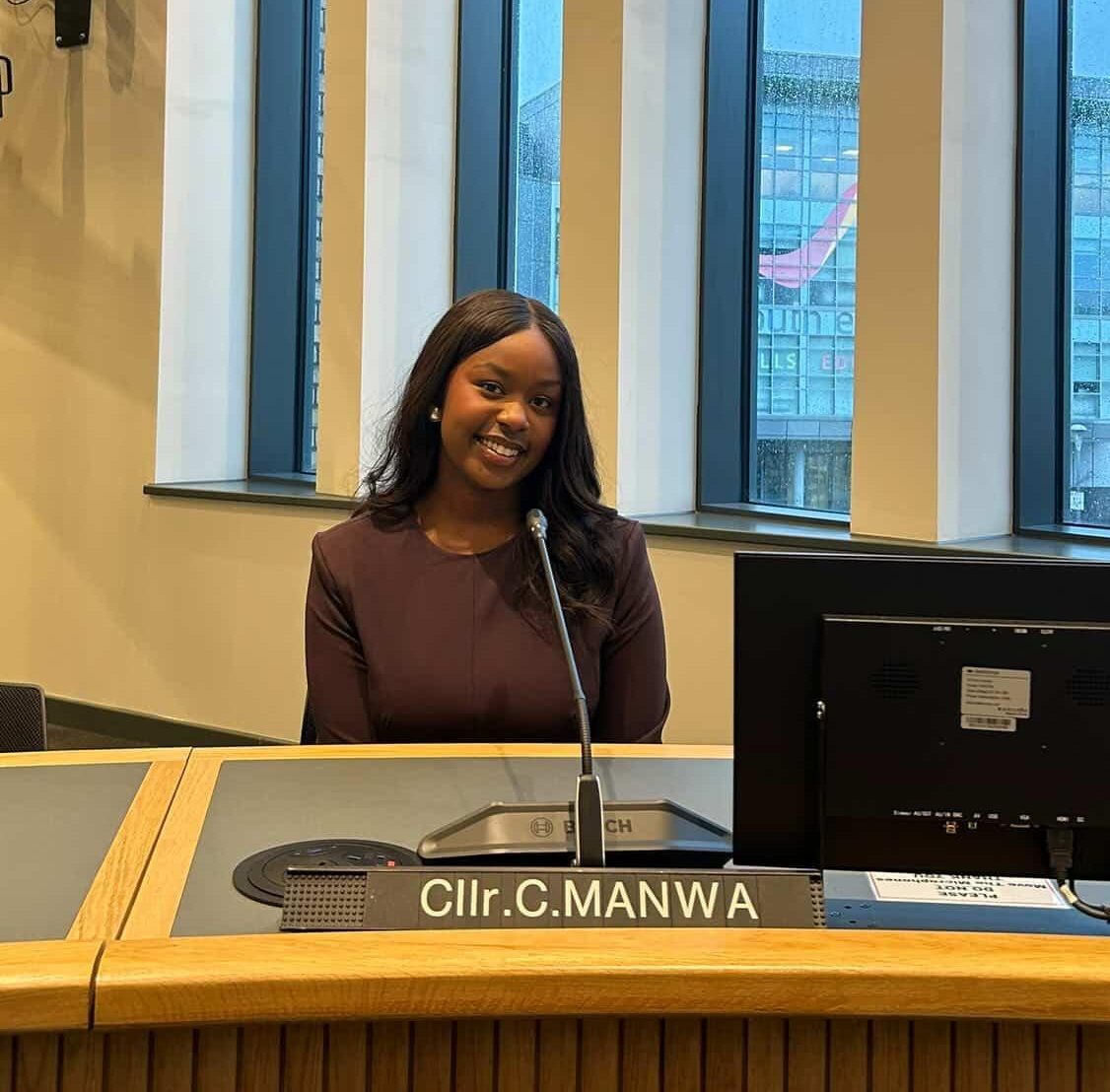
    The local elections are taking place today, and with the pending results, it can be easy to get wrapped up in the party politics of it all. However, given the importance of representation in politics, it is important to remember that there are many individual candidates within these parties looking to represent the people in their area. And so I decided to speak with Cylcia Manwa, a 22-year-old councillor for Thurrock, who is running for re-election, to get her unique perspective on what it’s like to be a young councillor and how she hopes to build on her achievements and further deliver for the residents of Thurrock. 

    I started by asking Cylcia about her campaign and what she thinks are the biggest issues facing Thurrock.

    To this, she replied: “I think the biggest issue facing people in Thurrock is one that we are seeing across the country – the cost of living crisis. With soaring fuel prices, bills and the price of everyday items rising too, that’s definitely a challenge for people across the borough.  For our campaign, we are focusing on getting everyday services right for people, and reducing the council’s debt”.

    Being so young, it can be intimidating to enter such an intense space of politics. Given the issues her residents face, it may be easy to underestimate her ability as a young councillor. However, Cylcia cites her age as one of her unique strengths.

    “I think being a young candidate means you can get underestimated at times, as some people use my age to suggest I’m not capable of doing my role as a councillor. But I think my age is actually my strength – I’m able to connect and represent a demographic that doesn’t always get a say in our local government, and I know that age is by no means a determining factor for competency. I think my record over the past few years is proof enough that young people can hold positions of leadership, and do a good job at it, too!”

    In her role as a councillor, she has also worked on projects that centre on young people and help their development. She proves to be a stellar example of the importance of young people in politics, given that their concerns can often be overlooked in a space where their representation is the exception.

    “I’ve supported the building of a local Youth Zone, which should be completed by early next year – it will give young people in our community access to state-of-the-art sports facilities, extracurricular activities and a space where they can safely enjoy themselves and make new friendships. That’s something I’m really excited about”.

    Looking back on all her achievements so far she shares what she hopes to continue doing if she is chosen by voters once again.

    “In the 3 years I have served, I have sat on several committees advocating for the community, held surgeries and spoken to residents, and helped residents through casework. I bring a fresh perspective as a young person in the borough, and I hope to continue doing that, should I be re-elected”. 

    “I want to continue being a champion for underrepresented communities, and especially with the rhetoric of the far right seeping into our politics, I want to lead with a vision of hope that unites our local community instead of dividing it”.

    No matter their result, it is clear that Cylcia is an inspiration to young people, especially young black women and girls seeking political careers. She has done so much for someone so young and will only continue to do greater things as her career progresses.

  • Could the Local Elections be the End for Starmer?

    Could the Local Elections be the End for Starmer?

    Sir Keir Starmer’s premiership has been anything but smooth sailing; if anything, he has been tiptoeing on the edge of his demise for a large majority of it. It does, however, feel as though the end could be near for him, as the local elections that are set to take place this week may be the final nail in the coffin.

    What do the polls say?

    The polls for the upcoming elections do not paint a pretty picture for Labour, with several expected losses. Pollsters have predicted that the party could lose an astonishing 1850 council seats.

    A potential outcome of such a loss of seats is the party losing control of the Welsh Parliament, the Senedd, which it has dominated since its creation in 1999.

    Polling shows Labour’s vote share in Wales falling by more than half. This would push them into third place with Reform and Plaid Cymru competing for first.

    Starmer already has the poorest local election performance of modern prime ministers, losing 66% of seats in 2025. This year could be even worse, with projections suggesting a 74% loss of seats. Such a catastrophic result will put immense pressure on the PM and raise several questions about the future and viability of his leadership.

    Rumblings of a Leadership Contest

    There have already been rumblings around the Labour Party that candidates are lining up to take the Prime Minister’s place. According to the Telegraph, Health Secretary Wes Streeting is ready to launch a leadership contest, having secured the 81 MPs needed to trigger a contest.

    The PM was reportedly made aware of Streeting’s potential plans after a staff member accidentally texted details of his plans.

    Streeting denied these plans, reportedly dismissing them as a “fishing expedition” by journalists in a WhatsApp chat of Labour MPs.

    Additionally, a spokesperson for the Health Secretary told the Telegraph, “Wes has said repeatedly that he supports the Prime Minister.

    “He is completely focused on his job, in which he has cut waiting lists to their lowest level for three years and got ambulances arriving faster than for half a decade.”

    Additionally, Angela Rayner and Andy Burnham are emerging as potential opponents.

    There have been reports that Burnham is preparing another attempt at securing a Commons seat to oust Sir Keir Starmer as Labour leader.

    Why is Starmer so Unpopular?

    Starmer’s 2024 landslide was a paradox: a major electoral victory built on a weak foundation of public popularity. Furthermore, he has only continued to fall further out of favour due to several controversies, most notably his appointment of Peter Mandelson, the former Labour Party politician, lobbyist and diplomat who had continued his friendship with the infamous convicted child sex offender Jeffrey Epstein.

    A YouGov poll shows that as of April this year, 70% of adults in the UK believe that Starmer is doing badly as Prime Minister.

    Alongside Starmers’ growing disapproval, there has been growing approval for Reform UK and the Green Party. The Green Party has seen a historic increase in membership under Zack Polanski’s leadership. Nigel Farage’s approval has decreased since 2024, but the party remains in a strong position to take several seats from Labour.

    Notably, there is a general lethargy towards Starmer because he has trapped himself in a centrist corner. A lot of people find him quite boring and do not know what he stands for, and so there is no enthusiasm towards him. His respective competitors, however, have a much clearer spot on the political spectrum. Love or hate what Zack Polanski and Nigel Farage stand for, but they very clearly stand for something, and this is proving to be a major advantage.

    It would be historic levels of success for what we traditionally refer to as ‘minor parties’ and signal the growing disillusionment with the two-party system. It is a peek at the future of the British government and even the potential outcome of the next general election. For example, Reform is estimated to win 2,260 councillors, and if they do, the potential for a Reform government is no longer unfathomable. 

    For so long, the two-party system has held steadfast. It has been hard to envision its end. As a result, for years, people have tactically voted for the two main parties to keep the other out of power because that was the only way the system could operate. 

    However, we now have a situation where people are so fed up with the system that they are willing to take a risk and abandon it. As a result, Reform and the Greens are likely to be very successful, and it will be Starmer who bears the consequences for Labour.

  • VICTORY FOR EUROPE AND DEMOCRACY?: HUNGARY OUST AN AUTOCRAT

    VICTORY FOR EUROPE AND DEMOCRACY?: HUNGARY OUST AN AUTOCRAT

    In the historic election that saw record turnout, autocrat Viktor Orbán was ousted after 16 years, and opposition leader Péter Magyar won a landslide victory. 

    The results, based on more than 98% of counted votes, put his Magyar Tisza party on course for an incredible 138 seats, with Orbán’s Fidesz on 55 and the far-right Our Homeland on six. 

    Following the victory, Péter Magyar told a crowd of his jubilant supporters, “We did it,”… “Together we overthrew the Hungarian regime.”

    This election was not between the traditional left-right dichotomy, but between democracy and autocracy. Magyar is himself a conservative who had once been part of Orbán’s circle. However, like many Hungarians, he became disillusioned with the direction the autocrat was taking the country. As a result, he gained support across the political spectrum in his bid to undo the damage and restore democracy.

    What had Orban done?

    During Orbán’s 16 years of rule, he restructured Hungary’s state institutions, limiting the powers of the constitutional court, reducing the number of parliamentary seats from 386 to 199 and redrawing district lines to benefit his party, expanding executive influence over the judiciary and taking control of and censoring the media. 

    On the international stage, he has isolated Hungary from Europe by pursuing a sovereigntist and eurosceptic foreign policy. He was an ally of Russian President Vladimir Putin, and regularly blocked funds to Ukraine and opposed sanctions against Russia. 

    Sky News Moscow correspondent Ivor Bennett described Mr Orban as a “Russian Trojan horse acting in Moscow’s interest”, whom EU leaders will be glad to see the back of. 

    He was also a close ally of President Donald Trump and has been a model for other far-right figures across Europe and the US, hence the endorsements of these leaders, including an official visit by the US vice-president, JD Vance, just days before the election. Orbán’s government also frequently clashed with the EU over judicial independence, migration, and LGBTQ+ rights. 

    What was Magyar promising?

    Magyar ran a campaign promising to crack down on corruption, repair Hungary’s dwindling healthcare system, and lower the cost of living. He also promised to distance the country from Ukraine and restore ties with the EU and Ukraine. He took his campaign around villages, town squares and cities, rallying Hungarians who had enough of the corruption. 

    He said Hungary would “never again be a country without consequences” and promised to establish a national asset recovery office that would ensure the “political and economic criminals” who “stole from the country” would be held responsible.

    Orbán’s campaign, on the other hand, centred on the Ukraine war. His main tactic was stoking fear that the country could be dragged into the Ukraine war if Fidesz did not win. This, however, proved insufficient as most Hungarian voters were no longer afraid that the country could be drawn into the conflict: according to polls by the independent political research institute Policy Solutions, the number of Hungarians who fear they could be dragged into the war has halved in recent years.

    Why is this important?

    This is a blow to the wider far-right movement across Europe. It is a warning to those groups that policies of hate and division are limited: they will run out of enemies to defeat and lose the trust of voters who aren’t receiving any benefits from their rule. Over time, the focus shifts and the leader becomes subject to more scrutiny. Eventually, it becomes clear that their policies aren’t tools to help the people but to consolidate their own power and erode the institutions that hold them accountable. Therefore, it signals to Orbán’s admirers on the right that rhetoric can only get them so far; if their actions are detrimental to the people, their power will run out. 

    This is a major victory, not just for Magyar but for democracy. It shows that the brand of far-right politics that devalues and erodes liberal democracy is going out of fashion. Magyar himself wasn’t exactly the perfect upstanding candidate, as mentioned above; he was a part of Orbán’s circle up until 2024. Additionally, he has his own history of controversies, which include domestic violence charges. He wasn’t a candidate on the opposite side of the spectrum, promising left-wing socialist policies; rather, he was someone who, like many Hungarians, had realised that enough was enough. This really puts into perspective just how detrimental Orbán’s rule was, and how desperate the Hungarian people were for change. 

    The road will not be easy, and there is no guarantee that it will be successful. Democracy will not be restored overnight. However, the result is a starting point; it’s a genuine chance to undo past mistakes and shows that perceived unlimited power has its limits. 

  • The Hidden Costs of Generative AI: Why You Should Rethink Your Usage

    The Hidden Costs of Generative AI: Why You Should Rethink Your Usage

    Photo by Solen Feyissa on Unsplash

    The use of Generative Artificial Intelligence (AI) has massively increased in recent years, making it hard to imagine the world before it. Whether it be for homework assignments, university essays, advice, or information, people are running to AI bots such as ChatGPT, Gemini, and Grok to get the answers. Given how useful it appears to be, the question right now is, why wouldn’t you use it? After all, it can make life a lot easier, and everyone is using it. While this is true, there are costs and consequences of its use that more people need to be aware of and concerned about.

    Generative AI vs Traditional AI: Understanding the Difference 

    AI has been a longstanding feature of daily life and a cornerstone of technology for years. Many of the tools and platforms we rely on today have integrated AI to improve efficiency long before the current generative AI boom. However, the rise of generative AI has marked a dramatic shift in traditional uses of AI and our understanding of it. 

    Traditional AI is task-oriented intelligence, which means it is rule-based AI that relies on pre-programmed rules and algorithms to perform specific tasks. It analyses data, identifies patterns, makes predictions and makes decisions based on logical reasoning, which allows it to carry out tasks such as recognising images, recommending products or answering specific queries. Voice assistants such as Siri and Alexa, recommendation engines on Netflix or Amazon, or Google’s search algorithm are all examples of traditional AI. They follow specific rules to carry out a specific task; they don’t create anything new. 

    Generative AI, on the other hand, does create something new. As opposed to traditional AI, which merely analyses and predicts, generative AI innovates and creates entirely new outputs from its training data. It goes beyond recognising patterns by learning them and using them to generate text, images, music or even code. For example, platforms like ChatGPT and Gemini can mimic human behaviour and creativity by engaging in conversation and producing new content from simple prompts. 

    A lot of people find it useful for completing menial tasks such as writing emails, cover letters or resumes. It can make life easier and improve productivity. For university students, generative AI can be a massive help with heavy workloads and reading lists. Instead of stressing about deadlines, you can get ChatGPT to provide a summary of required reading, an outline for an essay or even the whole essay. 

    For some people, it can even be a useful tool for advice or support, given that therapy can be hard to access. ChatGPT can provide help instantly. Furthermore, it can improve workplace efficiency. Gen AI is already being integrated into our daily learning and work tools, such as Copilot within Microsoft Office, or the AI content generator in Grammarly. There are clear benefits of generative AI; however, alongside these benefits, there are downsides to the tool that should cause concern to those who use it.

    Sexual Abuse

    One of the major harms caused by generative AI is its ability to create indecent images of children and women, as it has made it easier for people to create images and videos that qualify as sexual abuse and sped up the rate at which they are spread. Elon Musk’s AI platform Grok has been under fire recently for this very reason. Many users have been entering prompts such as: “Hey @Grok, remove her clothes” into the chatbot, and receiving exploitative images instantly. 

    The Internet Watch Foundation(IWF) which tackles child sexual abuse online have warned that AI is becoming a ‘child sexual abuse machine’ and adding to dangerous record levels of online abuse. 

    According to IWF analysts, new data shows that 2025 was the worst year on record for child sexual abuse material, and there has been a “frightening” 26,362% rise in photo-realistic AI videos of child sexual abuse, often including real and recognisable victims. Of all the AI-generated videos of child sexual abuse discovered by the IWF in 2025, 65% were so extreme that they were categorised as Category A.

    Generative AI has enabled this material to be made by criminals with minimal technical knowledge at an alarming scale. This has extremely harmful effects on children whose likeness is used, as well as further normalising sexual violence against children. There is now increasing pressure on these AI platforms to enforce stricter regulations to prevent such abuse from occurring. Earlier this month, Malaysia and Indonesia blocked access to Elon Musk’s AI chatbot Grok for this very reason.

    The UK government has also taken action following a long week of growing pressure to take the matter seriously. The Secretary of State confirmed that legislation to ban AI ‘nudification’ tools will be brought forward as a priority.

    She also stated that the Online Safety Act already offers significant protections against AI harms, and pledged to address any gaps, including through legislation. ‘

    Cognitive Development

    Another harm concerns cognitive development. A study at MIT found that using ChatGPT may be harming our critical thinking abilities. The study divided 53 subjects aged 18-39 years old from the Boston area into three groups and asked them to write several SAT essays using OpenAI’s ChatGPT, the Google search engine and nothing at all. The researchers used an EEG to record the writers’ brain activity and found that of the three groups, ChatGPT users had the lowest brain engagement and “consistently underperformed at neural, linguistic and behavioural levels’. According to them, those who used ChatGPT became lazier with each subsequent essay over the course of several months, with many simply resorting to copy and paste by the end of the study. 

    The group that wrote essays using ChatGPT all produced very similar essays that were described as “soulless” by the teachers that marked them and lacked original thought. The EEGs revealed low executive control and attentional engagement. 

    The brain-only group, on the other hand, showed the highest neural connectivity, especially in the alpha, theta and delta bands, all of which pertain to creativity ideation, memory load and semantic processing. According to researchers, this group was more engaged and curious and expressed higher satisfaction with their essays.

    The group which used Google Search also expressed high satisfaction and active brain function.

    This suggests that reliance on generative AI platforms at the academic level can harm learning, especially for young users. The paper has not yet been peer reviewed, and its sample size is quite small but its main author, Nataliya Kosmyna, felt that it was important to release the findings in order to elevate concerns about the impact of such a reliance on ChatGPT for immediate convenience, as it is long-term brain development that stands at risk.

    “What really motivated me to put it out now, before waiting for a full peer review, is that I am afraid in 6-8 months, there will be some policymaker who decides, ‘let’s do GPT kindergarten.’ I think that would be absolutely bad and detrimental,” she says. “Developing brains are at the highest risk.”

    Mental Health 

    This risk isn’t limited to our critical thinking skills, as generative AI can be detrimental to our mental health. Other studies have found that generally, the more time users spend talking to ChatGPT, the lonelier they feel. 

    A report by the British Medical Journal highlighted that AI-driven psychosis and suicide are on the rise. It acknowledges the fact that demand for mental health services has increased, and the rise of ChatGPT has provided many with an outlet to discuss their mental and emotional distress. However, according to the report, this use of chatbots in the self-treatment of mental health is becoming more of a problem than a cure. It points to the examples of several US teenagers, including 16-year-old Adam Raine and 14-year-old Sewell Seltzer III, who are known to have died by suicide after conversations with AI chatbots. The parents of these children have alleged that AI chatbots exacerbated or encouraged suicidal ideation.

    Sewell’s mothertold the BBC: “It’s like having a predator or a stranger in your home, and it is much more dangerous because a lot of the time children hide it – so parents don’t know.”

    It was only after he had taken his own life that Ms Garcia and her family discovered a huge collection of messages between Sewell and a chatbot based on Game of Thrones character Daenerys Targaryen.

    She says the messages were romantic and explicit, and, in her view, at fault for her son’s death by encouraging suicidal thoughts and asking him to “come home to me”.

    In another case, Stein-Erik Soelberg committed murder-suicide after spending hours a day talking to the chatbot and sharing his delusions. The 56-year-old allegedly killed his mother and then himself following a parsing spiral as a result of conversations with AI, and now the victim’s estate is suing OpenAI. This is not the only suit that has been filed against OpenAI; five other families have filed wrongful death lawsuits against OpenAI, alleging that ChatGPT encouraged their loved ones to kill themselves.

    The Environment 

    The rapid increase in the use of generative AI also has a devastating impact on the environment. Despite hopes that AI can help tackle some of the world’s biggest environmental emergencies, there is a negative side to the AI boom, according to a growing body of research. This is because the data centres that are needed to house AI servers produce electronic waste and consume large amounts of water. They also rely on critical minerals and rare elements, which are often mined unsustainably and use massive amounts of electricity, which increases the emission of greenhouse gases.

    “There is still much we don’t know about the environmental impact of AI, but some of the data we do have is concerning,” said Golestan (Sally) Radwan, the Chief Digital Officer of the United Nations Environment Programme (UNEP). “We need to make sure the net effect of AI on the planet is positive before we deploy the technology at scale.”  

    Again, it is generative AI that is driving these concerns as the power density it requires is a lot more than traditional AI. Noman Bashir, lead author of  “The Climate and Sustainability Implications of Generative AI,” co-authored by MIT colleagues, stated: “What is different about generative AI is the power density it requires. Fundamentally, it is just computing, but a generative AI training cluster might consume seven or eight times more energy than a typical computing workload”.

    At the end of last year, figures compiled by Dutch academic Alexis de Vries Gao revealed that the AI boom has caused as much carbon dioxide to be released into the atmosphere in 2025 as emitted by the whole of New York City. He also found that AI-related water use now exceeds all of global bottled water demand. This study used technology companies’ own reporting, and following it, the Dutch academic has called for stricter requirements and for them to be more transparent about their climate impact.

    Additionally, residents in areas near data centres are also significantly impacted. For example, in Texas, where AI data centres used 463 million gallons of water, residents were told to take shorter showers and cut back on water usage due to ongoing drought conditions.

    In rural Georgia, Metallica, Instagram and Facebook’s parent company have built a massive data centre which is spoiling the water in the area. Beverly Morris, a resident, told the BBC that a private well is her only source of water, and since construction began on the data centre, the water has turned murky, with sediment now in her taps that wasn’t there before

    A Final Note

    Generative AI can be useful but there are clear downsides to the tool that can cause significant harm. People need to be aware of and understand the impacts of their AI usage because these consequences negatively impact society. Humans should be able to think for themselves and think critically about the world around them. Students need to be able to do their own work, we should not be so careless towards the environment, and indecent images of children should not be able to be generated online and spread at such a rapid rate.

    It can be incredibly tempting to use ChatGPT to ease the burden of life’s menial tasks, or to ask it for advice, or to create quick, funny images, but when doing that, people need to remember the cost. After all these are tasks we have been doing since before the technology existed so we don’t have to become so reliant on it, we cannot relinquish our minds or our humanity to an artificial machine, because before we know it we will become mindless beings incapable of completing the simplest of tasks mistaking their state of meaningless existence for a comfortable and easily life. 

  • What Orwell’s 1984 Teaches Us about the Dangers of the Trump Administration’s  Lies

    What Orwell’s 1984 Teaches Us about the Dangers of the Trump Administration’s Lies

    “The Party told you to reject the evidence of your eyes and ears. It was their final, most essential command.” —George Orwell, 1984

    This quote from George Orwell’s 1984 has been doing the rounds across social media in light of the actions taken by the Trump administration following the killings by Immigration and Customs Enforcement (ICE) agents in Minneapolis. 1984 is one of the quintessential works within the dystopian genre, as it expertly depicts propaganda, extreme surveillance, totalitarianism, and the erosion of truth. The book follows Winston Smith, a low-ranking member of ‘the Party’, who is frustrated by the pervasive eyes of the party and its ruler, Big Brother. In the book, Orwell depicts a hypersurveillance state, where truth is whatever the Party or Big Brother says it is. 

    ICE in Minneapolis

    Following the Trump administration’s response to the murder of Alex Pretti, more equivalences are being made to Orwell’s novel. 

    Alex Pretti, a 37-year-old American intensive care nurse for the United States Department of Veterans Affairs, was shot multiple times and killed in broad daylight by an ICE agent in Minneapolis. This is the second ICE killing in Minneapolis, as it comes just weeks after Renee Good, a 37-year-old American woman, was also shot and killed by an ICE agent, Jonathan Ross. In both incidents, ICE agents acted out of control and took fatal measures that were not necessary. 

    The Ministry of Truth

    Following Renee’s killing, a statement by the White House deputy chief of staff, Stephen Miller, was reiterated by the Department of Homeland Security account on X. In the statement, Miller says, “To all ICE officers: You have federal immunity in the conduct of your duties. Anybody who lays a hand on you, tries to stop you or obstructs you is committing a felony. You have immunity to perform your duties, and no one—no city official, no state official, no illegal alien, no leftist agitator or domestic insurrectionist—can prevent you from fulfilling your legal obligations and duties”.

    The Trump administration was also quick to label her a ‘domestic terrorist’, with the president taking to Truth Social to claim that she was ‘very disorderly, obstructing and resisting’ and then ‘violently, willfully, viciously ran over the ICE agent who seems to have shot her in self-defence’. Video footage from the incident, however, shows that this was not the case; in fact, the last thing Renee said was “That’s fine, dude. I’m not mad at you”. Renee Good presented no threat, and neither did Alex Pretti.

    Contrary to the defamatory claims made by the Trump administration, Pretti was holding his phone, not a gun, before he was beaten down and pepper sprayed. Alex Pretti was defending a woman who was being manhandled by ICE agents. There are several videos from witnesses that multiple, credible news sources have analysed and verified, which do not support claims made by the administration; in fact, they leave no room for deniability or a different version of events. 

    There are stark parallels between the actions taken by Big Brother’s ‘Ministry of Truth’ and the Trump administration’s response to the ICE killings. In the novel, the Ministry of Truth concerns itself with lies; it is a deliberate contradiction. It is responsible for the propaganda of the Party through rewriting history and controlling the news media, entertainment, education, and the fine arts.

    Trump is a known liar, but what we are seeing here is the erasure of truth at a systemic level. Much like the Ministry of Truth, the entire administration is promoting the same lies that brandish the victims of these shootings as ‘domestic terrorists’ and thus justify the actions taken by these ICE agents. Vice President JD Vance reposted a statement by Stephen Miller claiming that Pretti was ‘an assassin’ who ‘tried to murder federal agents’. 

    What’s worse is that we live in the digital age, governments and law enforcement have great means of surveillance at their disposal, but citizens can also surveil them when things like this happen with their phones. Instead of waiting for bodycam footage from the perpetrator, victims and witnesses can have their own footage. There is an abundance of credible evidence from the people who witnessed Alex Pretti’s execution that contradicts the version of events that the administration has concocted. This strategy of plausible deniability is merely an attempt for ICE as an agency to escape accountability to ensure it can continue carrying out Trump’s mission. 

    Arendt in Orwell and Reality

    Hannah Arendt can help us understand this tactic of lying. She talks about facts being fragile because they are contingent, which means that there is always a possibility for alternative realities. For example, in her book ‘Between Past and Future’, she states: “Since everything that has actually happened in the realm of human affairs could just as well have been otherwise, the possibilities for lying are boundless, and this boundlessness makes for self-defeat”.

    With regards to the ICE killings, the administration is able to lie because many people can conceive an alternative story where the ICE agents were acting in self defense, where Alex Pretti did pull again, where Renee Good was a hired agitator part of a wider left wing conspiracy tasked with assaulting law enforcement. Though the evidence shows that this was the case, it still could have been, the very possibility of it enables this alternative reality to take off.

    We see it in 1984 when the Ministry of Truth constantly contradicts itself through altering historical records, changing wartime alliances from Eastasia to Eurasia, fabricating the existence of “Comrade Ogilvy,” and revising economic forecasts. This is all possible due to the contingency of facts. 

    In 1984, Orwell takes it further by eroding what Arendt labels a rational truth. A rational truth pertains to mathematical, scientific or philosophical truths that are actively discovered and independent of opinion. These truths are harder to erode because there is no alternative imagination. In 1984, Big Brother coerced the citizens in Oceania into believing the mathematical falsehood that 2+2=5. 

    Now the administration has not gone to such extremes yet but it is not hard to imagine a world in which they do because the scale at which they are already twisting the truth is a very slippery slope. The administration cannot be allowed to lie about these killings; ICE agents and the organisation must face accountability.