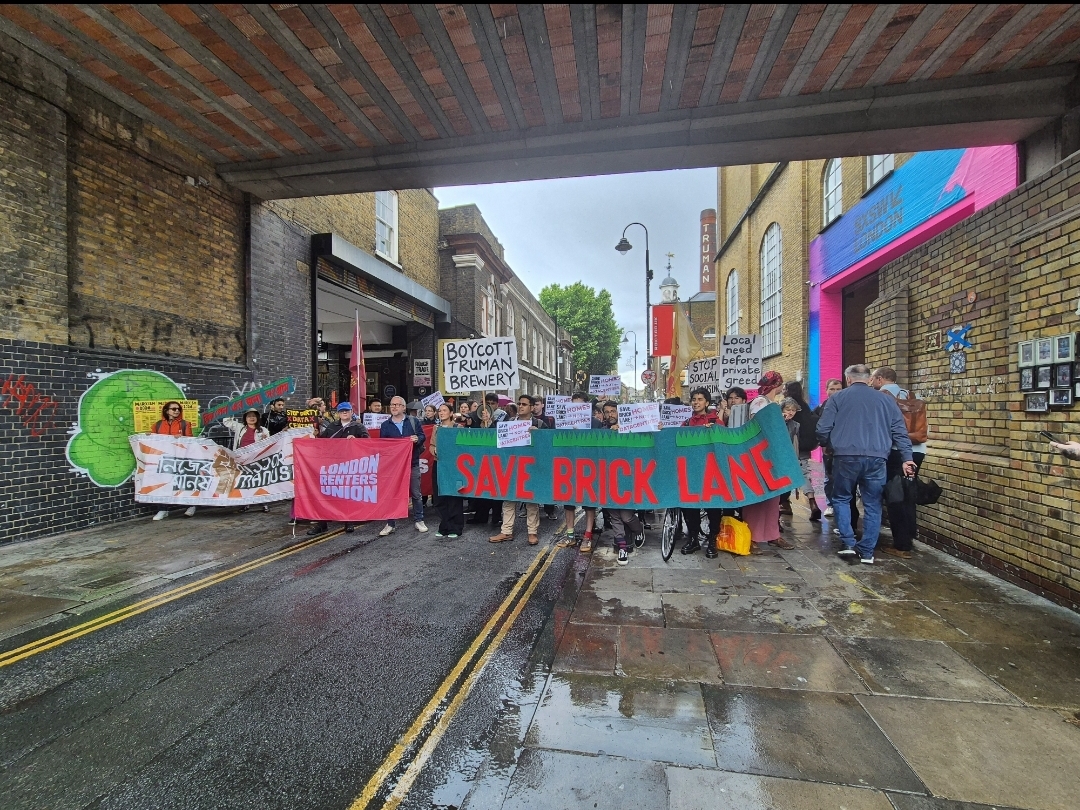
Last week, several ‘Save Brick Lane’ campaigners gathered outside the Truman Brewery before making their way to the entrance of the SXSW festival to reaffirm their opposition to the proposed construction of a data centre in the area.
The Truman Brewery is a historic site in Brick Lane and an important part of the local community. Since closing down in 1989 after being one of the world’s largest breweries, it has transformed into East London’s revolutionary arts and media quarter. However, its owners, the Zeloof family, now want to turn this quarter into a data centre.
The proposed £500 million redevelopment scheme would see five new buildings providing offices, shops, restaurants, a cinema and a market as well as the data centre. Also included in the proposals are 44 new homes, but only 11 would be designated affordable, and only six would be available for social rent.
London is a prime location for data centres due to its proximity to the country’s financial district, as shorter physical distances between traders and data centres mean that instructions can be processed faster, which gives traders a competitive advantage in an industry where milliseconds matter. Tower Hamlets is home to the UK’s largest financial district, Canary Wharf, and so it is no surprise that these plans for the borough have been proposed.
The SXSW festival is an annual festival for music, film and technology. This year, it was hosted by the Truman Brewery and platformed those embracing the AI boom. The rapid growth of AI in recent years has also contributed to the increased demand for data centres, as the technology needs these centres to become more efficient.
Campaigners felt compelled to protest the event and bring more awareness to the consequences of the proposed data centre.
The ‘Save Brick Lane’ campaign is highlighting the damage that would be done to the community if a data centre were built, and pushing for the construction of more social housing instead.
Tower Hamlets has over 28,000 families on the council housing waiting list. An alternative proposal has shown that the site could help provide 350 new homes. A data centre would seriously harm the community, given the large amounts of energy and water they consume.
We have seen these consequences in the US, where residents in rural Georgia have had their water turn murky with sediment, their water pressure decrease, their appliances stop working, and an expected increase in their water bills following the construction of Meta’s data centre in the area. As a result, data centres are becoming a crucial aspect of the political climate in the US; thus, it was only a matter of time before it came over here, and much like the US, communities aren’t going down without a fight.
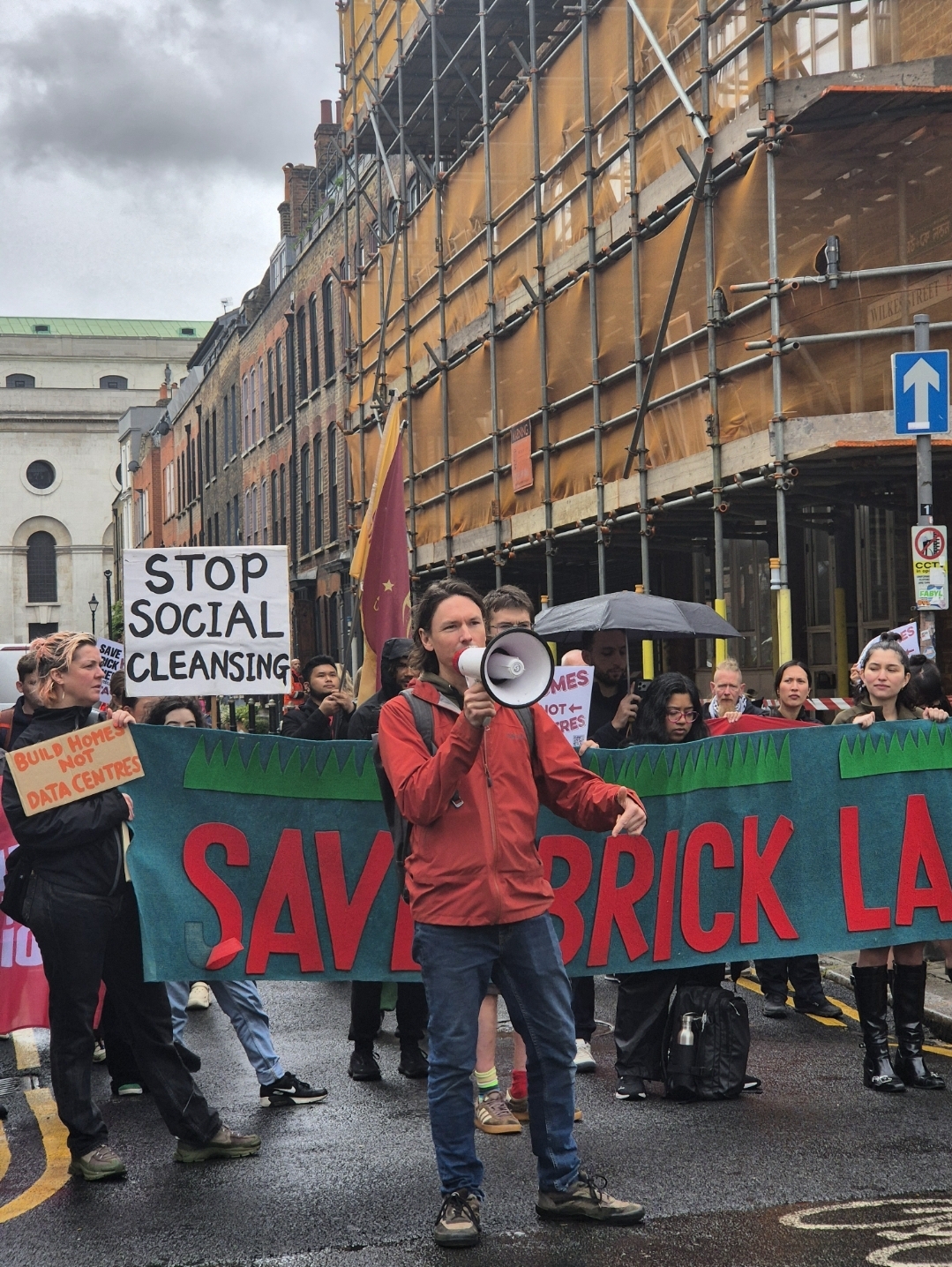
I spoke about this with Oliver Hayes, a campaigner for Global Action Plan, a climate change charity. I asked him why he was campaigning and what he was hoping to achieve.
“We’re here in the heart of East London, where Truman Estates want to redevelop the iconic Truman Brewery, not for homes, which the local community has been crying out for, but instead for a data centre, and that is just typical of what we’re seeing across the country”, he told me.
Global Action Plan is calling for a moratorium on data centres given the immense cost they end up having on communities: “Data centres are using all of the available grid connections which means that housing projects cant get finished, people cant move into new homes.
We know that the vast majority of these data centres are not doing useful things, some of them are, but the majority are chatbots, slop machines, grok deepfakes, this is not critical technology”.
I also asked him about the situation with data centres in the US and how that is now seeping into British politics, and he pointed to the strong resistance taking place in America that he is confident will catch on here in the UK.
“The politics of it[data centres in the US], that is fascinating, is that across the board there is opposition, no one wants this, once people see what happens to their community, whether they’re a red state or a blue state they don’t want it, and I think that is coming here to the UK because it doesn’t bring any benefits”.
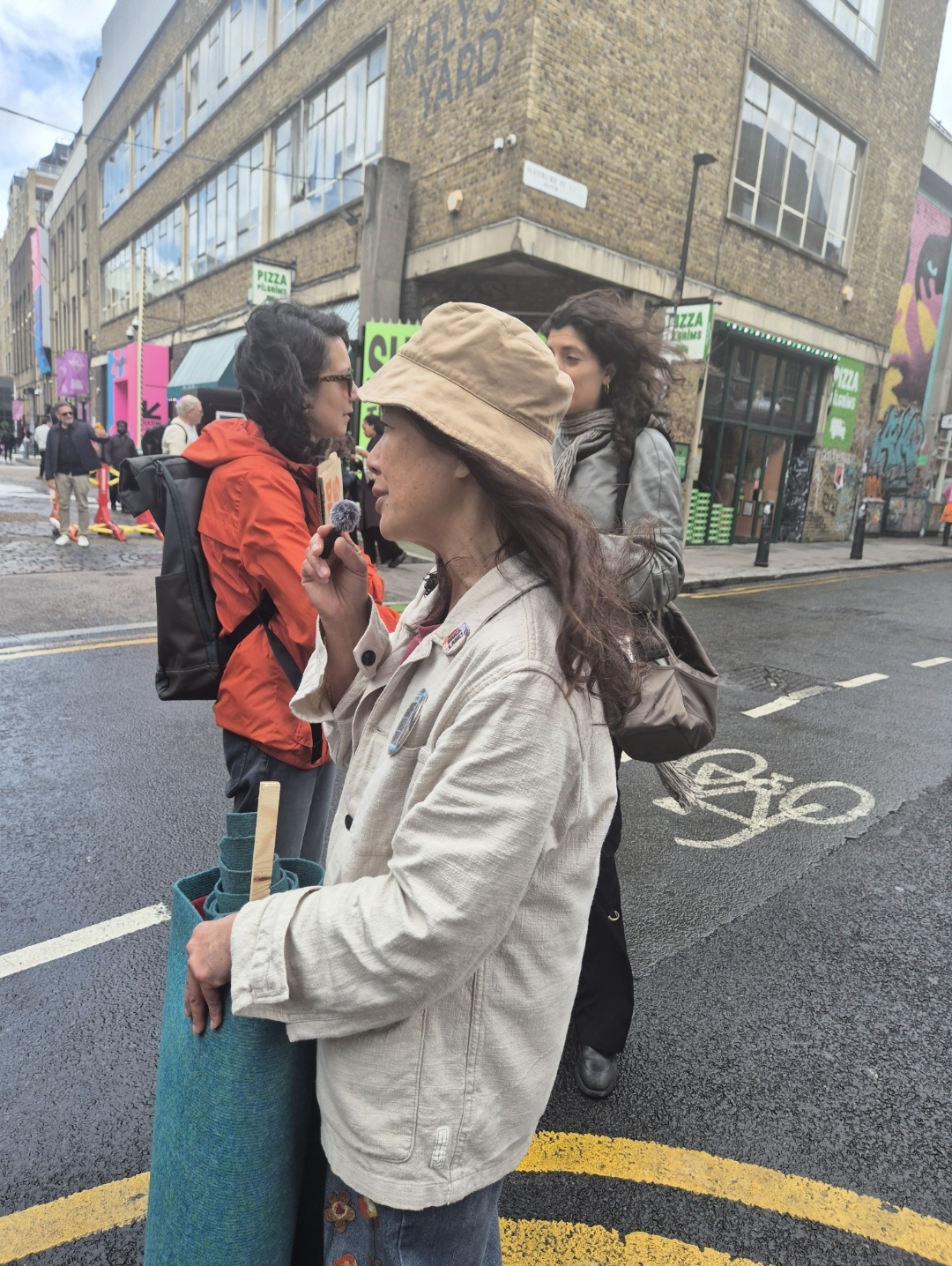
I later spoke to Susana Kow, a Tower Hamlets resident of 10 years, who told me about how what started as a campaign for more social housing had transformed into one opposing data centres, given the negative impact they would have on an already bad housing crisis. She stressed that the onus was on housing minister Steve Reed:
“We need social housing, so what is his decision going to be, is he gonna approve the data centre and ignore the housing crisis?, We hope not, so a word to Steve Reed is, please make the right decision.
There are better things to be built to preserve the culture and the heritage and to protect independent shops”.
Tower Hamlets has a strong Bangladeshi and immigrant population, who were integral to shaping the culture of the borough that we see today. I spoke to Shah Ashmina, a member of Nijjor Manush, a socialist organisation for Bengalis and Bangladeshis based in Britain, who was also present at the protest.
“This area of Tower Hamlets has been a refuge for immigrants since the 1800s; it has been a diverse and working-class area for eons. The culture that is so coveted by corporations and ‘developers’ was built by Jewish immigrants, Bengali immigrants and working-class East Enders. The authenticity that makes Brick Lane so vibrant and fashionable belongs to the community. It belongs to the workers in the garment factories, the brick makers and the fishmongers. The reason that real estate in this area is so profitable is because of cultural capital made by working-class immigrants”.
On the proposals for the data centre, she echoed the message of the other campaigners I spoke with:
“The plans for this development put forward by the Truman Brewery ignore the needs of the community brazenly. Tower Hamlets is one of the local authorities with the highest levels of homelessness…. What they want to do to this community is not redevelopment, it is social cleansing.
The people who created the soul of Brick Lane are being priced out, so what happens when they have been replaced? How can Banglatown survive when Bengalis can’t afford it anymore? Brick Lane’s history is anti-capitalist, anti fascist and anti racist. From the Battle of Cable Street until now, Brick Lane belongs to working-class immigrants”.
While it remains unclear whether those in Westminster will take heed of the growing concerns and opposition to data centres from local communities, what is clear is that the Save Brick Lane campaign is one that is growing and will continue to grow so long as corporations are prioritised over communities.
Leave a Reply