Tag: elections

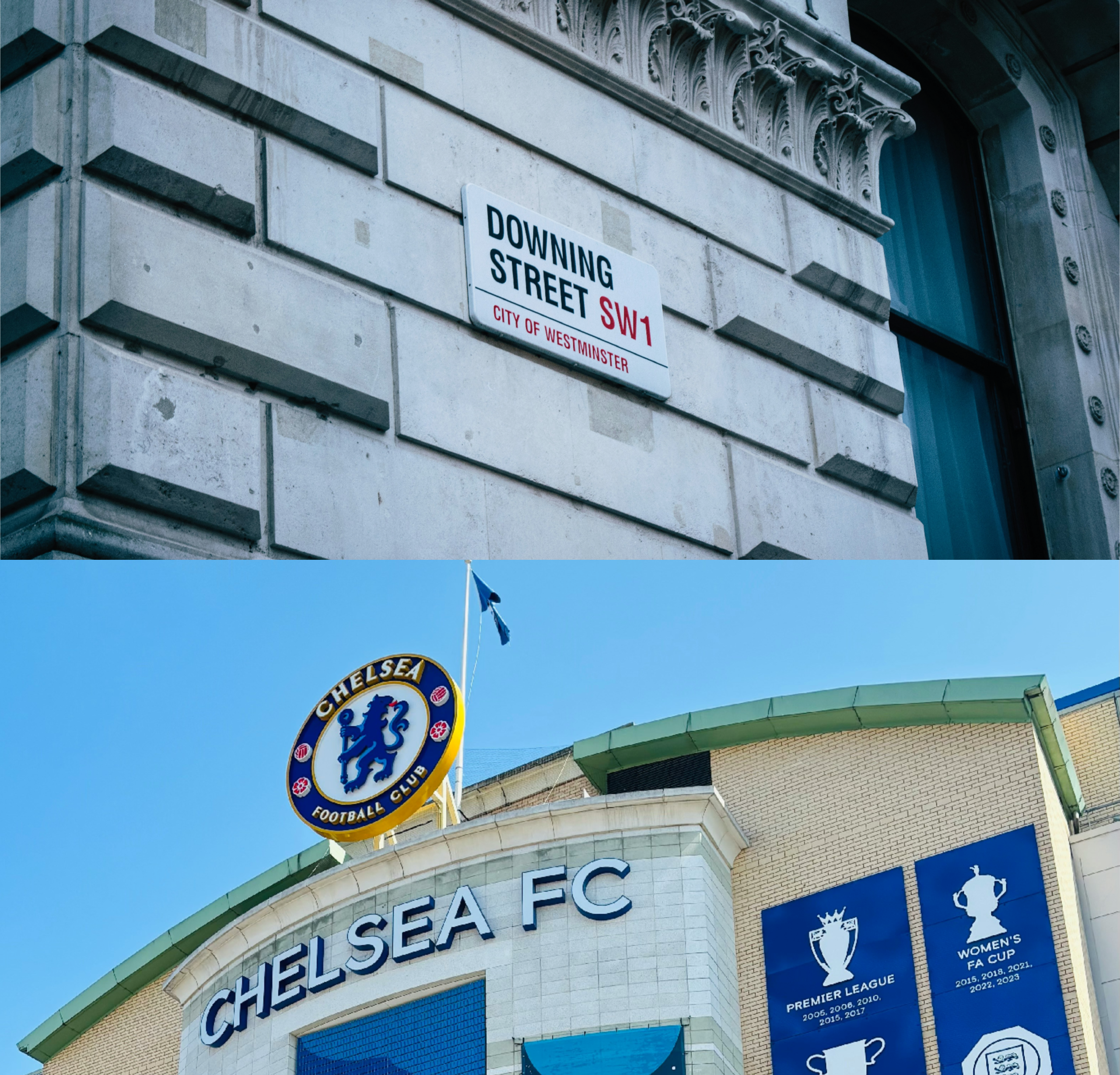
  • What do Chelsea FC and the UK Government have in common?

    What do Chelsea FC and the UK Government have in common?

    Last month, Keir Starmer announced his resignation as Prime Minister of the United Kingdom and leader of the Labour Party. After nearly 2 years at 10 Downing Street, he decided he was no longer the right person to take the country forward. In his resignation speech he said: “The question my party is asking now is whether I am best placed to lead us into the next general election. I have heard the answer of my parliamentary party to that question. And I accept that answer with good grace”.

    Starmer’s decision followed months of significant criticism and political pressure from the public, the opposition and his own party. Opinion polls indicated that he was the most unpopular prime minister in modern times. Many people felt he was not doing a good enough job.

    In 2024, Keir Starmer led his Labour Party to its biggest majority in Parliament this century, consigning the Conservatives to their worst-ever defeat. Whilst he won a large majority, he only won 33.7% of the total vote, representing the lowest vote share of any majority government in British history. 

    This staggering disparity is a direct consequence of the UK’s First-Past-the-Post electoral system, which rewards parties with concentrated support, rather than a party’s total national vote. FPTP is praised for creating strong and stable governments. However, the UK has seen 7 Prime Ministers in the last 10 years, suggesting that this electoral system is anything but unstable. The turnout at the 2024 election was only 60%, 7.6 percentage points lower than in 2019, further weakening Keir Starmer’s mandate.

    Several factors led to Starmer’s resignation. A disastrous performance in the May 2026 local elections severely damaged his authority and caused support within the party to drain away. Several high-profile figures, including former Health Secretary Wes Streeting and Defence Secretary John Healey, resigned from their positions, leaving Starmer without a viable bloc of support. To make matters worse for Starmer, Andy Burnham won a landslide in the Makerfield by-election, which cleared a definitive path for a top-tier challenger to re-enter parliament and directly challenge Starmer’s position.

    Ultimately, Number 10 has become a revolving door of Prime Ministers, much like Chelsea Football Club’s revolving door of managers. Both institutions have developed a reputation for replacing leaders in the hope that a new face can solve old problems. Chelsea has had 10 managers in the last 10 years and has become notorious for its willingness to sack managers, even when they have achieved great success.

    In football and in government leaders are under significant pressure from the media, public expectations and financial/ electoral stakes. Social media has exacerbated this pressure because there are now constant online reactions. As a result of this, leaders have less time to build and are expected to deliver immediately. Football clubs and governments therefore face a similar dilemma: Should they tolerate short-term setbacks in pursuit of long-term progress? Or prioritise immediate results, even if it means constant disruption?

    Chelsea has had some success in adopting this approach. In 2021, Thomas Tuchel transformed a struggling side into Champions League winners just months after Frank Lampard’s dismissal. Chelsea remains the only football club in London to win this title. However, Chelsea’s long-term record suggests that constant change is limited. While the club has enjoyed winning some major trophies through managerial turnover, it has struggled to establish the sustained dominance achieved by Manchester City. 

    In his first season at Manchester City, Pep Guardiola finished the season without a trophy for the first time in his managerial career. Despite this, the club’s hierarchy remained committed to his long-term vision. That patience was rewarded with multiple record-breaking seasons that included  Premier League titles, domestic cups and a Champions League trophy, creating one of the most successful eras in English football history. If Manchester City had adopted Chelsea’s approach, they might not have achieved the long-term success that they did.

    This can also be seen at Arsenal, where patience with Mikel Arteta allowed them to achieve success albeit in a different way. When Arteta was appointed in 2019, the club was far from competing for major trophies. His first seasons were marked by back-to-back 8th-place finishes in the league and criticism from supporters. However, Arsenal’s hierarchy resisted the pressure to make a quick change. Instead, they backed Arteta’s long-term vision, allowing him to reshape the squad, develop younger players and establish a new culture at the club. The results did not arrive immediately, but over time Arsenal became genuine Premier League title contenders, and won it earlier this year.

    At 10 Downing Street, in just two years, Keir Starmer has led several policy successes. Labour’s employment rights bill paved the way for significant new rights for workers on sick pay, parental leave and zero-hours contracts. He hailed it as “the biggest upgrade to workers’ rights in a generation” when it came into law in December. His government has also started a national rollout of free breakfast clubs for all primary school pupils, which Starmer called “a lifeline for parents” and an investment “in the next generation to give them the best start in life”. Despite what some might think, he has done well to combat immigration. In May last year, he promised that new immigration measures would see net migration fall “significantly” over the next four years. So far, it has been successful as over the last 12 months, according to this BBC tracker, net migration is 48% down, asylum claims are down 12%, and small boat arrivals are down 41%.

    It is clear that Keir Starmer’s government has not been a complete disaster, but ultimately he has not done enough to win the electorate’s favour. However, the electorate needs to understand that lasting reforms often require time to take effect, and replacing leaders before their policies can be implemented risks prioritising short-term political pressures over long-term outcomes.

    Chelsea and Westminster illustrate that in modern leadership, patience is in short supply and replacing the person at the top is often seen as the solution to institutional problems. Short-termism has become the norm, and people are becoming increasingly impatient. Whether in football or politics, replacing leaders can sometimes provide fresh momentum. But it can also become a substitute for confronting deeper organisational or institutional challenges.

  • Could the Local Elections be the End for Starmer?

    Could the Local Elections be the End for Starmer?

    Sir Keir Starmer’s premiership has been anything but smooth sailing; if anything, he has been tiptoeing on the edge of his demise for a large majority of it. It does, however, feel as though the end could be near for him, as the local elections that are set to take place this week may be the final nail in the coffin.

    What do the polls say?

    The polls for the upcoming elections do not paint a pretty picture for Labour, with several expected losses. Pollsters have predicted that the party could lose an astonishing 1850 council seats.

    A potential outcome of such a loss of seats is the party losing control of the Welsh Parliament, the Senedd, which it has dominated since its creation in 1999.

    Polling shows Labour’s vote share in Wales falling by more than half. This would push them into third place with Reform and Plaid Cymru competing for first.

    Starmer already has the poorest local election performance of modern prime ministers, losing 66% of seats in 2025. This year could be even worse, with projections suggesting a 74% loss of seats. Such a catastrophic result will put immense pressure on the PM and raise several questions about the future and viability of his leadership.

    Rumblings of a Leadership Contest

    There have already been rumblings around the Labour Party that candidates are lining up to take the Prime Minister’s place. According to the Telegraph, Health Secretary Wes Streeting is ready to launch a leadership contest, having secured the 81 MPs needed to trigger a contest.

    The PM was reportedly made aware of Streeting’s potential plans after a staff member accidentally texted details of his plans.

    Streeting denied these plans, reportedly dismissing them as a “fishing expedition” by journalists in a WhatsApp chat of Labour MPs.

    Additionally, a spokesperson for the Health Secretary told the Telegraph, “Wes has said repeatedly that he supports the Prime Minister.

    “He is completely focused on his job, in which he has cut waiting lists to their lowest level for three years and got ambulances arriving faster than for half a decade.”

    Additionally, Angela Rayner and Andy Burnham are emerging as potential opponents.

    There have been reports that Burnham is preparing another attempt at securing a Commons seat to oust Sir Keir Starmer as Labour leader.

    Why is Starmer so Unpopular?

    Starmer’s 2024 landslide was a paradox: a major electoral victory built on a weak foundation of public popularity. Furthermore, he has only continued to fall further out of favour due to several controversies, most notably his appointment of Peter Mandelson, the former Labour Party politician, lobbyist and diplomat who had continued his friendship with the infamous convicted child sex offender Jeffrey Epstein.

    A YouGov poll shows that as of April this year, 70% of adults in the UK believe that Starmer is doing badly as Prime Minister.

    Alongside Starmers’ growing disapproval, there has been growing approval for Reform UK and the Green Party. The Green Party has seen a historic increase in membership under Zack Polanski’s leadership. Nigel Farage’s approval has decreased since 2024, but the party remains in a strong position to take several seats from Labour.

    Notably, there is a general lethargy towards Starmer because he has trapped himself in a centrist corner. A lot of people find him quite boring and do not know what he stands for, and so there is no enthusiasm towards him. His respective competitors, however, have a much clearer spot on the political spectrum. Love or hate what Zack Polanski and Nigel Farage stand for, but they very clearly stand for something, and this is proving to be a major advantage.

    It would be historic levels of success for what we traditionally refer to as ‘minor parties’ and signal the growing disillusionment with the two-party system. It is a peek at the future of the British government and even the potential outcome of the next general election. For example, Reform is estimated to win 2,260 councillors, and if they do, the potential for a Reform government is no longer unfathomable. 

    For so long, the two-party system has held steadfast. It has been hard to envision its end. As a result, for years, people have tactically voted for the two main parties to keep the other out of power because that was the only way the system could operate. 

    However, we now have a situation where people are so fed up with the system that they are willing to take a risk and abandon it. As a result, Reform and the Greens are likely to be very successful, and it will be Starmer who bears the consequences for Labour.

  • Opinion: The UK’s Two-Party System Is Fragmenting

    Opinion: The UK’s Two-Party System Is Fragmenting

    One can no longer say, with absolute certainty, that the UK maintains a strong two-party system. The Conservative-Labour dominance that has been a staple feature of post-war British politics has never looked weaker. In recent years, we have seen the fragmentation of the two-party system as people have become increasingly apathetic and disillusioned towards the two mainstream parties. Smaller, less established parties have moved to the forefront of British politics. This rejection of the status quo was further reinforced by the Gorton and Denton by-election result last week. 

    The Green Party, which has gained significant momentum since Zack Polanski became leader, won the by-election with more than 40% of the vote. Hannah Spencer garnered 14,980 votes, Reform UK’s Matt Goodwin came second with 10,578, while Labour’s Angeliki Stogia was third with 9,364. This win by the Greens is extremely significant and historic because the seat had been held by Labour for nearly 100 years, making it one of Labour’s safest seats. In the 2024 General Election, Labour took the Greater Manchester seat with more than 50% of the vote. By winning the seat with 40% of the vote, Hannah Spencer overturned a massive 13,000-vote Labour majority. It is the first time that candidates from two parties other than Labour and the Conservatives have taken both first and second place in a Westminster by-election in England.

    Safe seats have long helped entrench the two-party system. The UK’s winner-takes-all, first-past-the-post electoral system means that larger, more well-established parties are rewarded as they have more concentrated support. With their support concentrated, they can secure seats with only a plurality of the vote. Smaller parties tend to have dispersed support spread too thinly across constituencies to translate into strong parliamentary representation. It is because of this that only Labour and the Conservatives have consistently been able to form governments. The Gorton and Denton result, however, suggests that this order is dwindling.

    The Green Party overturning a safe seat in such dramatic fashion signals great dissatisfaction with the Labour Party and suggests that Britain’s move toward a more fragmented, multiparty political landscape can no longer be dismissed or ignored.

    The signs of these seismic shifts were evident in the 2024 election results. While the Labour Party won an extremely significant majority, they only obtained 34% of the national vote share,  meaning that roughly two-thirds of voters opted for other parties. This was one of the lowest vote shares for a majority government in British history. It was also the most disproportionate election ever. The result, therefore, highlighted that even though large, established parties enjoy a structural advantage under the electoral system, they are not as dominant as they once were. Their ability to govern was down to the mechanics of the electoral system rather than securing majority support from the electorate. While Labour achieved decisive institutional power, the relatively low vote share signalled a weaker voter base and a more divided and volatile political landscape. The by-election confirmed this message, as it showed that two of the key foundations of Labour’s traditional electoral coalition have crumbled. 

    Angela Rayner, the former deputy leader of the Labour Party, said the result was a “wake-up call” that illustrated the party needed to be “braver”. She seemed to voice that Labour needs to move more to the left. Arguably, the Labour Party has lost itself in its attempts to neutralise the threat of Reform UK. Reform UK continues to lead the polls with a policy platform focused on immigration. Labour’s attempts to counter Reform UK have involved adopting elements of its opponent’s agenda and rhetoric. When the Labour government announced its immigration proposals, around 40 Labour MPs raised concerns about the impact they would have on migrants already living here, describing the retrospective approach as “un-British” and “moving the goalposts”.

    Labour’s approach, therefore, has contributed to shifting the Overton window, normalising ideas that were once considered fringe and creating political space for Reform UK’s platform. This has left many long-time Labour voters feeling disconnected from the party. The by-election confirmed this as the result shows that the Greens, who position themselves as the progressive left, can mobilise ethnic minorities and more left-wing Labour voters who feel politically homeless in Starmer’s Labour. Ultimately, Labour’s core voter base has been on the decline, but this recent result only reaffirmed this. 

    Exclusive polling following the election shows the Green Party have leapfrogged Labour in voting intention polls, as the second most popular UK party. The Greens, like Reform, are emerging as a serious, seat-winning electoral force. The old left and right no longer define politics – cultural issues are now a key factor. This further reinforces the UK’s shift towards a multiparty system. In a letter to his MPs, the Prime Minister said that the Green Party was no longer made up of “harmless environmentalists”. He recognises the electoral threat Labour now faces from both sides of the political spectrum. Despite this loss of a party stronghold and calls for him to resign, the Prime Minister pledged to“keep on fighting”.

    The Conservatives are faring even worse than the Labour Party, as they are struggling to maintain support. With several high-profile defections to Reform UK, it appears that the traditional political order, long defined by the Conservatives as the dominant right-wing party, is clearly eroding. There is still time for both parties to regroup before the next general election, but current trends suggest they cannot solely rely on their traditional bases. The threat of the minor parties is very real. Ultimately, the Gorton and Denton by-election is an urgent signal of the need to prepare UK democracy for a multi-party future. Many agree that a new electoral system is needed to reflect this new political reality.