Author: Imani Adesanya

  • Iran protests slow after brutal crackdown by the regime 

    What has happened?

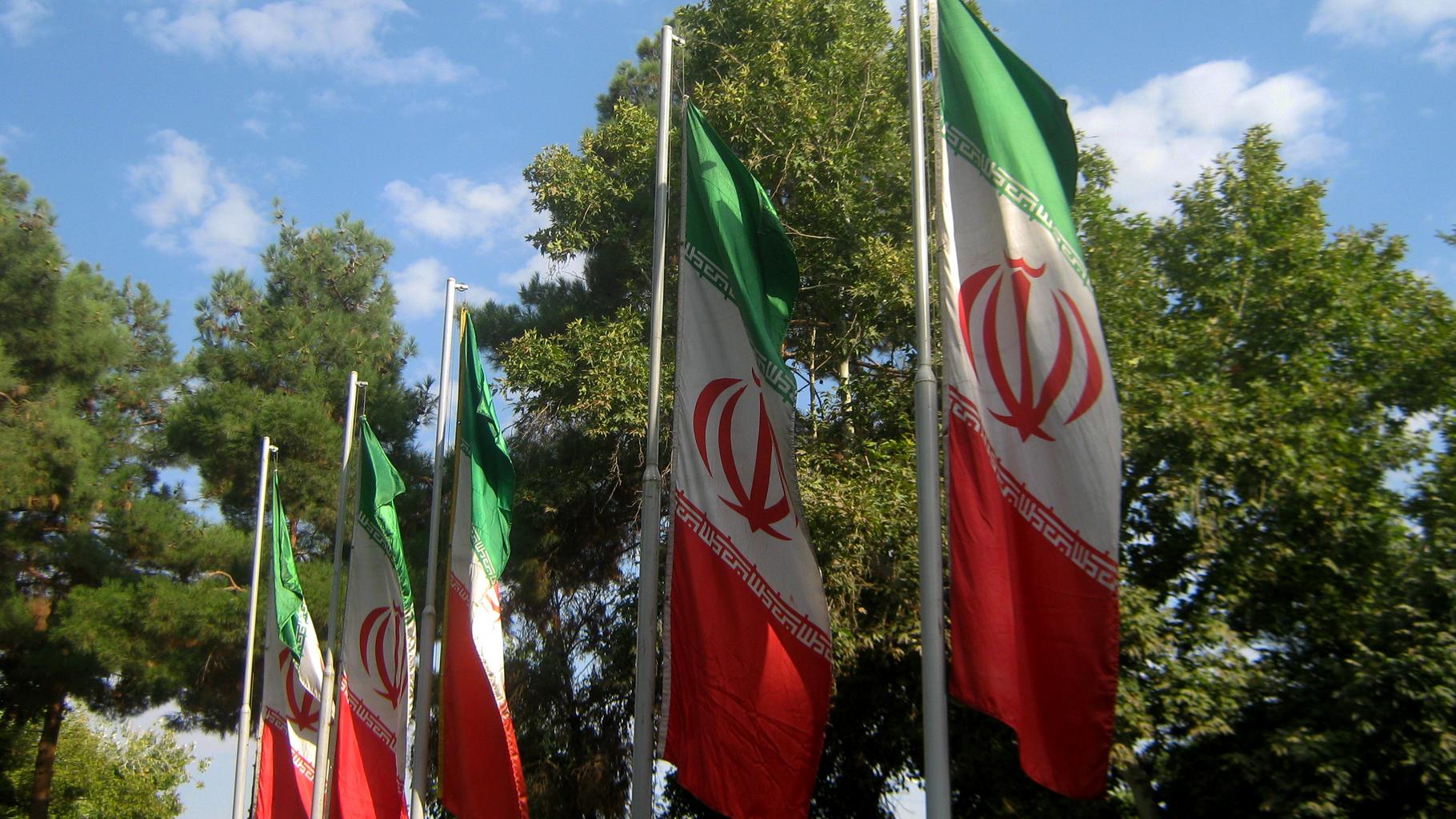
    Since 28 December 2025, Iran has been marred by unrest, as a series of protests, aimed at the Islamic Republic Government, erupted across the country. Whilst it is now being reported that protests have slowed, it is important to recognise that this is due to the callous crackdown, as opposed to citizens having their voices heard and demands met. 

    According to the US-based Human Rights Activists News Agency, more than 3000 people have been killed in the regime’s violent response to anti government protests. This brutal response has suppressed many Iranians, silencing dissent through fear and force, while leaving their grievances unresolved. This ruthless attack on freedom of expression underscores the authoritarian character of the regime and highlights the urgency needed to address the country’s deep social and political issues.

    Protest and uprising have been prominent features of Iran, shaping the political structure that it acquires today. The Islamic Revolution that occurred in 1979 is fundamental for understanding Iran’s current political landscape. This revolution was a widespread uprising against the Western backed autocratic monarchy of Shah Mohammad Reza Pahlavi. After successfully removing Pahlavi, Iran became an Islamic theocracy led by Ayatollah Ruhollah Khomeini. This significantly changed Iran’s political structure and ushered in decades of clerical rule and significant geopolitical shifts. 

    Why are Iranians protesting?

    Decades on from this, Iran finds itself in another unstable political climate. The recent protests have been described as the most serious bout of unrest the government has faced since the 1979 revolution. But what sparked such a movement in the first place? As with any large scale uprising, there are a multitude of factors that intersect to cause it. The catalyst for this movement, however, has strong roots in economics. 

    Many Iranians began taking to the streets after a sudden collapse in the value of the country’s currency. Over the past few years Iranians have been suffering with deep economic issues. Their purchasing power has fallen by more than 90 percent and food prices have soared by an average of 72 percent. Due to this, public frustration only intensified further. It is this frustration that culminated in shopkeepers and bazaar merchants in Tehran staging a strike as a response to the Iranian currency hitting an all-time low against the US dollar. These strikes led to the protest movement that has spread to all 31 provinces. These protests initially focused on the economic crisis, but quickly expanded to demand political reform and an end to the rule of Iran’s supreme leader.

    The Iranian government has called the protests “riots” backed by Iran’s enemies. The regime’s response has been marked by a significant scale of violence which has so far succeeded in quashing protests and driving people off the streets. Protesters were met with lethal force and videos of security forces shooting at protestors have been authenticated by the BBC. Many relatives overseas have been slow to find out whether their family members are victims of this abhorrent violence, as the Iranian regime shut down the internet. 

    Why has the regime shut down the internet? 

    The significance of the internet shutdown cannot be understated. It represents a deliberate attempt by the regime to cut off a vital tool that has, in the past, stimulated mass mobilisation, the documentation of power abuse and global solidarity. The Arab spring is often referred to as the “Facebook Revolution” because social media platforms acted as a pivotal tool for organising demonstrations, spreading information and building international awareness of uprisings that were happening. Social media platforms, therefore, remain a vital tool for resistance. The Iranian regime recognised this and imposed a near total internet and communications shutdown to regain control of the narrative and to stop first hand accounts of what’s going on.

    This is not the first time that Iran has adopted this strategy. During the demonstrations in 2019 and 2022 there were nationwide internet shutdowns. Freedom campaigners at Access Now say Iran has consistently used shutdowns as a way to mask mass violence and brutal crackdowns on protesters. However, the current internet blackout has lasted longer than any previous shutdown.

    Will there be US intervention?  

    The events in Iran have been met with significant international scrutiny. In the past few weeks US President Donald Trump has spoken a lot on the matter. He threatened “very strong action” if the Iranian authorities executed 26-year-old protester Erfan Soltani. On Tuesday 13 January, Trump urged Iranians to “keep protesting”, telling them “help is on its way”. Many people suspected that there would be military intervention from the US. However, 24 hours later, the US President told reporters that he had received assurances that planned executions of protesters would not now proceed and so retreated from military intervention in Iran. 

    Despite Trump’s aggressive foreign policy at the start of this year, US intervention works directly against Trump’s promise to not engage the US in new wars. It is important to note that Iran is not Venezuela. Iran has significant military capabilities, allies who are very anti-US and they have already stated that if the US intervenes they will retaliate and target military bases. It also goes without saying that US intervention would not necessarily benefit Iranians as the US has little credibility when it comes to protecting innocent lives in the middle east. Whilst it may be in Trump’s interest to not intervene, many Iranian protestors feel abandoned as killings have continued.

    On Saturday 17 January, Iran’s supreme leader, Ayatollah Ali Khamene, publicly acknowledged the thousands of killings that have occurred during the protests and blamed them on the US. “Those linked to Israel and the US caused massive damage and killed several thousand,” Khamenei said, quoted by Iranian state media. He also labelled the US President a “criminal” for the “casualties, damages and slander he inflicted on the Iranian nation.”

    In Iran, many protesters remain unsure about taking to the streets again. The future of the country remains uncertain. Reza Pahlavi, the son of Iran’s former pro-western monarch, has predicted the fall of the Islamic regime and has claimed he is “uniquely” placed to head a successor government. However, this has been questioned s has not been in Iran since his family fled the country at the beginning of the 1979 Islamic revolution. A wide range of paths exist, from continued stagnation and authoritarian consolidation, to prolonged instability or, eventually, meaningful transformation.

  • TRUMP’S GREENLAND MISSION

    TRUMP’S GREENLAND MISSION

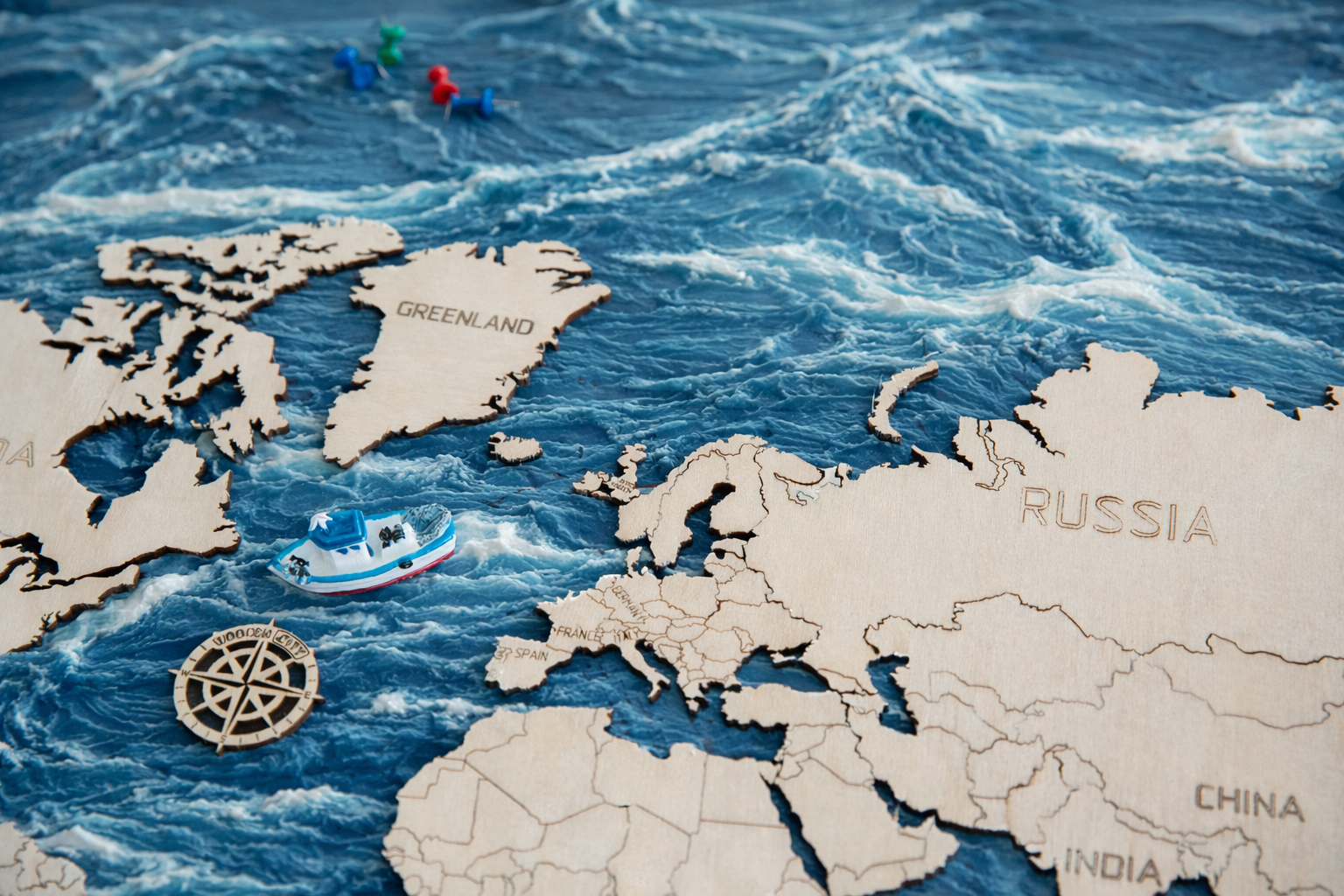
    Home to just 56,000 people, Greenland finds itself at the centre of a geopolitical storm. After carrying out a controversial military operation in Venezuela, which resulted in the capturing of Nicolás Maduro and his wife Cilia Flores, President Trump has renewed calls for the US takeover of Greenland. This has raised questions about the future of NATO and the rules based international system that has facilitated global cooperation since the end of World war two.

    Speaking to NBC News on Monday evening, the US president said “We need Greenland for national security.” He said, “It’s so strategic. Right now, Greenland is covered with Russian and Chinese ships all over the place.” He stated that he is “very serious” in his intent of acquiring the country. The White House has further reinforced this stance, saying that Trump has been discussing “a range of options” to obtain Greenland, including military action. While Trump has previously expressed interest in acquiring Greenland, these latest remarks are being treated with greater seriousness due to his recent actions in Venezuela.

    Greenland is a region that sits off the northeastern coast of Canada, and has more than 80 per cent of its territory lying within the Arctic Circle. It is an autonomous territory within the Kingdom of Denmark, governing its own affairs while Denmark retains control over defence and security. As Denmark is a member of NATO– the intergovernmental military alliance whose purpose is to guarantee the freedom and security of its members through political and military means- Trump’s ambitions are especially concerning. 

    Article 5 of the treaty dictates that “an armed attack against one or more” in Europe or North America shall be considered “an attack against them all”. But what happens if the threat comes from the treaty’s most powerful member? The US explicitly and forcibly challenging the historical sovereignty of Denmark, an ally, would surely signal the US’s departure from, and potentially the end of, the alliance. It would create a highly unstable international system that would only benefit rival powers such as Russia and China. Russia may feel emboldened to make further advances in Europe while NATO is in chaos. The Danish Prime Minister, Mette Frederiksen, has expressed this and has also made it clear that the US has no right to Greenland.

    The Prime Minister stated, “If the U.S. chooses to attack another NATO country militarily, then everything stops, including NATO and thus the security that has been established since the end of the Second World War”. She also said, “the US has no right to annex any of the three countries in ​the Danish Kingdom.” The Danish Prime Minister and Greenland has received the support of several European leaders including French President Emmanuel Macron and United Kingdom Prime Minister Keir Starmer, who issued a joint statement on Tuesday saying that “Greenland belongs to its people. It is for Denmark and Greenland alone to decide on matters concerning Denmark and Greenland”.

    Given Greenland’s small population and relatively low profile in global affairs, some might ask why Trump is so interested in it and why the issue has gained such attention. The answer lies in its strategic location and natural resources, which make it attractive to the US. It is strategically located in the Arctic Ocean, between the US and Russia, in the midst of major shipping routes. Climate change is causing the Arctic ice to melt, potentially creating a Northwest Passage for international trade and reigniting competition with Russia and China. Greenland is also rich in natural resources. It has rare earth minerals that are a key component of mobile phones, computers, batteries and other hi-tech gadgets. As well as this, it has billions of untapped barrels of oil and a vast supply of natural gas that used to be inaccessible but is becoming increasingly accessible due to melting ice sheets caused by climate change. Therefore, this is not solely a matter of national security, but also one of economic security.

    Ultimately, Trump and the US are acting as powerful states traditionally do under realist theory. 

    Realism holds that states are power seeking actors, operating in an anarchic world, with no central authority to enforce rules. This compels states to prioritise survival, security, and the accumulation of power. Whilst there are international organisations that attempt to enforce international norms and rules, as realist theory argues, these institutions remain subordinate to state interests and power politics. Trump’s latest actions and comments reinforce this idea.

    His desire to acquire Greenland reflects a rational attempt to strengthen strategic positioning in the Arctic, secure access to emerging trade routes and resources, and prevent rival powers such as Russia and China from gaining influence. 

    Trump’s behaviour can therefore be understood as a continuation of great-power politics, where strategic advantage outweighs legal norms, alliances, and the rules-based international order.

    It appears that the rules-based international order is increasingly giving way to a system governed more by capability than by law. This shift risks accelerating great-power competition and undermining international security.

  • TRUMP ATTACKS VENEZUALA: Is this the end of the rules based international system?

    TRUMP ATTACKS VENEZUALA: Is this the end of the rules based international system?

    When questioned by a reporter what his new year’s resolution was, President Trump responded “Peace. Peace on Earth”. Three days later he launched an unprecedented attack on Venezuela. On Saturday 3 January, the FIFA peace prize recipient announced a large-scale US strike on Venezuela and the capturing of Nicolás Maduro, and his wife, Cilia Flores. The couple have now been indicted in New York on terrorism and drugs charges. Trump says the US is going to “run” Venezuela “until such time as we can do a safe, proper and judicious transition”. The attack saw at least 40 people, including civilians and Venezuelan soldiers, die. Therefore it appears Mr Trump is going to have to find another new year’s resolution.

    No one will mourn the removal of Nicolas Maduro. In fact, many Venezuelan immigrants in the US and the UK have celebrated his capture, saying “it is impossible not to feel relief”. The Venezuelan leader is seen by many as a dictator as he relied on the secret police, disappearances and persecution to keep his grip on power. He has run an authoritarian state since 2013 with the help of elections widely regarded as rigged and fraudulent. Over seven million Venezuelans fled the country during his rule. So now there is one less dictator in the world terrorising its people. Whilst some people may consider this to be a victory, it cannot be denied that the manner in which he was removed is deeply troubling and raises significant geopolitical concerns about international law and state sovereignty.

    This military operation appears to have little to no legal or constitutional authority. The US has ultimately invaded a sovereign nation without UN authorisation, kidnapped a sitting head of state and has done so acting not on the basis of international law but on its own domestic law. State sovereignty is the principle that a state holds supreme and independent authority over its territory and people, free from external control. The US’s actions, therefore, are a serious cause for concern because it sends a message that as long as you have the military clout you can do what you want, to whoever you want, on the international stage. It highlights the erosion of the rules based international order, where law is increasingly overshadowed by power. The geopolitical implications of this are very dangerous. Other powerful nations such as China may feel empowered to pursue their own territorial and strategic ambitions by force.

    The public justification of this military operation by the Trump administration has been about drugs. Trump has been focused on fighting the influx of drugs – especially fentanyl and cocaine – into the US. He has framed this attack on Venezuela as a broader war on narcotics and has accused Maduro of running a “narco terrorist organisation”. Without providing evidence, Trump has also accused Maduro of “emptying his prisons and insane asylums” and “forcing” its inmates to migrate to the US. From the justification some may argue that Trump is simply acting in the national interest to protect the American population from the alleged flow of drugs and criminal networks linked to Maduro. Framed this way, the operation can be presented as a defensive measure aimed at safeguarding public health and domestic security, rather than as an overtly aggressive act against a sovereign state.

    However, it would be illogical to think that this is the only reason for the attack. In fact, many of Trump’s claims about drugs have been criticised as there is little evidence.

    For example, counternarcotic experts have explained that Venezuela is a minor player when it comes to global drug trafficking. Cocaine is mainly produced in Colombia and most of it is said to enter the US through other routes, rather than Venezuela. Fentanyl, the other drug that Trump has raised concerns about, is mainly produced in Mexico and enters the US almost exclusively via land through its southern border. 

    Therefore, it would appear that the central basis of justification for this attack is very weak. Realist international relations theory teaches us that states are self-interested, power-seeking actors driven by survival in an anarchic world. This means that they will use any means necessary to achieve their aims. In this case, the US has ignored the principle of state sovereignty in order to achieve its objectives. For some, its objectives extend beyond the stated aim of combating drug trafficking. Maduro and political commentators have accused the US of using the so-called “war on drugs” as a pretext to secure access to Venezuela’s vast oil reserves. Venezuela has the largest proven oil reserves of any country in the world, making it an especially attractive target for external influence and intervention. Therefore, it is hard to believe that the rationale behind this military operation was drug-related.

    Analysis from Sky News highlights exactly why Trump may be seeking access to Venezuelan oil. Whilst the US is the world’s largest oil producer, it primarily produces light crude. However, most of its refineries are designed to process heavy oil. Because upgrading refineries would cost billions, the US remains heavily dependent on imports of heavy crude, exporting much of its own oil while importing thousands of barrels daily for refineries in Texas and Louisiana. Venezuela, therefore, is strategically important because it holds some of the world’s largest reserves of heavy oil.

    The significance of oil in this whole situation was reinforced by President Trump during his press conference on Saturday in which oil was referred to more than a dozen times. Trump said Venezuela had “stolen” oil from the US and that it would now be taken back. This belief that the oil had been stolen is based on Venezuela’s nationalisation of its oil industry between the 1970s and the 2000s, forcing most US oil companies out. The president also claimed US occupation “won’t cost a penny” as the country will be reimbursed from “money coming out of the ground”. He explained that he plans to have major American energy multinationals invest “billions and billions of dollars” to rebuild the country’s “rotted” oil infrastructure.

    Clearly, this has never been solely about drugs. The US’s actions therefore set a dangerous precedent. Whilst the fall of a dictator may offer short-term satisfaction, when achieved at the expense of state sovereignty and the rules based international system, it risks contributing to a more dangerous and unpredictable world.

  • Opinion: Britain Isn’t Becoming America — It’s Importing Trumpism

    Opinion: Britain Isn’t Becoming America — It’s Importing Trumpism

    Reform UK and the Mainstreaming of Far-Right Discourse

    Mirroring trends in the United States, the UK has become increasingly polarised along lines of culture and politics. Far right movements have gained significant ground as the Overton window has shifted away from the political centre, normalising rhetoric that was once considered extreme. In the UK, the Reform Party is at the heart of this shift as they continue to campaign on issues such as immigration, national sovereignty and opposition to what they term as “woke” politics. With their ideas being platformed by the mainstream media they have been able to shape political discourse and stamp influence on the Labour Government’s policy agenda. 

    With the Reform Party leading both the Conservatives and Labour in the polls, there is a strong possibility of them forming the next government. Concerns continue to grow about what this would mean for the UK, because the Reform party and the far right have become increasingly synonymous with the kind of divisive politics that defines Trump’s America. Nigel Farage has adopted a political strategy that strongly ascribes to Trumpism, and the wider far right in the UK has mobilised around issues imported from American culture wars. Discourse around ‘wokeness’, free speech, immigration and religion has become increasingly American in character.

    The Americanisation of the far right in the UK, therefore, is an ongoing process whose influence is becoming more apparent as there has been an erosion of the boundaries between extreme and mainstream politics by normalising imported culture-war rhetoric. This has been driven by a variety of forces in the political and media landscape. The Reform Party is one of the key driving forces, particularly when it comes to the issue of immigration. The climate crisis, global conflicts and global inequality mean that immigration will always be at the forefront of political discourse. There are many arguments on both sides of the immigration debate and it is not inherently wrong to advocate for less or more controlled levels of immigration. But it is how these arguments are framed that matters. When presented through fear, cultural grievance, and criminality, exclusionary narratives are reinforced, which sows even more division.

    Trump’s Immigration Agenda and Its Political Impact

    Central to Donald Trump’s electoral success in the 2016 Presidential election was his pledge to build a barrier along the U.S.-Mexico border and to enforce stricter controls on immigration. ”Build the wall” became a prominent slogan of the 2016 Presidential election. His first Presidential term saw travel bans on predominantly Muslim countries and anti immigrant rhetoric that framed all illegal immigrants as criminals. During his second term he has intensified this rhetoric and has implemented even more extreme measures, further reflecting the shifting Overton window. In March 2025, the Trump administration invoked the U.S. Alien Enemies Act to deport dozens of Venezuelan immigrants to El Salvador. They were detained in a notorious mega-prison used for the country’s most dangerous criminals. In 2025 immigration and Customs Enforcement (ICE) significantly intensified its enforcement operations, with large-scale workplace raids and neighborhood sweeps becoming a regular occurrence. This has perpetuated a culture of fear in America.

    These policies and actions have become a model for Nigel Farage and his party who also advocate for hardline immigration policies, frequently using similar rhetoric regarding mass deportations and border control. In some instances Farage is outright copying Trump’s policies. For example, in July last year, he announced that any future Reform UK government would try to send prisoners overseas to complete their sentences- including to El Salvador. Given the UK’s lack of geographical and political ties to El Salvador, Farage’s proposal appears symbolic, designed to emulate Trump’s, spectacle-driven immigration policies rather than reflect a practical plan. This can also be seen through his party’s pledge to deport up to 600,000 people over a five-year parliamentary term, which has been dubbed as Operation Restoring Justice. This plan feels strikingly similar to Trump’s ICE raids as it includes detaining anyone who arrives illegally (including children) in disused military bases.

    The significant rise of Farage’s party has seen the Conservative Party also adopting a Trump style policy agenda as they confront the reality that, as in the U.S., the center appears to have disappeared. During the Conservative Party conference last year, Kemi Badenoch pledged to deploy a new “removals force” with powers to detain and remove 150,000 undocumented migrants, with her top team crediting the U.S. president’s Immigration and Customs Enforcement (ICE) agency as their inspiration. This clearly demonstrates that American style approaches to key political issues are growing in influence. Given the recent events surrounding ICE this is a serious cause for concern. 

    On 7 January 2026, 37-year-old Renee Nicole Good was fatally shot by an Immigration and Customs Enforcement (ICE) agent in Minneapolis. Despite video footage clearly suggesting otherwise, the Trump administration has justified the actions of the agent by saying that Good tried to run over the officer. Homeland Security Secretary Kristi Noem claimed that as she drove away from ICE officers, she “weaponised her car” in a “domestic terror attack”. This brutal campaign of intimidating immigrants also has severe consequences for American citizens. If a campaign with similar aims were to happen here under a Conservative or Reform government  it would raise serious concerns about the expansion of state power, the erosion of civil liberties.

    Importing US Culture-War Debates into the UK

    Another policy debate that has been imported from America by the Reform Party is DEI. American culture war narratives around ‘wokeness’ and diversity are beginning to frame debates and policies about equality and inclusion in the UK. In the early stages of Trump’s second Presidential term there was significant backlash against DEI programmes in government and the private sector, with executive actions aimed at restricting diversity and equity initiatives across federal agencies and contractors. Trump even went as far as blaming DEI on a deadly plane crash in Washington DC early last year. It was not too long after this that the Reform Party started to attack DEI, despite it not technically existing in the UK. What was previously discussed under the UK legal term EDI (equality, diversity, and inclusion) has increasingly been framed in the American-imported language of DEI and culture-war critique.

    Other far right figures in the UK like Tommy Robinson who held a “Unite the Kingdom” rally are also becoming more American in their tactics and discourse. Despite this rally supposedly being about English patriotism and national identity, Robinson used it to honour US right-wing activist Charlie Kirk and the South African billionaire Elon Musk joined via video link encouraging violence and further division. Tommy Robinson was also supportive of “Operation Raise the Colours“, a campaign that encouraged the public display of the UK’s national flags, particularly the St. George’s Cross and the Union Jack. The campaign saw activists tying flags to lampposts and street furniture, and in some cases, painting red crosses on roundabouts and zebra crossings. This campaign borrows directly from American tactics and symbolism. 

    The UK is heading further away from the centre towards the right and is on a similar trajectory to America. Nonetheless, the fundamental differences in political structures between the UK and the US places limits on how far this trajectory can be replicated.