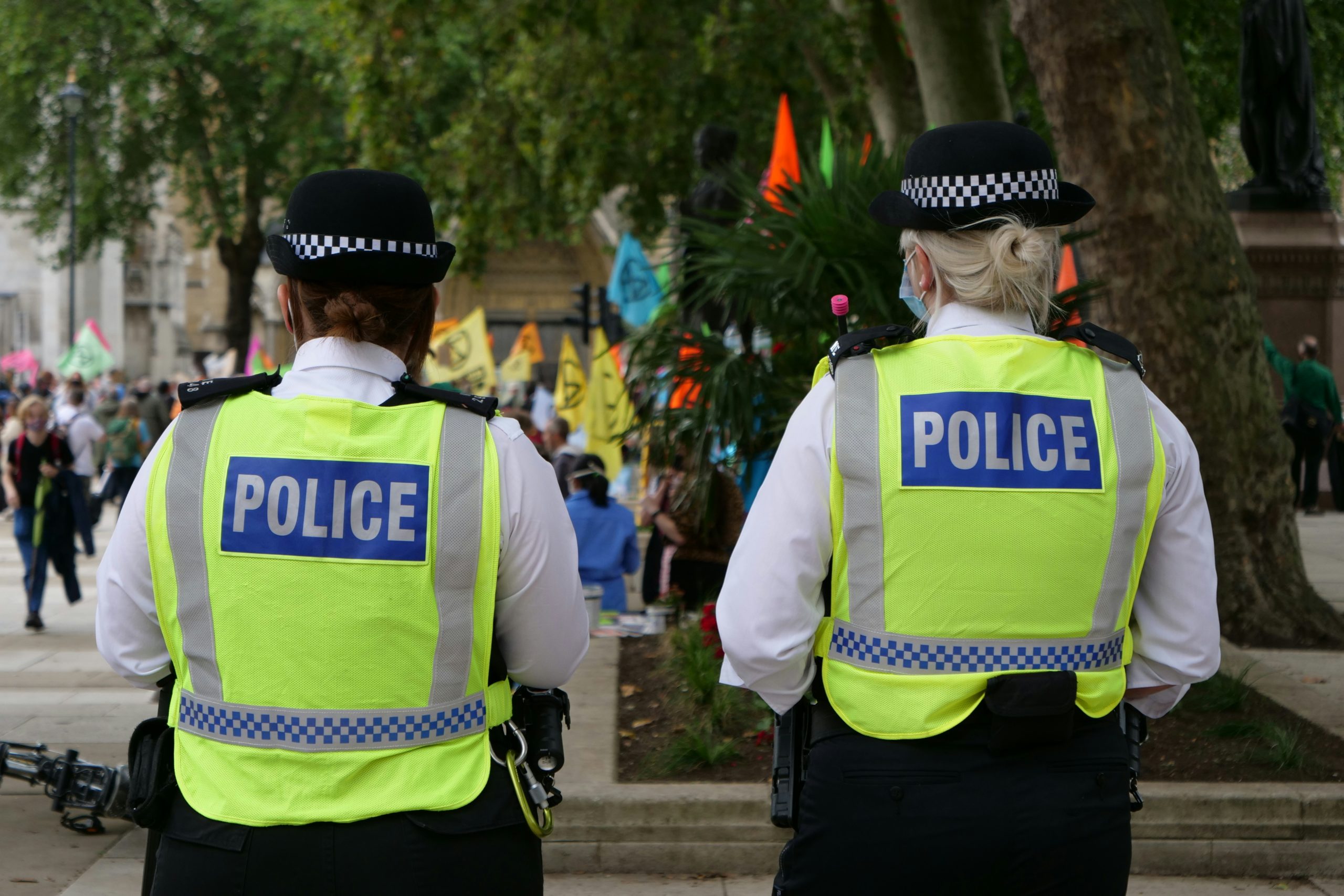
In December 2025, an 18-year-old finance student, Henry Nowak, was brutally murdered by Vickrum Digwa, a Sikh man. Bodycam footage, released by the police, shows the 18-year-old student being handcuffed and telling police, “I can’t breathe”. The footage also shows his killer claiming he was racially abused by the teen and acted in self-defence, which was a lie. Despite Nowak repeatedly telling the officers he had been stabbed, they dismissed his pleas, handcuffed him, and placed him under arrest.
This negligence of the police officers has been strongly condemned across the UK political landscape, and the Independent Office for Police Conduct (IOPC) has since launched an investigation into the force’s response. Digwa, 23, was sentenced on Monday to life in prison with a minimum term of 21 years.
Following the conviction, Henry’s father gave a noble and moving statement. He asked that his son’s death not be used by politicians as a chance to promote their own agendas. “We don’t want his death used to create further division, hatred or tension,” Mark Nowak said. A family should be able to grieve the loss of their loved one without it being used or weaponised for political gain and civil unrest.
It is becoming increasingly common for high-profile tragedies, such as this one, to be exploited as symbols in wider political discourse. Following the horrific attacks on a children’s holiday dance and yoga session in Southport in 2024, which tragically saw three young girls lose their lives and ten others injured, far-right protestors took to the streets. They clashed with police in Southport and damaged a mosque after misinformation about the attacker’s identity – which had not yet been publicly released – was spread online.
It is therefore commendable that, despite his grief, Henry’s father urged for unity rather than division. Despite his wishes, however, in the rush to advance a cause, score points against opponents, and reinforce existing narratives, these wishes have been ignored, especially by political figures on the right.
It did not take Reform UK leader Nigel Farage long to make this horrific incident about himself and incite violent riots on the streets of Southampton. In a video posted on social media addressing the distressing incident, Nigel Farage made several claims that have drawn widespread political and public criticism. He repeated the words of Henry, “I can’t breathe”, and drew parallels with George Floyd, whom he described as a “career criminal”.
Many people strongly rejected Farage’s comparison, pointing out the fundamental difference between the two cases. George Floyd was killed directly by a law enforcement officer who knelt on his neck, whereas a civilian murdered Henry Nowak. Ultimately, Farage used Floyd’s name as a culture war dog whistle to ignite racial divisions and grievances among white citizens.
Farage also claimed that there is two tier policing in the UK. He believes that British institutions, including the police, are biased against White Britons. However, available evidence does not support this belief. Government statistics show that white defendants, on average, serve a lower custodial sentence than other ethnicities. Black prisoners serve a greater proportion of their original sentence than other ethnic groups, while Black, Asian, mixed and other ethnic groups were more likely to be stopped and searched in London last year.
In his video, he also suggested that “It is time to respond with pure cold rage”. This is a sharp contrast to the message he put out after Sarah Everard was kidnapped, raped and murdered by a Metropolitan Police constable. When this happened, he tweeted, “We must not allow the tragic murder of a young woman to turn into attacks on men and attacks on the police.” This difference in tone illustrates that Farage tends to adopt a politically convenient approach when it comes to addressing these incidents.
Following Farage’s message, on Tuesday evening, hundreds of people, including Tommy Robinson, gathered and took part in a demonstration outside Southampton Central Police Station before gathering close to the family home of Vickrum Digwa in St Denys.
The demonstration soon turned violent and clashed with police, throwing bricks and other projectiles and injuring 11 officers. The far right tends to portray itself as a victim or as on the side of victims as a tool to promote its political ends. This is exactly what Henry’s father did not want. The fact that his wishes were so blatantly ignored illustrates that Nigel Farage clearly does not care about the victim. For Farage, the facts are less important than the narrative, and it is in this way that the victim is dehumanised.
Prime Minister Keir Starmer pointed this out in PMQs on Wednesday. “Exploiting this tragedy to create grievance and division would be wrong in any circumstances, but to do it when the family are expressly saying ‘please don’t’ is unforgivable,” the Prime Minister said after Nigel Farage reinforced his divisive message.
Suella Braverman, a former Tory MP who defected to Reform UK, tweeted “white lives matter”, further intensifying the racial tension surrounding the tragedy. “White Lives Matter” is a reactionary slogan to the Black Lives Matter movement and has often been used by far-right activists or white nationalist groups. By invoking this slogan, Suella Braverman helped to deepen divisions and shift focus away from the wishes of Henry’s family and the specific facts of the case.
The far right is homogenising the actions of one individual and projecting them onto an entire group, playing on people’s fears and anxieties. The actions of one person should never be used to characterise an ethnic group. The fact that the person who committed this horrific crime was non-white and from an ethnic minority background does not mean that all ethnic minorities in the UK should be held accountable for those actions.
People are allowed to be frustrated with the actions of the police. Citizens have every right to debate whether institutions apply standards fairly, whether communities are protected equally, and whether government responses are adequate. But those debates require evidence, restraint and empathy. They should not be used as an excuse to spread racism and discriminate against entire groups of people.
The violent scenes in Southampton do not help anyone. Police and Crime Commissioner for Hampshire and the Isle of Wight Donna Jones said Henry Nowak’s family were “disappointed” to see the violent protests.
Leave a Reply