Tag: trump

  • The 2016 Nostalgia Trend: Why Gen Z’s Internet Throwback Reflects Political Anxiety in 2026

    The 2016 Nostalgia Trend: Why Gen Z’s Internet Throwback Reflects Political Anxiety in 2026

    Since the beginning of the year, the internet has been flooded by 2016 nostalgia. From rose-tinted filters to viral Musical.ly sounds and users sharing personal 2016 photos, a strong desire to return to the past has dominated digital platforms. This trend is not limited to Gen Z; people of all ages and backgrounds have participated, underscoring how widely this sense of nostalgia isfelt. 2026 marks a decade since 2016, so it is understandable why people are looking back and reminiscing. However, the scale of this nostalgia trend was not seen last year,  when a decade had passed since 2015. This suggests that what appears at first to be a harmless internet trend may reflect something deeper. Widespread nostalgia often signals dissatisfaction with the present and a longing for a mythic past. It suggests that something has gone wrong in our current reality.

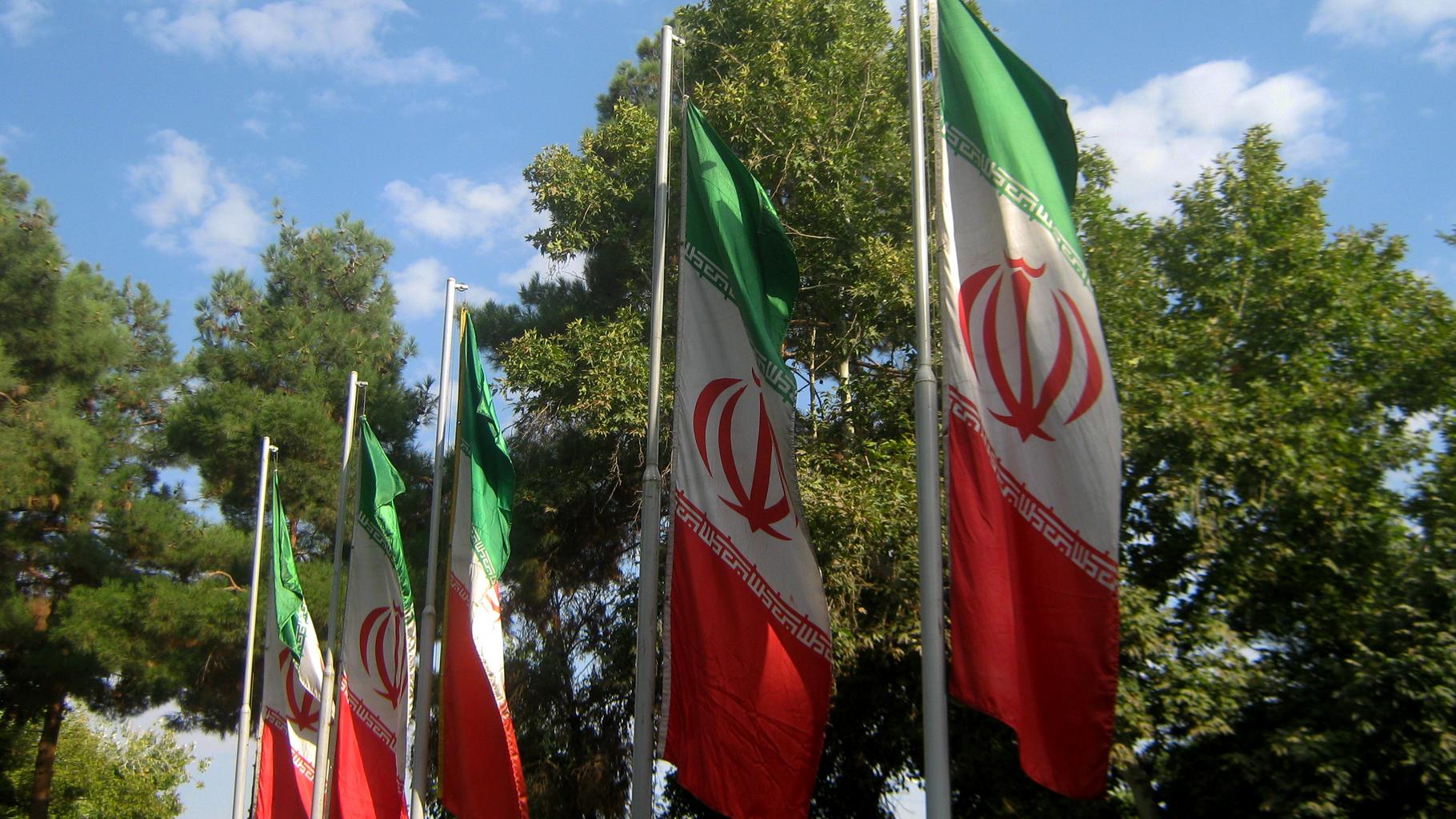
    Scrolling through social media feeds, amid videos and pictures referencing 2016, it has been hard to escape more serious content depicting ICE brutality in the US, widespread protests in Iran and even discussions of Trump potentially invading Greenland. Many people around the world live in constant fear and uncertainty, so it makes sense for them to retreatto a time when life felt better. When people are nostalgic, often, what they remember is not the full historical reality of that year, but how life felt. Many people participating in this trend were younger at the time and so, more shielded from economic instability, rising living costs, climate anxiety, digital overload, and constant exposure to global crises through social media. Therefore, life felt a lot easier for them.

    However, 2016 was, in many ways, the beginning of the political reality we are living in today. 2016 was the year Donald Trump won his first U.S. Presidential election, an event widely viewed as the catalyst for the intensification of the political polarisation that’s plaguing America today. Through his divisive rhetoric and politicisation of nostalgia, he mobilised millions of voters by framing the present as a decline and the past as something that needed to be restored. He promised to “Make America Great Again” by building a wall to curb migration levels. However, given America’s deeply contested history marked by slavery, Jim Crow laws and gender inequality, many commentators questioned what period this “greatness” referred to. 

    2016 also had major political implications in the UK. This was the year of the Brexit referendum, which resulted in the UK leaving the European Union after 52% of the country voted to “take back control”. The leave campaign, like Trump, also used the tactic of politicising nostalgia, as they framed EU membership as a loss of national sovereignty, promising a return to an earlier period of independence and control. For some individuals, this period is remembered as a time of greater cultural familiarity and less visible diversity. The leave campaign exploited this sentiment by strongly emphasising immigration.

    This recent trend seems to have forgotten this, instead focusing only on the positives of 2016. This is significant because it highlights that, if overindulged, nostalgia can produce a paradise that never has and never will exist, but that is pursued at all costs, taking away all joy and potential from the present. The danger of nostalgia, therefore, lies in its ability to move politics away from solving current issues towards attempting to recreate a mythic past. When this happens, progress is framed as decline, and so societies become more vulnerable to divisive rhetoric, exclusionary policies, and authoritarian leaders who promise to “restore” rather than “reform”. 

    Whilst this recent wave of nostalgia has mainly been felt by young people focusing on internet culture and memories of childhood, rather than something as explicitly political as national history, the underlying sentiment can align with wider political narratives. The past becomes a symbol of comfort and safety, while the present is the opposite and something we need to leave. This feeling can be manipulated into making people believe that society has moved in the wrong direction. Consequently, instead of a politics of progress and democratic debate, we get a politics of division and democratic decline.

    If we look through history, we can see that authoritarian and fascist movements have often drawn on similar emotional dynamics. Leaders of these movements employ nostalgic rhetoric to highlight their country’s past greatness for their own political gain. This past greatness is often characterised by economic stability and cultural purity, which fascists/ authoritarian leaders promise to restore if given power. Fascist parties leverage this nostalgia to mobilise the working and middle classes by appealing to a shared sense of loss, exploiting cultural anxieties and economic insecurities. Walter Benjamin argued that fascism invokes a mythical past not to genuinely recover it, but to reframe the present in ways that justify oppressive policies.

    In emphasising the greatness of the nation in the past, fascist nostalgia is selective and ignores significant moments in the history of the nation. Things such as colonial violence, gender and racial inequality and class exploitation are omitted from the narrative of the nation’s past, instead presenting a homogenous society that never existed in reality. By manipulating cultural memory, fascism seeks to align popular discontent with its agenda, diverting anger away from the capitalist system and toward fabricated enemies of the state, such as immigrants or different cultural influences. The rise of far-right politics across Europe and America has coincided with an increase in this political tactic. 

    The 2016 nostalgia trend is an important reminder that a longing for the past can be exploited and manipulated for political gain. What begins as a desire for old trends and memes can evolve into a broader belief that the past was inherently better than the present. History illustrates how easily this feeling of longing can be redirected toward exclusion, blame, and promises of national restoration. Nostalgia itself is not a dangerous emotion to feel. It reflects humans’ natural desire for stability and security. The risk arises when these desires are directed toward chasing a version of the past that never truly existed.

  • What Orwell’s 1984 Teaches Us about the Dangers of the Trump Administration’s  Lies

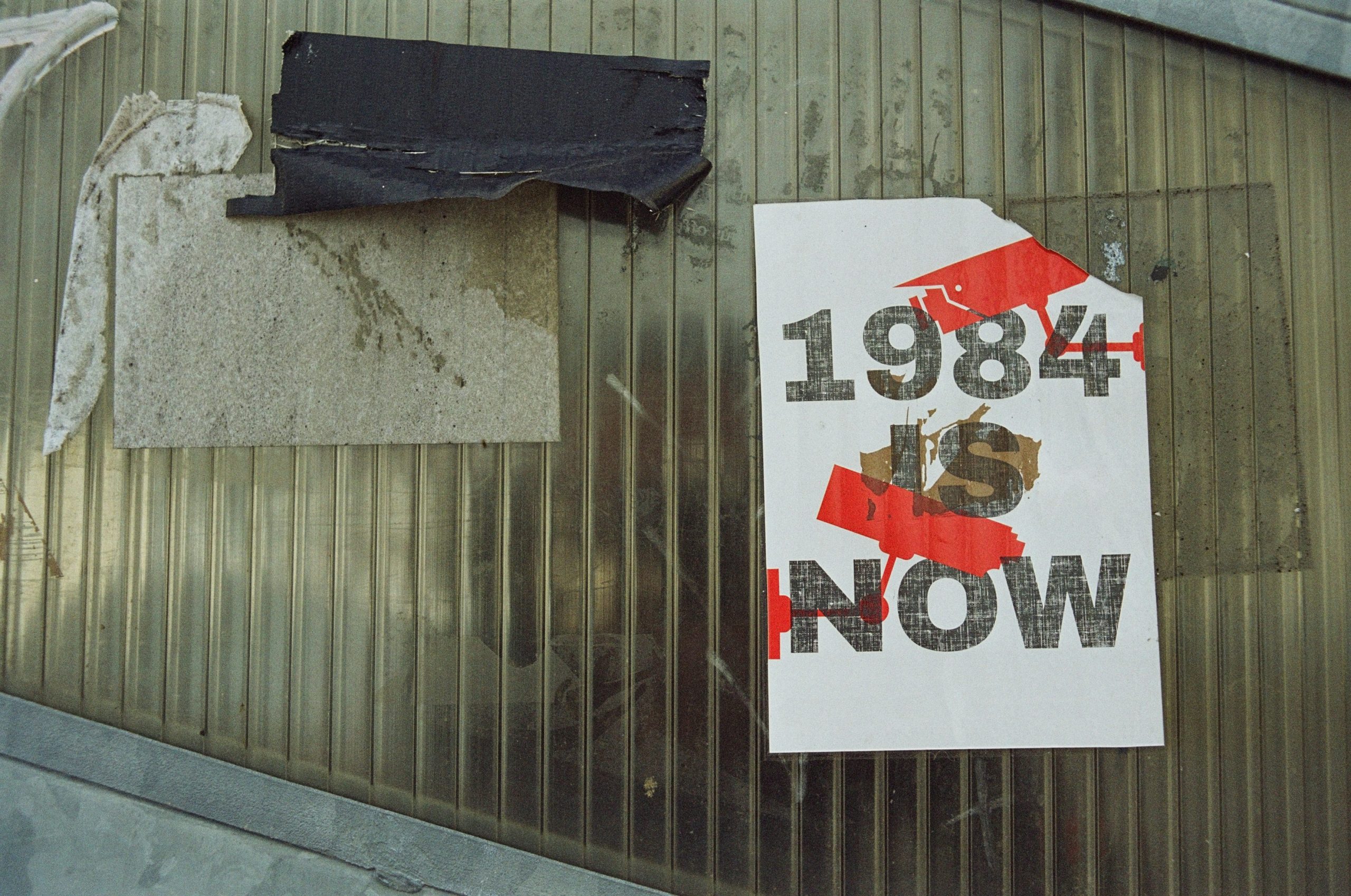
    What Orwell’s 1984 Teaches Us about the Dangers of the Trump Administration’s Lies

    “The Party told you to reject the evidence of your eyes and ears. It was their final, most essential command.” —George Orwell, 1984

    This quote from George Orwell’s 1984 has been doing the rounds across social media in light of the actions taken by the Trump administration following the killings by Immigration and Customs Enforcement (ICE) agents in Minneapolis. 1984 is one of the quintessential works within the dystopian genre, as it expertly depicts propaganda, extreme surveillance, totalitarianism, and the erosion of truth. The book follows Winston Smith, a low-ranking member of ‘the Party’, who is frustrated by the pervasive eyes of the party and its ruler, Big Brother. In the book, Orwell depicts a hypersurveillance state, where truth is whatever the Party or Big Brother says it is. 

    ICE in Minneapolis

    Following the Trump administration’s response to the murder of Alex Pretti, more equivalences are being made to Orwell’s novel. 

    Alex Pretti, a 37-year-old American intensive care nurse for the United States Department of Veterans Affairs, was shot multiple times and killed in broad daylight by an ICE agent in Minneapolis. This is the second ICE killing in Minneapolis, as it comes just weeks after Renee Good, a 37-year-old American woman, was also shot and killed by an ICE agent, Jonathan Ross. In both incidents, ICE agents acted out of control and took fatal measures that were not necessary. 

    The Ministry of Truth

    Following Renee’s killing, a statement by the White House deputy chief of staff, Stephen Miller, was reiterated by the Department of Homeland Security account on X. In the statement, Miller says, “To all ICE officers: You have federal immunity in the conduct of your duties. Anybody who lays a hand on you, tries to stop you or obstructs you is committing a felony. You have immunity to perform your duties, and no one—no city official, no state official, no illegal alien, no leftist agitator or domestic insurrectionist—can prevent you from fulfilling your legal obligations and duties”.

    The Trump administration was also quick to label her a ‘domestic terrorist’, with the president taking to Truth Social to claim that she was ‘very disorderly, obstructing and resisting’ and then ‘violently, willfully, viciously ran over the ICE agent who seems to have shot her in self-defence’. Video footage from the incident, however, shows that this was not the case; in fact, the last thing Renee said was “That’s fine, dude. I’m not mad at you”. Renee Good presented no threat, and neither did Alex Pretti.

    Contrary to the defamatory claims made by the Trump administration, Pretti was holding his phone, not a gun, before he was beaten down and pepper sprayed. Alex Pretti was defending a woman who was being manhandled by ICE agents. There are several videos from witnesses that multiple, credible news sources have analysed and verified, which do not support claims made by the administration; in fact, they leave no room for deniability or a different version of events. 

    There are stark parallels between the actions taken by Big Brother’s ‘Ministry of Truth’ and the Trump administration’s response to the ICE killings. In the novel, the Ministry of Truth concerns itself with lies; it is a deliberate contradiction. It is responsible for the propaganda of the Party through rewriting history and controlling the news media, entertainment, education, and the fine arts.

    Trump is a known liar, but what we are seeing here is the erasure of truth at a systemic level. Much like the Ministry of Truth, the entire administration is promoting the same lies that brandish the victims of these shootings as ‘domestic terrorists’ and thus justify the actions taken by these ICE agents. Vice President JD Vance reposted a statement by Stephen Miller claiming that Pretti was ‘an assassin’ who ‘tried to murder federal agents’. 

    What’s worse is that we live in the digital age, governments and law enforcement have great means of surveillance at their disposal, but citizens can also surveil them when things like this happen with their phones. Instead of waiting for bodycam footage from the perpetrator, victims and witnesses can have their own footage. There is an abundance of credible evidence from the people who witnessed Alex Pretti’s execution that contradicts the version of events that the administration has concocted. This strategy of plausible deniability is merely an attempt for ICE as an agency to escape accountability to ensure it can continue carrying out Trump’s mission. 

    Arendt in Orwell and Reality

    Hannah Arendt can help us understand this tactic of lying. She talks about facts being fragile because they are contingent, which means that there is always a possibility for alternative realities. For example, in her book ‘Between Past and Future’, she states: “Since everything that has actually happened in the realm of human affairs could just as well have been otherwise, the possibilities for lying are boundless, and this boundlessness makes for self-defeat”.

    With regards to the ICE killings, the administration is able to lie because many people can conceive an alternative story where the ICE agents were acting in self defense, where Alex Pretti did pull again, where Renee Good was a hired agitator part of a wider left wing conspiracy tasked with assaulting law enforcement. Though the evidence shows that this was the case, it still could have been, the very possibility of it enables this alternative reality to take off.

    We see it in 1984 when the Ministry of Truth constantly contradicts itself through altering historical records, changing wartime alliances from Eastasia to Eurasia, fabricating the existence of “Comrade Ogilvy,” and revising economic forecasts. This is all possible due to the contingency of facts. 

    In 1984, Orwell takes it further by eroding what Arendt labels a rational truth. A rational truth pertains to mathematical, scientific or philosophical truths that are actively discovered and independent of opinion. These truths are harder to erode because there is no alternative imagination. In 1984, Big Brother coerced the citizens in Oceania into believing the mathematical falsehood that 2+2=5. 

    Now the administration has not gone to such extremes yet but it is not hard to imagine a world in which they do because the scale at which they are already twisting the truth is a very slippery slope. The administration cannot be allowed to lie about these killings; ICE agents and the organisation must face accountability. 

  • TRUMP’S GREENLAND MISSION

    TRUMP’S GREENLAND MISSION

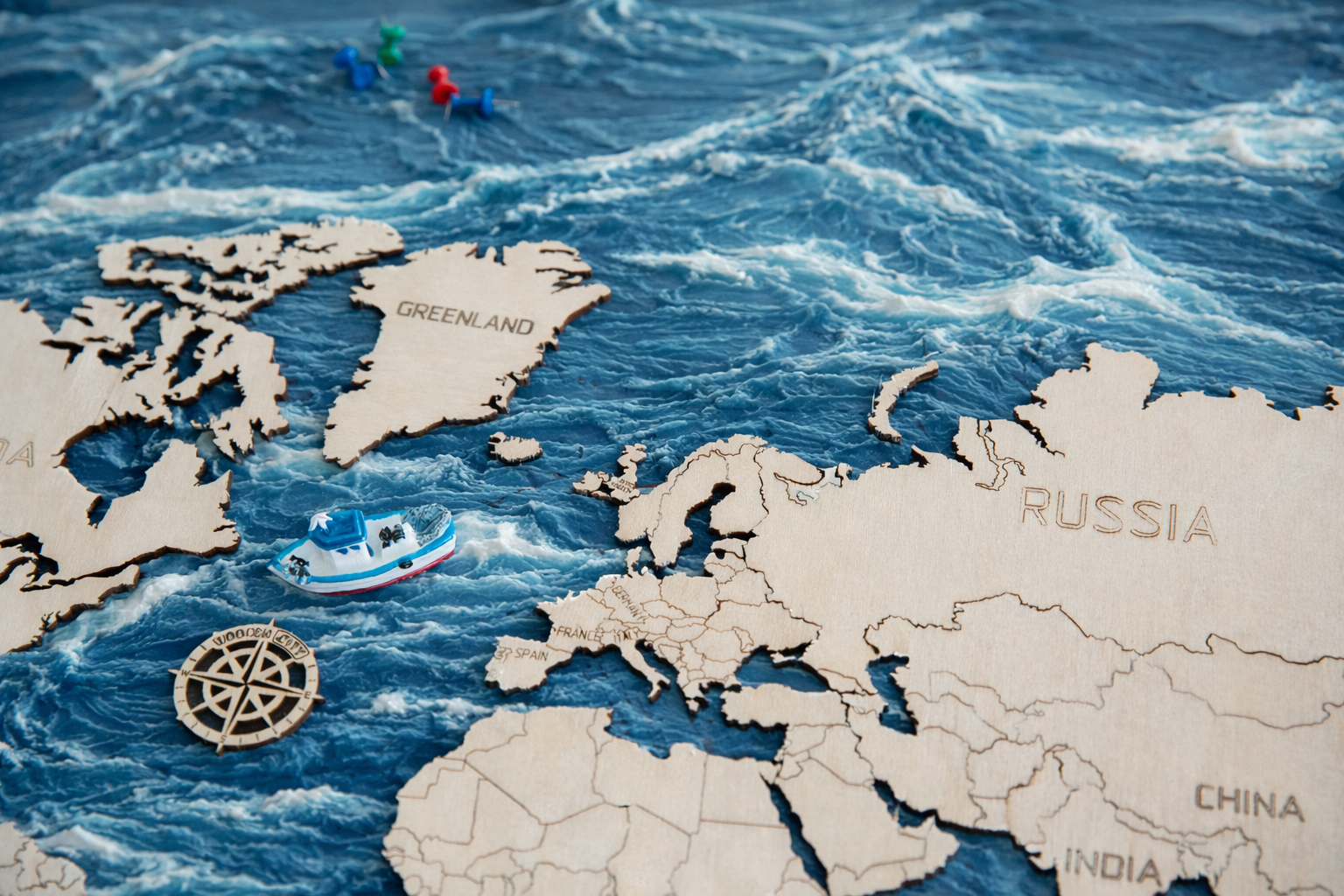
    Home to just 56,000 people, Greenland finds itself at the centre of a geopolitical storm. After carrying out a controversial military operation in Venezuela, which resulted in the capturing of Nicolás Maduro and his wife Cilia Flores, President Trump has renewed calls for the US takeover of Greenland. This has raised questions about the future of NATO and the rules based international system that has facilitated global cooperation since the end of World war two.

    Speaking to NBC News on Monday evening, the US president said “We need Greenland for national security.” He said, “It’s so strategic. Right now, Greenland is covered with Russian and Chinese ships all over the place.” He stated that he is “very serious” in his intent of acquiring the country. The White House has further reinforced this stance, saying that Trump has been discussing “a range of options” to obtain Greenland, including military action. While Trump has previously expressed interest in acquiring Greenland, these latest remarks are being treated with greater seriousness due to his recent actions in Venezuela.

    Greenland is a region that sits off the northeastern coast of Canada, and has more than 80 per cent of its territory lying within the Arctic Circle. It is an autonomous territory within the Kingdom of Denmark, governing its own affairs while Denmark retains control over defence and security. As Denmark is a member of NATO– the intergovernmental military alliance whose purpose is to guarantee the freedom and security of its members through political and military means- Trump’s ambitions are especially concerning. 

    Article 5 of the treaty dictates that “an armed attack against one or more” in Europe or North America shall be considered “an attack against them all”. But what happens if the threat comes from the treaty’s most powerful member? The US explicitly and forcibly challenging the historical sovereignty of Denmark, an ally, would surely signal the US’s departure from, and potentially the end of, the alliance. It would create a highly unstable international system that would only benefit rival powers such as Russia and China. Russia may feel emboldened to make further advances in Europe while NATO is in chaos. The Danish Prime Minister, Mette Frederiksen, has expressed this and has also made it clear that the US has no right to Greenland.

    The Prime Minister stated, “If the U.S. chooses to attack another NATO country militarily, then everything stops, including NATO and thus the security that has been established since the end of the Second World War”. She also said, “the US has no right to annex any of the three countries in ​the Danish Kingdom.” The Danish Prime Minister and Greenland has received the support of several European leaders including French President Emmanuel Macron and United Kingdom Prime Minister Keir Starmer, who issued a joint statement on Tuesday saying that “Greenland belongs to its people. It is for Denmark and Greenland alone to decide on matters concerning Denmark and Greenland”.

    Given Greenland’s small population and relatively low profile in global affairs, some might ask why Trump is so interested in it and why the issue has gained such attention. The answer lies in its strategic location and natural resources, which make it attractive to the US. It is strategically located in the Arctic Ocean, between the US and Russia, in the midst of major shipping routes. Climate change is causing the Arctic ice to melt, potentially creating a Northwest Passage for international trade and reigniting competition with Russia and China. Greenland is also rich in natural resources. It has rare earth minerals that are a key component of mobile phones, computers, batteries and other hi-tech gadgets. As well as this, it has billions of untapped barrels of oil and a vast supply of natural gas that used to be inaccessible but is becoming increasingly accessible due to melting ice sheets caused by climate change. Therefore, this is not solely a matter of national security, but also one of economic security.

    Ultimately, Trump and the US are acting as powerful states traditionally do under realist theory. 

    Realism holds that states are power seeking actors, operating in an anarchic world, with no central authority to enforce rules. This compels states to prioritise survival, security, and the accumulation of power. Whilst there are international organisations that attempt to enforce international norms and rules, as realist theory argues, these institutions remain subordinate to state interests and power politics. Trump’s latest actions and comments reinforce this idea.

    His desire to acquire Greenland reflects a rational attempt to strengthen strategic positioning in the Arctic, secure access to emerging trade routes and resources, and prevent rival powers such as Russia and China from gaining influence. 

    Trump’s behaviour can therefore be understood as a continuation of great-power politics, where strategic advantage outweighs legal norms, alliances, and the rules-based international order.

    It appears that the rules-based international order is increasingly giving way to a system governed more by capability than by law. This shift risks accelerating great-power competition and undermining international security.