Photo by Wesley Fávero on Unsplash
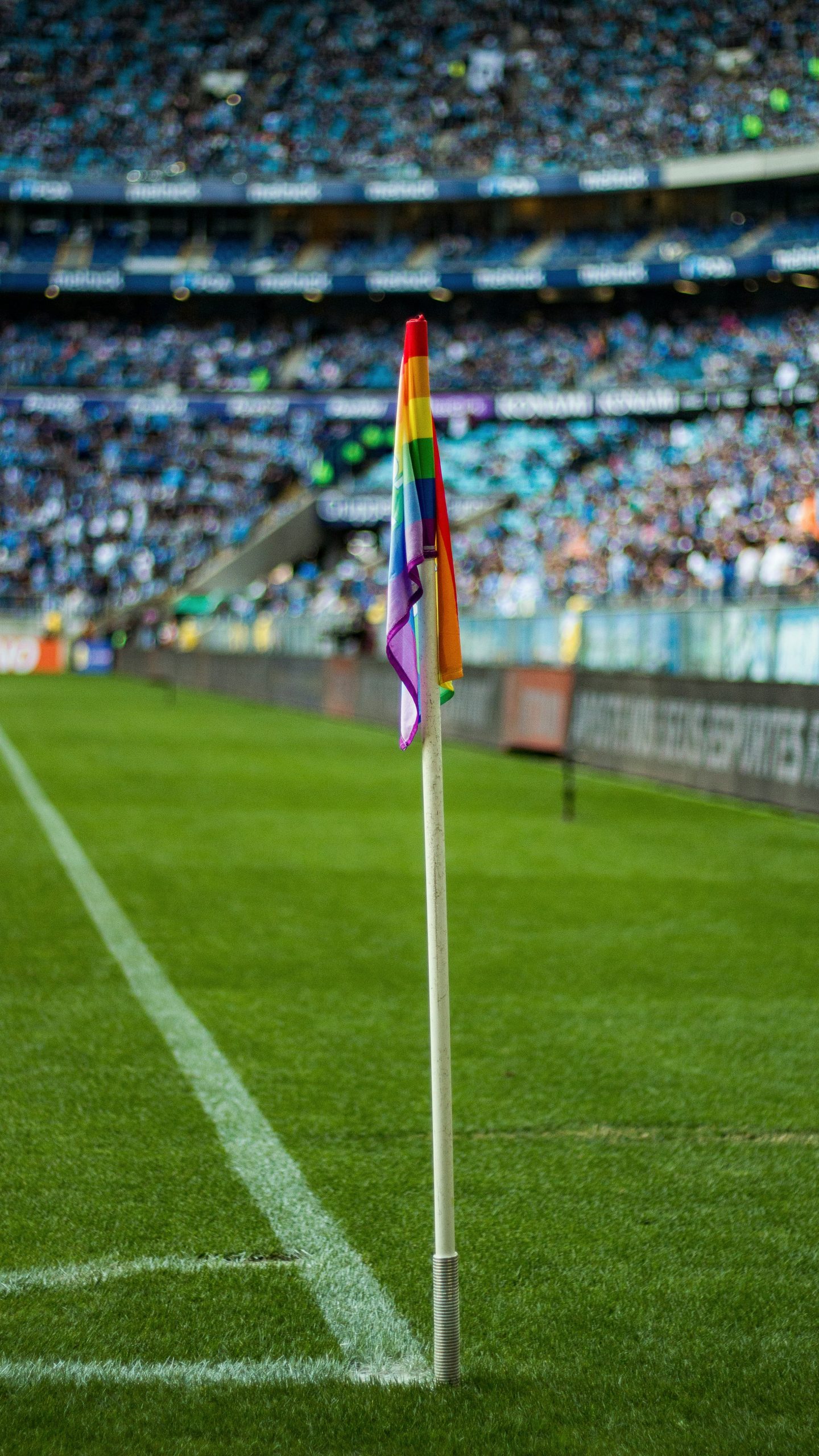
During a match against Sevilla in January, Borja Iglesias was the subject of horrific homophobic abuse. Opposition fans weaponised the striker’s creativity by making derogatory references to his painted nails. In a powerful stand against this discrimination, Celta Vigo players and supporters wore nail polish in the following game against Rayo Vallecano to show solidarity with their player and also to demonstrate that homophobia has no place in football. Rainbow flags were also waved in the stands. After the game, Celta posted a picture of their players with their nail art with the caption: “Against Hate, Together.” This is significant because it demonstrates that football clubs can redirect something negative into something positive.
Iglesias has painted his fingernails for years. In past interviews, he has said that he began doing it to highlight important social issues and stand against injustice and intolerance in society. The fact that something as small and simple as nail polish provoked such hostility highlights just how fragile and archaic ideas of masculinity are within football and, more broadly, sports culture. Since its inception, football has been characterised as a sport for men that demands toughness and aggression.
These are traits that are typically viewed as masculine. For decades, these rigid expectations excluded women from playing the game and also men who do not act in accordance with hyper-masculine norms. Football continues to confine anyone who attempts to step outside of the very narrow ideas of masculinity and gender norms. Whilst there have been attempts to eradicate these stereotypes and welcome the LGBTQ+ community, these have mainly been symbolic rather than transformative.
Campaigns such as rainbow laces are symbolic acts that do well to signal awareness and discussion of the issue, but they often fail to confront the deeper cultural attitudes that are strongly ingrained within fan behaviour, locker room norms and footballing institutions. They have not done enough to change the narratives within football. The positive response of the Celta Vigo supporters and players shows that, in some instances, symbolic acts can become acts of resistance, reshaping the narrative by challenging entrenched ideas of masculinity in football.
A week before the Celta Vigo incident, Josh Cavallo, the first man to come out as gay while playing elite football, accused his former club Adelaide United of “internal homophobia” before his exit in 2025. In a statement, he wrote: “It’s hard to swallow when I realised my own club was homophobic. I was angry because people thought I was sidelined based on injuries, when in reality, it was internal homophobia that kept me on the bench.” A spokesperson for the club said it “categorically rejects” these claims.
However, the fact that this was how he was made to feel is significant in itself. It illustrates that even when institutions publicly align themselves with inclusion and equality, the internal structures of these institutions prohibit any real progress. It also highlights that homophobia in football is not simply limited to chants in the stands. Football is supposed to be a unifying sport that brings people together, but instead, we still see attempts to keep those who do not confine themselves to traditional ideals of football culture pushed out.
The abuse that Borja Iglesias was a victim of only reinforces this. Its institutions and cultures often reproduce the same exclusionary politics taking place in society, showing that sport doesn’t escape politics, it reflects and magnifies it. As football is a microcosm for society, it reflects the wider political and cultural shift which has seen progress stalled for a return back to a more fixed, traditional social order where conformity is rewarded and difference is treated as a threat rather than something to be celebrated.
In the past few years, across Europe and America, there has been a significant rise in right-wing populism. Appeals to traditional social norms have marked this. Policies and rhetoric from these growing movements have framed LGBTQ+ rights as a threat. The effect of this has been seen through fan behaviour and institutional hesitation. Recent years have seen backlash to rainbow armbands, hostility toward women’s football gaining legitimacy, and abuse toward players who don’t fit hyper-masculine norms. The rise of the right doesn’t just influence what governments do; it shapes what is socially acceptable, who is celebrated and who is marginalised, on the pitch, in stadiums, and across the global fanbase.
A cultural shift is unlikely if powerful institutions do not challenge this, and if inclusion continues to be treated as a symbolic performance rather than astructural necessity. Moments like Celta Vigo supporters painting their nails in solidarity show that progressive politics is still an option. Until governing bodies and institutions move beyond risk-avoidance, progress will continue to be uneven and vulnerable to backlash.