Tag: sports

  • How Zohran Mamdani Uses Sports To Communicate His Politics

    How Zohran Mamdani Uses Sports To Communicate His Politics

    Sport brings people together through a shared love and joy. It provides a source of comfort and ease for millions around the world. It isn’t just entertainment, though– it can also be used as a powerful political tool. Politicians can use sport to build community, connect with ordinary voters and communicate their political values. It has often been underutilised as a political tool because it can be hard for politicians to convey genuine passion and interest. New York mayor Zohran Mamdani, however, is challenging this idea. He is proving to be a great model for using this tool. Mamdani has embraced football and basketball not only as a fan, but as part of how he connects with the public. This has been important to his political strategy and public perception.

    Before Mamdani was elected New York City Mayor, he made his sporting allegiances no secret. Through his social media, many people quickly learnt that he is a massive Arsenal fan and New York Knicks fan. Instead of ignoring this passion, he embraced it and made it a central piece of his political identity. Through his love of sports, particularly football, a working-class game, he has been able to communicate several policies as well as his socialist values.

    His relationship with it goes beyond mere interest. His deep knowledge of both Arsenal and the New York Knicks has helped him cultivate an image of an “everyman” politician; someone who understands the highs and lows of supporting a team because he has experienced them himself. This authenticity is important. Often, politicians fail in attempts to appear more connected to ordinary voters by associating themselves with popular sports. This is because these attempts can easily feel performative. Mamdani’s sporting identity, however, clearly predates his political career. When Arsenal were in their ‘banter era ’, Mamdani was tweeting about it. Earlier this year, he celebrated their Premier League success.

    This connection Mamdani has with football has allowed him to use sport to communicate progressive politics. Whilst sport tends to be used by politicians to distract from domestic issues and boost national pride, Zohran Mamdani has used it to challenge corporate greed and combat high living costs- issues at the heart of his political agenda. During his mayoral campaign, he launched the “Game Over Greed” petition. This challenged FIFA’s approach to ticket pricing for the 2026 World Cup games. He criticised dynamic pricing and called for limits on resale prices and affordable tickets for residents. By doing this, he was sending a strong message that the world’s biggest sporting event should not be hijacked by corporate greed and be inaccessible to the people living in the cities hosting it. 

    By calling out FIFA in this way, Mamdani was able to translate a political argument about corporate power and affordability into something tangible for ordinary people. Instead of talking about the cost-of-living crisis in purely economic terms, he pointed to something millions of people understand immediately: being priced out of watching your team play. The World Cup is supposed to be a time of unity and jubilation. People should not feel excluded, and it should not be inaccessible. Mamdani successfully used football as a vehicle for his wider argument that essential experiences should not be reserved for those who can afford the most.

    As mayor, he worked with FIFA to secure 1,000 World Cup tickets priced at $50, while also establishing more than 100 free public viewing events for New Yorkers and visitors. These initiatives were important because they allowed the World Cup to function as more than just entertainment. Through these spaces, people were able to gather, celebrate and develop a shared sense of civic identity.

    Earlier this week, he secured 1,000 affordable tickets to the US Open, allowing more New Yorkers to watch elite-level tennis, making the US Open Main Draw more accessible to New York City residents.

    While politicians on the left such as Hillary Clinton, Joe Biden and Kamala Harris have occasionally engaged with sport, it has rarely been central to their political identities. Mamdani appears to have recognised that sport offers an opportunity to reach people beyond traditional political spaces. His approach is particularly significant because sport has often been associated with the political right. Politicians have used football to appeal to ideas of patriotism, national identity and traditional culture. This has been seen in Britain, where Nigel Farage, leader of the right-wing party Reform UK, has previously argued that football and politics should remain separate before releasing Reform-branded football merchandise.

    Mamdani is not using sports to be divisive. Rather, he is attempting to associate it with affordability, accessibility, community and collective identity. Authenticity is the strategy.

    Perhaps the most important part of Mamdani’s approach is that he does not appear to be manufacturing a sporting personality for political purposes.
  • From Abuse to Activism: Celta Vigo Tackles Homophobia and Toxic Masculinity in Football

    From Abuse to Activism: Celta Vigo Tackles Homophobia and Toxic Masculinity in Football

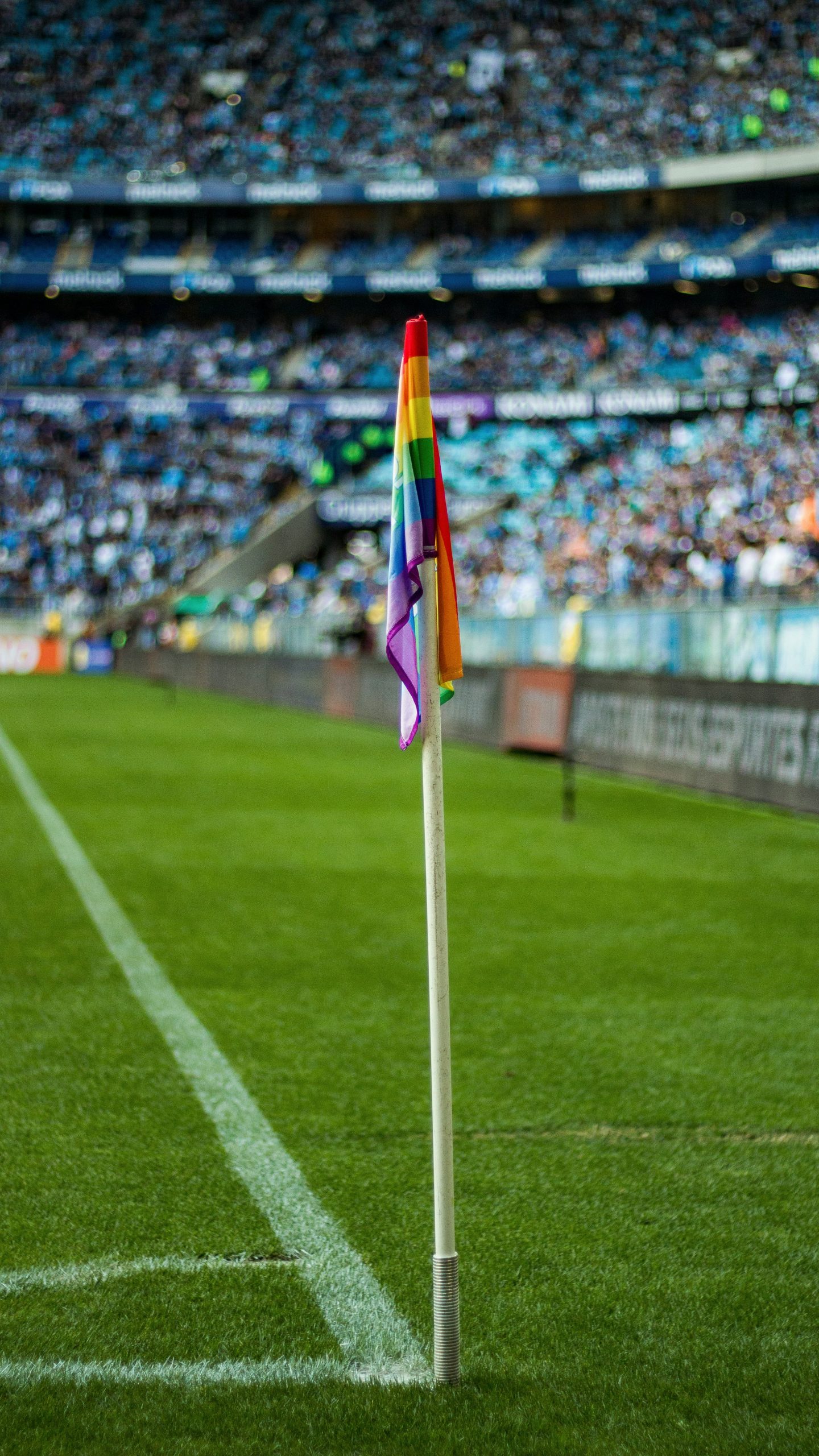
    Photo by Wesley Fávero on Unsplash

    During a match against Sevilla in January, Borja Iglesias was the subject of horrific homophobic abuse. Opposition fans weaponised the striker’s creativity by making derogatory references to his painted nails. In a powerful stand against this discrimination, Celta Vigo players and supporters wore nail polish in the following game against Rayo Vallecano to show solidarity with their player and also to demonstrate that homophobia has no place in football. Rainbow flags were also waved in the stands. After the game, Celta posted a picture of their players with their nail art with the caption: “Against Hate, Together.” This is significant because it demonstrates that football clubs can redirect something negative into something positive.

    Iglesias has painted his fingernails for years. In past interviews, he has said that he began doing it to highlight important social issues and stand against injustice and intolerance in society. The fact that something as small and simple as nail polish provoked such hostility highlights just how fragile and archaic ideas of masculinity are within football and, more broadly, sports culture. Since its inception, football has been characterised as a sport for men that demands toughness and aggression. 

    These are traits that are typically viewed as masculine. For decades, these rigid expectations excluded women from playing the game and also men who do not act in accordance with hyper-masculine norms. Football continues to confine anyone who attempts to step outside of the very narrow ideas of masculinity and gender norms. Whilst there have been attempts to eradicate these stereotypes and welcome the LGBTQ+ community, these have mainly been symbolic rather than transformative.

    Campaigns such as rainbow laces are symbolic acts that do well to signal awareness and discussion of the issue, but they often fail to confront the deeper cultural attitudes that are strongly ingrained within fan behaviour, locker room norms and footballing institutions. They have not done enough to change the narratives within football. The positive response of the Celta Vigo supporters and players shows that, in some instances, symbolic acts can become acts of resistance, reshaping the narrative by challenging entrenched ideas of masculinity in football. 

    A week before the Celta Vigo incident, Josh Cavallo, the first man to come out as gay while playing elite football, accused his former club Adelaide United of “internal homophobia” before his exit in 2025.  In a statement, he wrote: “It’s hard to swallow when I realised my own club was homophobic. I was angry because people thought I was sidelined based on injuries, when in reality, it was internal homophobia that kept me on the bench.” A spokesperson for the club said it “categorically rejects” these claims. 

    However, the fact that this was how he was made to feel is significant in itself. It illustrates that even when institutions publicly align themselves with inclusion and equality, the internal structures of these institutions prohibit any real progress. It also highlights that homophobia in football is not simply limited to chants in the stands. Football is supposed to be a unifying sport that brings people together, but instead, we still see attempts to keep those who do not confine themselves to traditional ideals of football culture pushed out. 

    The abuse that Borja Iglesias was a victim of only reinforces this. Its institutions and cultures often reproduce the same exclusionary politics taking place in society, showing that sport doesn’t escape politics, it reflects and magnifies it. As football is a microcosm for society, it reflects the wider political and cultural shift which has seen progress stalled for a return back to a more fixed, traditional social order where conformity is rewarded and difference is treated as a threat rather than something to be celebrated. 

    In the past few years, across Europe and America, there has been a significant rise in right-wing populism. Appeals to traditional social norms have marked this. Policies and rhetoric from these growing movements have framed LGBTQ+ rights as a threat. The effect of this has been seen through fan behaviour and institutional hesitation. Recent years have seen backlash to rainbow armbands, hostility toward women’s football gaining legitimacy, and abuse toward players who don’t fit hyper-masculine norms. The rise of the right doesn’t just influence what governments do; it shapes what is socially acceptable, who is celebrated and who is marginalised, on the pitch, in stadiums, and across the global fanbase.

    A cultural shift is unlikely if powerful institutions do not challenge this, and if inclusion continues to be treated as a symbolic performance rather than astructural necessity. Moments like Celta Vigo supporters painting their nails in solidarity show that progressive politics is still an option. Until governing bodies and institutions move beyond risk-avoidance, progress will continue to be uneven and vulnerable to backlash.