Tag: premierleague

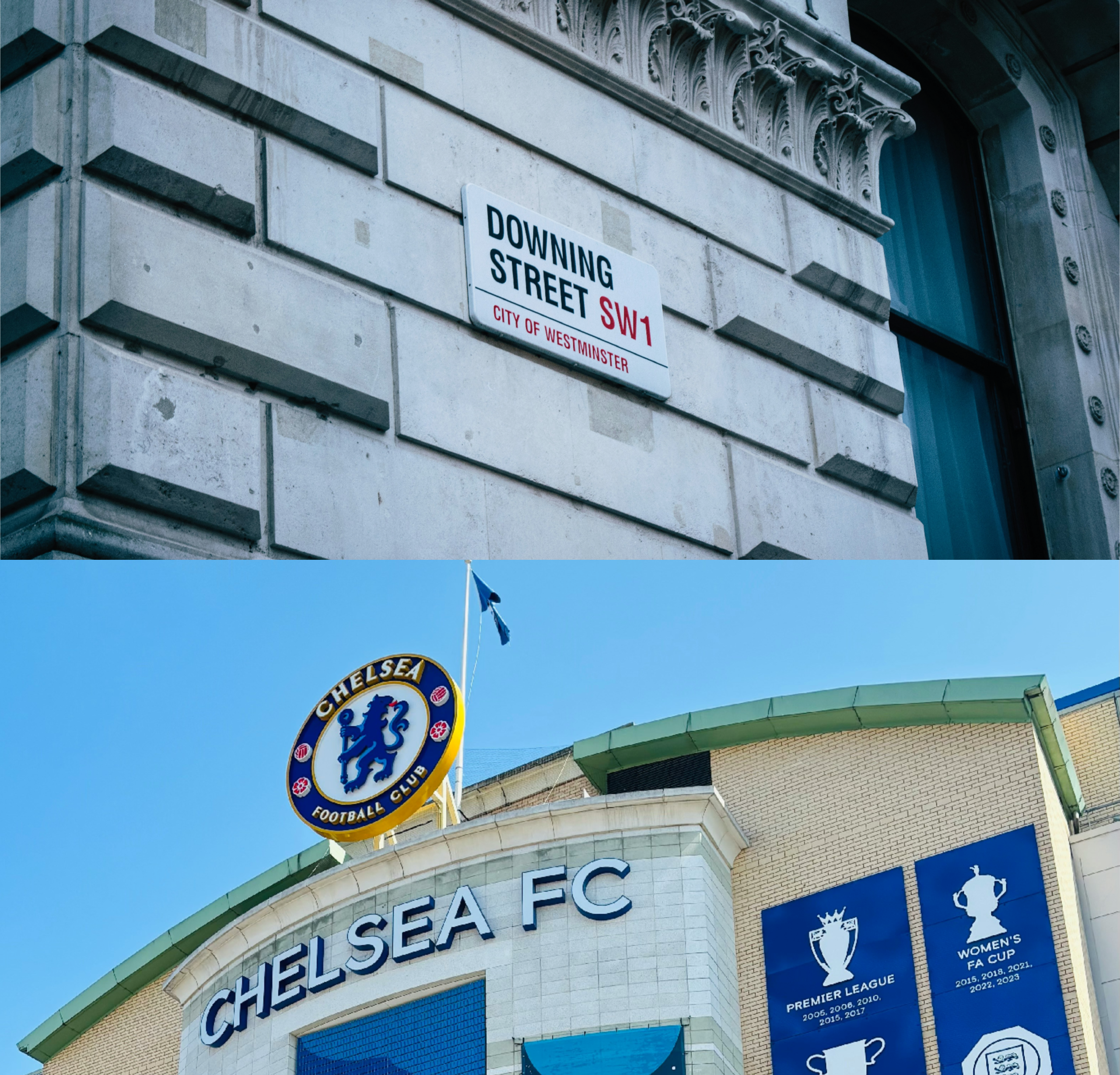
  • What do Chelsea FC and the UK Government have in common?

    What do Chelsea FC and the UK Government have in common?

    Last month, Keir Starmer announced his resignation as Prime Minister of the United Kingdom and leader of the Labour Party. After nearly 2 years at 10 Downing Street, he decided he was no longer the right person to take the country forward. In his resignation speech he said: “The question my party is asking now is whether I am best placed to lead us into the next general election. I have heard the answer of my parliamentary party to that question. And I accept that answer with good grace”.

    Starmer’s decision followed months of significant criticism and political pressure from the public, the opposition and his own party. Opinion polls indicated that he was the most unpopular prime minister in modern times. Many people felt he was not doing a good enough job.

    In 2024, Keir Starmer led his Labour Party to its biggest majority in Parliament this century, consigning the Conservatives to their worst-ever defeat. Whilst he won a large majority, he only won 33.7% of the total vote, representing the lowest vote share of any majority government in British history. 

    This staggering disparity is a direct consequence of the UK’s First-Past-the-Post electoral system, which rewards parties with concentrated support, rather than a party’s total national vote. FPTP is praised for creating strong and stable governments. However, the UK has seen 7 Prime Ministers in the last 10 years, suggesting that this electoral system is anything but unstable. The turnout at the 2024 election was only 60%, 7.6 percentage points lower than in 2019, further weakening Keir Starmer’s mandate.

    Several factors led to Starmer’s resignation. A disastrous performance in the May 2026 local elections severely damaged his authority and caused support within the party to drain away. Several high-profile figures, including former Health Secretary Wes Streeting and Defence Secretary John Healey, resigned from their positions, leaving Starmer without a viable bloc of support. To make matters worse for Starmer, Andy Burnham won a landslide in the Makerfield by-election, which cleared a definitive path for a top-tier challenger to re-enter parliament and directly challenge Starmer’s position.

    Ultimately, Number 10 has become a revolving door of Prime Ministers, much like Chelsea Football Club’s revolving door of managers. Both institutions have developed a reputation for replacing leaders in the hope that a new face can solve old problems. Chelsea has had 10 managers in the last 10 years and has become notorious for its willingness to sack managers, even when they have achieved great success.

    In football and in government leaders are under significant pressure from the media, public expectations and financial/ electoral stakes. Social media has exacerbated this pressure because there are now constant online reactions. As a result of this, leaders have less time to build and are expected to deliver immediately. Football clubs and governments therefore face a similar dilemma: Should they tolerate short-term setbacks in pursuit of long-term progress? Or prioritise immediate results, even if it means constant disruption?

    Chelsea has had some success in adopting this approach. In 2021, Thomas Tuchel transformed a struggling side into Champions League winners just months after Frank Lampard’s dismissal. Chelsea remains the only football club in London to win this title. However, Chelsea’s long-term record suggests that constant change is limited. While the club has enjoyed winning some major trophies through managerial turnover, it has struggled to establish the sustained dominance achieved by Manchester City. 

    In his first season at Manchester City, Pep Guardiola finished the season without a trophy for the first time in his managerial career. Despite this, the club’s hierarchy remained committed to his long-term vision. That patience was rewarded with multiple record-breaking seasons that included  Premier League titles, domestic cups and a Champions League trophy, creating one of the most successful eras in English football history. If Manchester City had adopted Chelsea’s approach, they might not have achieved the long-term success that they did.

    This can also be seen at Arsenal, where patience with Mikel Arteta allowed them to achieve success albeit in a different way. When Arteta was appointed in 2019, the club was far from competing for major trophies. His first seasons were marked by back-to-back 8th-place finishes in the league and criticism from supporters. However, Arsenal’s hierarchy resisted the pressure to make a quick change. Instead, they backed Arteta’s long-term vision, allowing him to reshape the squad, develop younger players and establish a new culture at the club. The results did not arrive immediately, but over time Arsenal became genuine Premier League title contenders, and won it earlier this year.

    At 10 Downing Street, in just two years, Keir Starmer has led several policy successes. Labour’s employment rights bill paved the way for significant new rights for workers on sick pay, parental leave and zero-hours contracts. He hailed it as “the biggest upgrade to workers’ rights in a generation” when it came into law in December. His government has also started a national rollout of free breakfast clubs for all primary school pupils, which Starmer called “a lifeline for parents” and an investment “in the next generation to give them the best start in life”. Despite what some might think, he has done well to combat immigration. In May last year, he promised that new immigration measures would see net migration fall “significantly” over the next four years. So far, it has been successful as over the last 12 months, according to this BBC tracker, net migration is 48% down, asylum claims are down 12%, and small boat arrivals are down 41%.

    It is clear that Keir Starmer’s government has not been a complete disaster, but ultimately he has not done enough to win the electorate’s favour. However, the electorate needs to understand that lasting reforms often require time to take effect, and replacing leaders before their policies can be implemented risks prioritising short-term political pressures over long-term outcomes.

    Chelsea and Westminster illustrate that in modern leadership, patience is in short supply and replacing the person at the top is often seen as the solution to institutional problems. Short-termism has become the norm, and people are becoming increasingly impatient. Whether in football or politics, replacing leaders can sometimes provide fresh momentum. But it can also become a substitute for confronting deeper organisational or institutional challenges.
  • The Arsenal Identity: Diversity, Community, and Culture

    The Arsenal Identity: Diversity, Community, and Culture

    On May 19th 2026, Arsenal Football Club’s agonising wait for a Premier League title officially came to an end. After their closest challengers, Manchester City, failed to beat AFC Bournemouth, Arsenal were crowned champions of England. The last time those words were associated with Arsenal was in 2004 – 22 years prior – when they became the first and, to this day, only team to end the Premier League campaign as champions without a single defeat. Dubbed “The Invincibles”, that team remains one of the most iconic teams in English football history. 

    After such a historic campaign, few could have imagined that the Gunners’ next Premier League title would come more than two decades later. But after 22 years of heartbreak, rebuilding, and near misses, Arsenal have finally returned to the summit of English football. Beyond a simple sporting achievement, this title win has served as an important reminder that football has a unique ability to transcend differences, strengthen communities, and unite people through a shared sense of hope and belonging. This is especially important given the political climate we find ourselves in, where division and uncertainty often overshadow a sense of shared identity and togetherness.

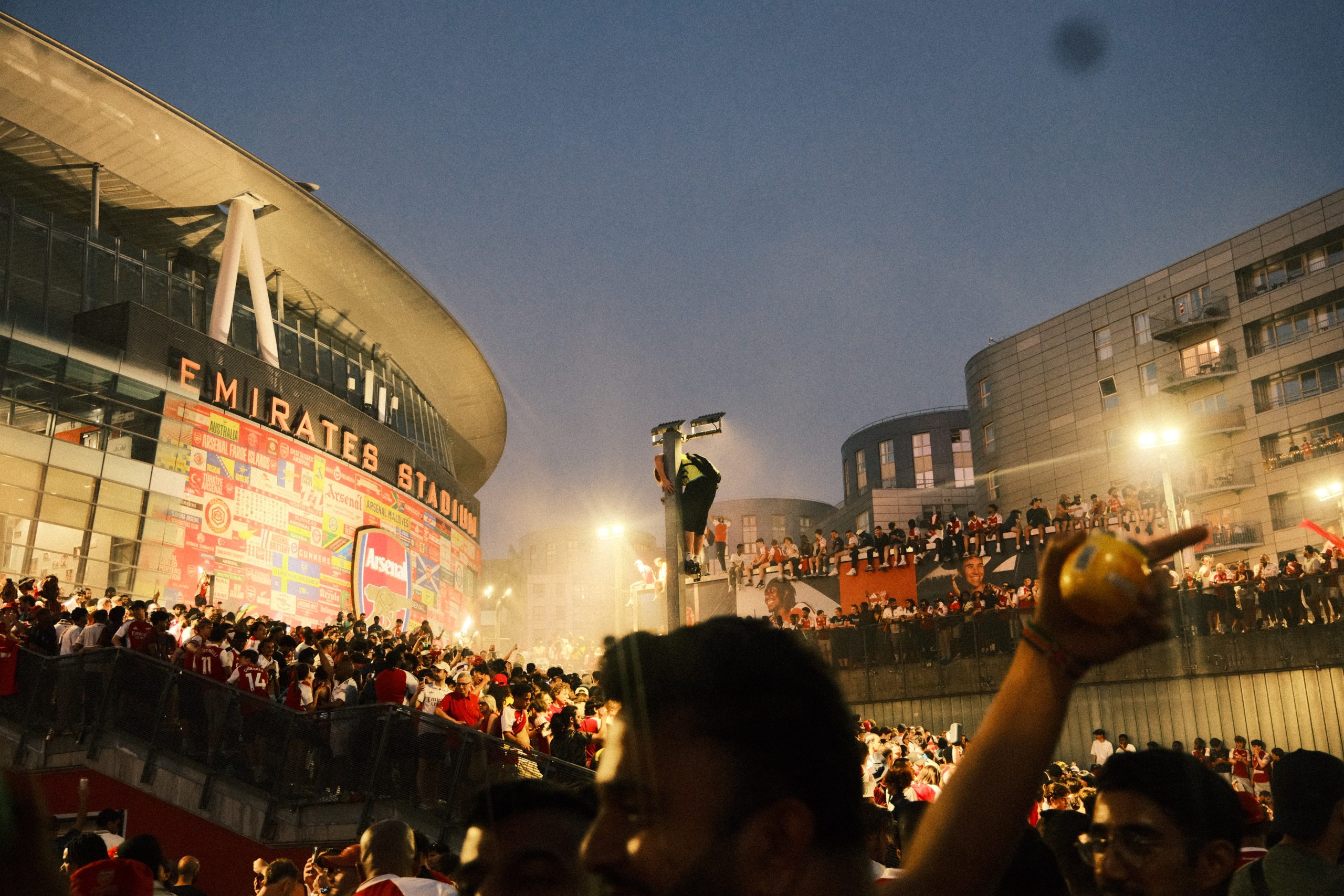
    As soon as the full-time whistle blew at Bournemouth, confirming Arsenal as champions, it is estimated that around 100,000 Arsenal supporters spontaneously descended upon the Emirates and the streets of North London to celebrate. Young and old, from every race, background, and walk of life, fans gathered in scenes of pure jubilation. Strangers hugged strangers. Fireworks and flares lit the sky and voices harmonised into chants that echoed in the streets. 

    This massive and diverse gathering showcased London at its best: a multicultural and cosmopolitan city where cultures coexist and differences are celebrated rather than feared. It served as a significant contrast to the “Unite the Kingdom” rally held days prior, which had been widely condemned by politicians and rights groups for encompassing inflammatory rhetoric and division. 

    Organised by far-right activist Tommy Robinson, a highly controversial figure accused of promoting anti-Muslim sentiment, the rally was symbolic of the political polarisation that is at the forefront of public discourse. Whilst organisers claimed that millions had attended his “unite the kingdom” rally, police estimated the number of demonstrators to be at about 60,000. Not only was this significantly below the organisers’ claims, but it was also lower than the estimated 100,000 Arsenal supporters who gathered around the Emirates Stadium and across North London to celebrate their club’s Premier League triumph.

    The scenes across North London were not surprising considering Arsenal’s status as the ‘culture club’ in England. Arsenal have created a strong identity as one of English football’s most multicultural and globally supported clubs. The celebrations were not confined to North London. Across the world, in places like Kenya, New York and Ethiopia, streets were painted red with Arsenal Supporters. In an era of rising racial and social fragmentation, Arsenal’s victory can be viewed as an anchor for multiculturalism. It can be seen as a reminder that despite our differences, cohesion and community is possible.

    For decades, Arsenal have embodied the diversity that defines modern London. They have been pioneers of the women’s game, giving their women’s team significant visibility by celebrating their women’s team and adopting a one-club mentality. They have also been a pioneering force for diversity. Before the English game became diversified with foreign talent, it was Arsenal that led the charge in changing what football looked like. 

    In the 1970s and 1980s, racism in English football was overt and deeply embedded. Black players were victims of abuse from the stands and the media, and monkey chants, bananas and racist chants were the norm. Institutions within football offered little to no protection for these players. Black supporters were alienated from attending football matches as it was not a safe atmosphere for them. 

    Arsenal soon became the antithesis of this. This is because, under Arsène Wenger, Arsenal disrupted the traditional makeup of English football. The former Arsenal manager brought in French, black, and African players, creating one of the most diverse squads in English football at the time. In 2002, Arsenal became the first club to field nine Black players in a Premier League starting XI. Many people across the globe became Arsenal fans because they could see themselves represented in the team. Through the shared love of Arsenal, therefore, different cultures and backgrounds were able to unite under one single identity. 

    Black players have been key protagonists in Arsenal’s history. Thierry Henry holds the club’s all-time scoring record with 228 goals. His lethal finishing spearheaded the “Invincibles” unbeaten season, one of the greatest feats in English football history. Alongside him were Sol Campbell and Patrick Vieira, who also played vital roles in this historic campaign. In 1989, when Arsenal needed to score 2 goals at Anfield to win the league, it was Michael Thomas who scored the second goal in the final seconds of the match, ending Arsenal’s 18-year wait to be crowned champions. Alongside Michael Thomas, David Rocastle became an instrumental component of George Graham’s title-winning side, playing in every single league match of the legendary 1988–89 campaign.

    Before Thierry Henry, Ian Wright obtained the club’s all-time goalscoring record. Nicknamed “Wrighty”, he became a cultural and sporting icon whose charisma and authenticity made him a beloved figurehead for Arsenal’s multicultural fanbase. For many supporters, particularly young Black fans growing up in London, Wright represented visibility, pride, and possibility. The success of players such as Wright and Henry did not emerge in isolation. Their rise was built upon the foundations laid by trailblazers who challenged barriers and expanded representation within English football.  Brendon Batson became the club’s first Black player when he made his debut in 1971, paving the way for decades of representation.

    Viv Anderson was signed by George Graham in 1984, and he was the first Black man to play for the England senior national football team. Paul Davis was a vital midfielder who made over 400 appearances and won two league titles during the 1980s. Together, these figures helped shape not only Arsenal’s identity on the pitch but also its image off the pitch as a club that celebrates people from different backgrounds. Arsenal have created a global fanbase that has brought millions of people together under a shared identity, and this was more than evident in the title celebrations. In times of political polarisation and division, it is refreshing to see moments that still bring people together.