During his 2024 election campaign, US President Donald Trump pledged to end US involvement in costly and destructive foreign wars. In December 2025, during the FIFA World Cup draw, Donald Trump was awarded the inaugural FIFA Peace Prize. Gianni Infantino, the Fifa president and a close ally of Trump, presented the award, saying Trump had been selected “in recognition of his exceptional and extraordinary actions to promote peace and unity around the world”.
His foreign policy this year, however, appears to contradict this. 2026 for Trump has been defined by aggressive military action. In January, the United States captured Venezuelan President Nicolás Maduro and his wife, Cilia Flores, in a military operation in Caracas. Following this, Trump also renewed threats to annex Greenland, leading to severe diplomatic friction with Denmark. Trump also threatened US strikes in Nigeria if the government did not do more to address what Trump said is a “genocide” of Christians in Nigeria by Muslim groups.
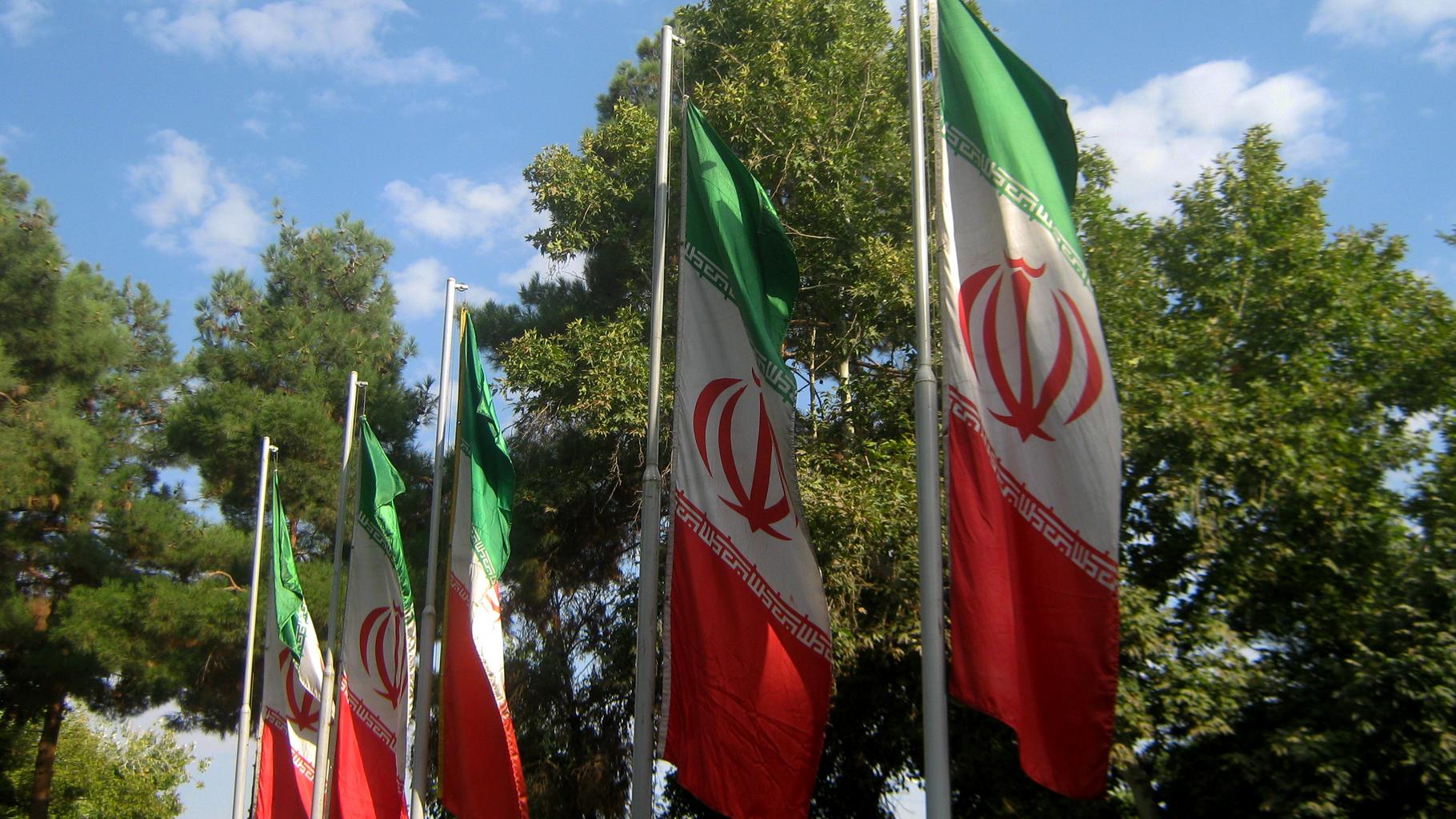
His most aggressive embrace of military action this year comes in Iran, where the United States has been engaged in a rapidly escalating conflict since late February. The conflict started on 28 February 2026, when the United States and Israel launched surprise airstrikes on multiple sites and cities across Iran, killing Supreme Leader Ali Khamenei and several other Iranian officials. Iran responded with missile and drone strikes against Israel, US bases, and US-allied countries in the Middle East.
The conflict stems from years of tense relations between Iran and the United States. Before the 1979 Islamic Revolution, the United States and Israel were both close allies with Iran’s government. However, U.S. involvement in Iranian affairs became a lasting source of resentment among Iranians, particularly following its role in the 1953 Iranian coup d’état, which helped sustain the widely unpopular Pahlavi monarchy. Many Iranians under the Pahlavi monarchy viewed the Shah as a “puppet” of the US. Therefore, the 1953 intervention was a major catalyst for the 1979 revolution that forced the Shah into exile.
Since the 1979 revolution, tension between these global actors has continued. Much of this tension is over Iran’s nuclear program, ballistic missile development, and regional proxy network. The 2026 Iran war followed the collapse of the 2025–2026 nuclear negotiations and a 12-day war with Israel in June 2025. Following this 12-day War, sanctions on Iran were reimposed, and this put Iran’s currency into a freefall, prompting a significant outbreak of protests in late December. These protests spread across Iran in January 2026 and became the largest uprising in Iran since the 1979 Islamic Revolution. The US first openly talked in January about potentially attacking Iran when its security forces cracked down on protesters with deadly force.
This violent crackdown, reportedly carried out under orders by Ali Khamenei and senior officials, resulted in massacres that left thousands of protesters dead, making them the largest massacres in modern Iranian history. But the US and Iran began nuclear negotiations and appeared to be making progress until Trump said he was “not happy” with the way the talks were going on 27 February. Hours after this, the US and Israel launched a surprise attack, killing Khamenei, other Iranian officials, and civilians, abruptly ending any immediate prospect of diplomatic resolution.
American and Israeli officials have offered conflicting explanations of the attack. Following the attack, US President Donald Trump described it as defensive and suggested that the aim was to eradicate “imminent threats” from Iran. Meanwhile, Israel described it as a “preemptive strike” aimed at neutralising an anticipated missile attack from Iran. Other U.S. officials have said it was aimed at crippling Iran’s ballistic missile infrastructure and preventing Iran from obtaining a nuclear weapon. Israeli Prime Minister Benjamin Netanyahu has repeatedly described the Iranian regime as an “existential threat” to Israel. Marco Rubio, the US secretary of state initially suggested that the U.S. launched strikes partly due to pressure from Israel which was preparing its own attack. These comments were later taken back as he insisted that the strike was a decision made by Trump and that Israel did not force U.S. action.
Realist international relations theory emphasises that states operate in an anarchic system focused on power maximisation and national security. The justifications offered by the United States and Israel, particularly the need to eliminate Iran’s nuclear capabilities, suggest their actions are consistent with realist logic, in which military force is used to eliminate perceived threats. Ultimately states are selfish, and so anything they do is to maximise their power and position in the global system. Iran is also following the same logic, as its retaliation reflects its need for self-preservation.
As with any war, the costs have been high. From civilian casualties to rising oil prices, the effects of this conflict have been felt globally. One of the most significant impacts has been the blockage of the Strait of Hormuz. The Strait of Hormuz is a waterway between the Persian Gulf and the Gulf of Oman. It is bordered by several countries, one of which is Iran. It is of great geopolitical importance because about 20% of all oil supplies and about 20% of seaborne gas tankers pass through it, making it one of the most important arteries for global trade. Options to bypass the strait are limited.
Before the war, each day roughly 20 million barrels of oil and petroleum products moved through the Strait. Around 3,000 ships usually sail through the strait each month, but this has dramatically decreased recently. Iran’s blockage of the Strait has globally impacted energy and fuel prices. Brent crude oil has surged above $100 per barrel, up from roughly $65 when tensions between the United States and Iran began heating up.
The UK is forecast to experience the largest growth hit among the G20 major economies due to its vulnerability to global energy price shocks. The International Monetary Fund (IMF) has said that Britain’s economy is “especially exposed” to spiralling prices because it relies on gas‑fired power. Elsewhere in the Philippines, the government has declared a national energy emergency over the oil crisis triggered by the war in the Middle East. The Philippines imports almost all of its crude oil from the Middle East, and so it has been significantly impacted by the blockage of the Strait of Hormuz.
Another state that has been impacted is Russia. The United States temporarily lifted sanctions on Russian oil to contain energy prices. This move has delivered Moscow roughly $150 million per day in additional revenue. This has given the Kremlin a boost as it now has new resources to finance its war against Ukraine. Also, with Iran now taking centre stage, the Trump administration’s attention is inevitably distracted from Ukraine.
This conflict has also had profound diplomatic consequences, causing significant global friction. On Wednesday, it was reported that Donald Trump is strongly considering leaving NATO over the lack of support shown for his attack on Iran, in another extraordinary attack on US allies. Several European countries, such as Spain, expressed opposition to US actions. Spain refused to allow the US to use its airbases. Similarly, UK Prime Minister Keir Starmer has repeatedly said that he will not be dragged into a war. Trump has been consistent in his criticism of the Prime Minister, stating that he was “very disappointed in Keir” as he “took far too long” to reverse his decision not to let the US use UK bases to bomb Iran.
It is not clear when this war is likely to end, as reports of negotiations have been conflicting. Trump says talks with Iran are happening, while Iran says there is no negotiation. Progress may be playing out behind the scenes; however, there is little public indication that the war is coming to a diplomatic end.