Tag: politics

  • Trump’s War with Iran and Its Global Effects

    Trump’s War with Iran and Its Global Effects

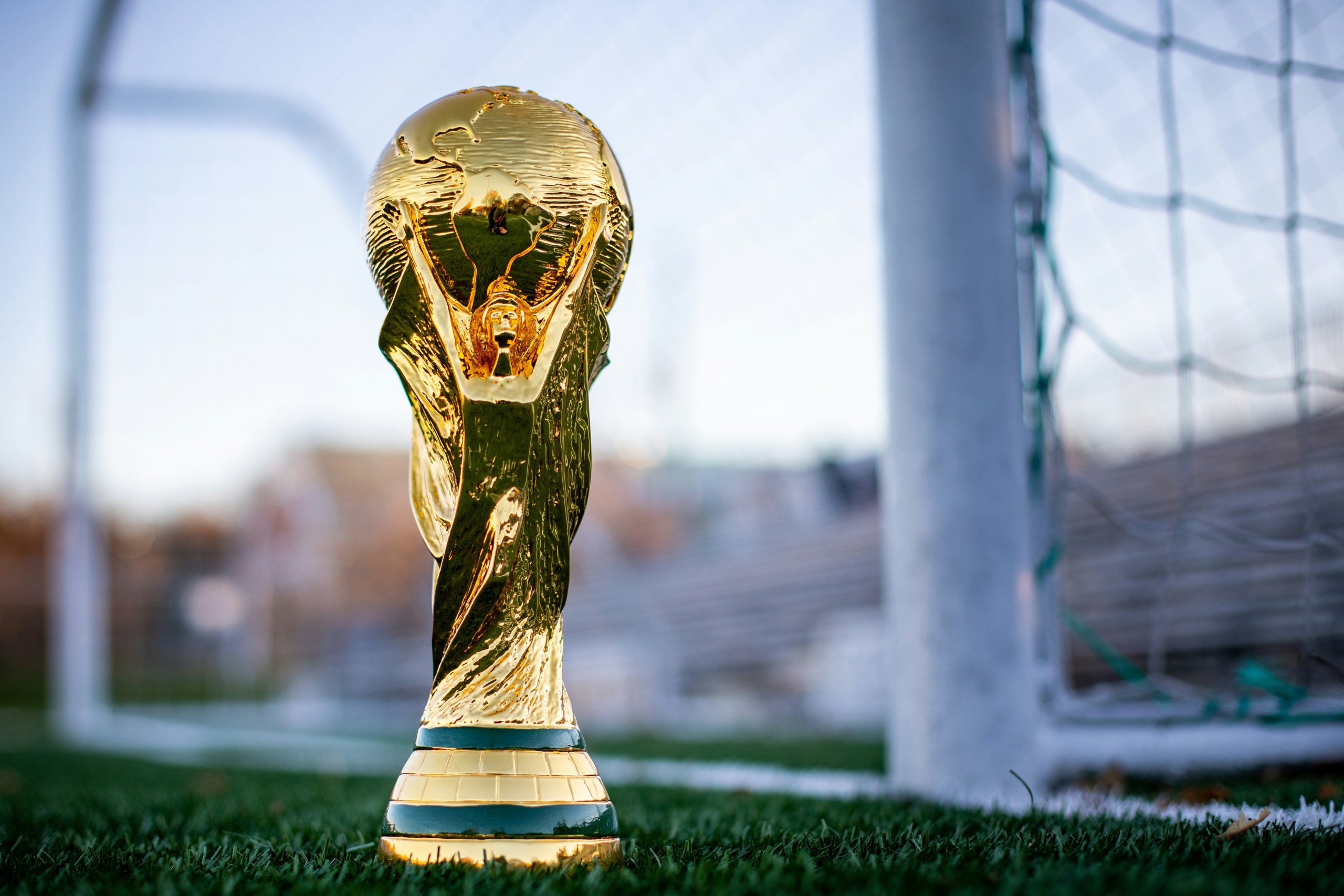
    During his 2024 election campaign, US President Donald Trump pledged to end US involvement in costly and destructive foreign wars. In December 2025, during the FIFA World Cup draw, Donald Trump was awarded the inaugural FIFA Peace Prize. Gianni Infantino, the Fifa president and a close ally of Trump, presented the award, saying Trump had been selected “in recognition of his exceptional and extraordinary actions to promote peace and unity around the world”.

    His foreign policy this year, however, appears to contradict this. 2026 for Trump has been defined by aggressive military action. In January, the United States captured Venezuelan President Nicolás Maduro and his wife, Cilia Flores, in a military operation in Caracas. Following this, Trump also renewed threats to annex Greenland, leading to severe diplomatic friction with Denmark. Trump also threatened US strikes in Nigeria if the government did not do more to address what Trump said is a “genocide” of Christians in Nigeria by Muslim groups.

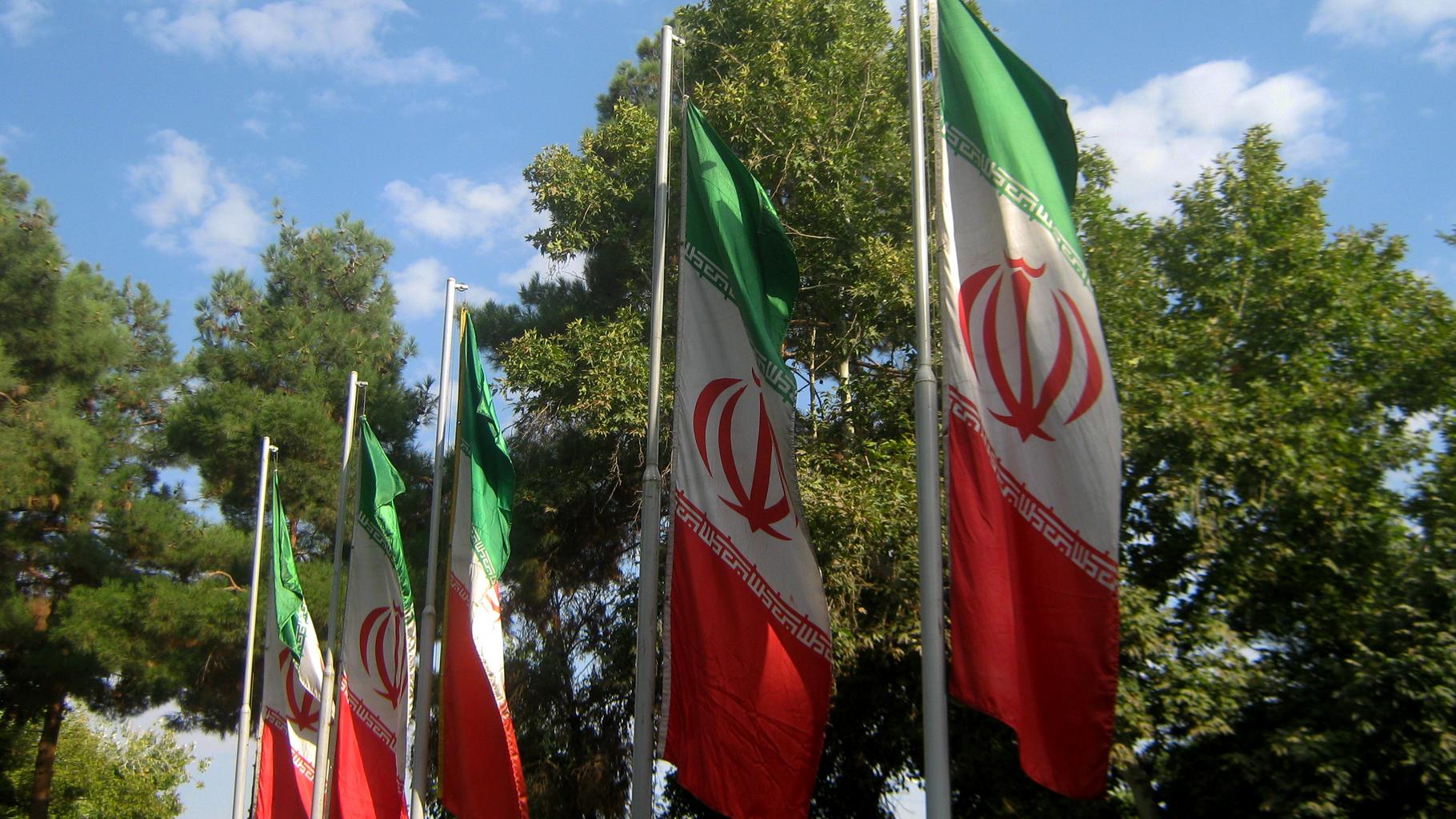
    His most aggressive embrace of military action this year comes in Iran, where the United States has been engaged in a rapidly escalating conflict since late February. The conflict started on 28 February 2026, when the United States and Israel launched surprise airstrikes on multiple sites and cities across Iran, killing Supreme Leader Ali Khamenei and several other Iranian officials. Iran responded with missile and drone strikes against Israel, US bases, and US-allied countries in the Middle East.

    The conflict stems from years of tense relations between Iran and the United States. Before the 1979 Islamic Revolution, the United States and Israel were both close allies with Iran’s government. However, U.S. involvement in Iranian affairs became a lasting source of resentment among Iranians, particularly following its role in the 1953 Iranian coup d’état, which helped sustain the widely unpopular Pahlavi monarchy. Many Iranians under the Pahlavi monarchy viewed the Shah as a “puppet” of the US. Therefore, the 1953 intervention was a major catalyst for the 1979 revolution that forced the Shah into exile.

    Since the 1979 revolution, tension between these global actors has continued. Much of this tension is over Iran’s nuclear program, ballistic missile development, and regional proxy network. The 2026 Iran war followed the collapse of the 2025–2026 nuclear negotiations and a 12-day war with Israel in June 2025. Following this 12-day War, sanctions on Iran were reimposed, and this put Iran’s currency into a freefall, prompting a significant outbreak of protests in late December. These protests spread across Iran in January 2026 and became the largest uprising in Iran since the 1979 Islamic Revolution. The US first openly talked in January about potentially attacking Iran when its security forces cracked down on protesters with deadly force.

    This violent crackdown, reportedly carried out under orders by Ali Khamenei and senior officials, resulted in massacres that left thousands of protesters dead, making them the largest massacres in modern Iranian history. But the US and Iran began nuclear negotiations and appeared to be making progress until Trump said he was “not happy” with the way the talks were going on 27 February. Hours after this, the US and Israel launched a surprise attack, killing Khamenei, other Iranian officials, and civilians, abruptly ending any immediate prospect of diplomatic resolution.

    American and Israeli officials have offered conflicting explanations of the attack. Following the attack, US President Donald Trump described it as defensive and suggested that the aim was to eradicate “imminent threats” from Iran. Meanwhile, Israel described it as a “preemptive strike” aimed at neutralising an anticipated missile attack from Iran. Other U.S. officials have said it was aimed at crippling Iran’s ballistic missile infrastructure and preventing Iran from obtaining a nuclear weapon. Israeli Prime Minister Benjamin Netanyahu has repeatedly described the Iranian regime as an “existential threat” to Israel. Marco Rubio, the US secretary of state initially suggested that the U.S. launched strikes partly due to pressure from Israel which was preparing its own attack. These comments were later taken back as he insisted that the strike was a decision made by Trump and that Israel did not force U.S. action.

    Realist international relations theory emphasises that states operate in an anarchic system focused on power maximisation and national security. The justifications offered by the United States and Israel, particularly the need to eliminate Iran’s nuclear capabilities, suggest their actions are consistent with realist logic, in which military force is used to eliminate perceived threats. Ultimately states are selfish, and so anything they do is to maximise their power and position in the global system. Iran is also following the same logic, as its retaliation reflects its need for self-preservation.

    As with any war, the costs have been high. From civilian casualties to rising oil prices, the effects of this conflict have been felt globally. One of the most significant impacts has been the blockage of the Strait of Hormuz. The Strait of Hormuz is a waterway between the Persian Gulf and the Gulf of Oman. It is bordered by several countries, one of which is Iran. It is of great geopolitical importance because about 20% of all oil supplies and about 20% of seaborne gas tankers pass through it, making it one of the most important arteries for global trade. Options to bypass the strait are limited.

    Before the war, each day roughly 20 million barrels of oil and petroleum products moved through the Strait. Around 3,000 ships usually sail through the strait each month, but this has dramatically decreased recently. Iran’s blockage of the Strait has globally impacted energy and fuel prices. Brent crude oil has surged above $100 per barrel, up from roughly $65 when tensions between the United States and Iran began heating up.

    The UK is forecast to experience the largest growth hit among the G20 major economies due to its vulnerability to global energy price shocks. The International Monetary Fund (IMF) has said that Britain’s economy is “especially exposed” to spiralling prices because it relies on gas‑fired power. Elsewhere in the Philippines, the government has declared a national energy emergency over the oil crisis triggered by the war in the Middle East. The Philippines imports almost all of its crude oil from the Middle East, and so it has been significantly impacted by the blockage of the Strait of Hormuz.

    Another state that has been impacted is Russia. The United States temporarily lifted sanctions on Russian oil to contain energy prices. This move has delivered Moscow roughly $150 million per day in additional revenue. This has given the Kremlin a boost as it now has new resources to finance its war against Ukraine. Also, with Iran now taking centre stage, the Trump administration’s attention is inevitably distracted from Ukraine.

    This conflict has also had profound diplomatic consequences, causing significant global friction. On Wednesday, it was reported that Donald Trump is strongly considering leaving NATO over the lack of support shown for his attack on Iran, in another extraordinary attack on US allies. Several European countries, such as Spain, expressed opposition to US actions. Spain refused to allow the US to use its airbases. Similarly, UK Prime Minister Keir Starmer has repeatedly said that he will not be dragged into a war. Trump has been consistent in his criticism of the Prime Minister, stating that he was “very disappointed in Keir” as he “took far too long” to reverse his decision not to let the US use UK bases to bomb Iran.

    It is not clear when this war is likely to end, as reports of negotiations have been conflicting. Trump says talks with Iran are happening, while Iran says there is no negotiation. Progress may be playing out behind the scenes; however, there is little public indication that the war is coming to a diplomatic end.

  • When Obedience Becomes a Weapon: How Regimes Make Repression Feel Normal 

    When Obedience Becomes a Weapon: How Regimes Make Repression Feel Normal 

    Written by Fatmah Alotaibi 

    In December 2024, one of the longest-standing authoritarian regimes in the modern world collapsed. The  Assad dynasty had ruled Syria for over fifty years. It fell in a matter of days. State television, which for decades had broadcast loyalty rituals, presidential speeches, and celebrations of military “victories over terrorism,” abruptly changed its tone. The same outlet that had framed peaceful protesters as foreign agents and state violence as patriotic duty was suddenly raising the Free Syria flag. 

    The shift happened almost overnight. Which raises an uncomfortable question: if so many people had not truly believed, why had it held for so long? 

    What Syria revealed was not that its people had believed the propaganda. Many had not. What it revealed is that you do not need people to believe. You just need them to comply. 

    This is the central insight that political theorist Hannah Arendt captured in her concept of the “banality of  evil.” Evil, she argued, is not always the product of monsters. It is often carried out by ordinary people who follow orders, perform their roles, and stop asking questions. The danger is not the true believers. It is the quiet majority who normalise what is happening around them simply by going along with it. 

    Authoritarian regimes understand this better than anyone. 

    The playbook is consistent across contexts. First, language is weaponised. Protesters become terrorists. Dissent becomes betrayal. Violence becomes defence. Once the vocabulary shifts, the moral framework shifts with it. It becomes possible to justify almost anything if it is framed as protecting the nation,  defending the homeland, or fighting an existential threat. 

    Second, emotions are mobilised. Fear, pride, and outrage are not incidental to authoritarian propaganda;  they are its engine. State funerals become loyalty performances. Elections become displays of unity.  Religious ceremonies become endorsements of state violence. These rituals are not designed to persuade.  They are designed to make a particular emotional and moral reality feel inevitable, to shrink the space in which doubt is even possible. 

    Third, and most insidiously, repetition does the work that force alone cannot. When the same narrative is broadcast continuously that protesters are criminals, that the state is protecting you, that there is no legitimate alternative, it does not need to be believed. It just needs to be present. It fills the air until it becomes the background against which all other information is assessed. 

    Look at the world right now, and the pattern is not hard to find. When Supreme Leader Khamenei was killed in February 2026, months after the 12-day US-Israeli war on Iran that began in June 2025, Iranian state media did not present a system in crisis. It presented a system proving its strength. The Tehran Times  ran the headline “Trump is gone, Khamenei remains.” Hardline outlets Kayhan and Tasnim framed the succession of Mojtaba Khamenei not as a rushed, pressure-filled process, in which the IRGC reportedly pressured Assembly of Experts members to vote quickly, but as a demonstration of the Islamic Republic’s resilience.

    Front pages were dominated by pledges of allegiance from military commanders, clerics, and political figures. Wartime posters merged the faces of Khomeini, Ali Khamenei, and Mojtaba, projecting an unbroken line of divine authority. The new supreme leader’s first statement was read aloud by a state television anchor over a still photograph, with no video or audio of the new leader himself released. In it,  Khamenei called the conflict an act of aggression by external enemies and demanded “effective and  regret-inducing defence.” Analysts noted that focusing on armed resistance allowed the new leadership to avoid discussing the economic hardships and domestic unrest, including violent protests in December and January that had divided Iranian society long before the strikes began. 

    Meanwhile, Iran was firing hundreds of missiles and drones at Gulf states, striking civilian infrastructure,  residential areas, and energy facilities. Qatar’s foreign ministry called it a crossing of all red lines. Yet none of this appeared in Iranian state media as aggression. It was resistance. It was a duty. The mechanism is the same one that sustained Assad for fifty years: attach moral language to power, keep the population looking outward at enemies, and those carrying out the violence never have to question it. They are simply doing their duty. 

    What is striking is how little this depends on outright lying. The most effective propaganda does not fabricate reality wholesale. It selects, frames, and repeats. It decides what is shown and what is not. It determines which deaths are mourned and which are invisible. Over time, what is omitted becomes unthinkable, and what is repeated becomes common sense. 

    That is both reassuring and alarming. Reassuring because manufactured consent is more fragile than it looks, as Syria showed, it can collapse quickly once the coercive structure behind it falls. Alarming because it means we can live inside systems of repression for a very long time without fully registering what is happening, precisely because those systems are designed to make repression feel normal. 

    The question worth asking, not just about Syria or Tehran or the waters of the Gulf, but about any political environment, is a simple one: what are we accepting as normal that we have not actually chosen to accept? 

    Propaganda works best when nobody calls it propaganda, when violence is a duty, when silence is loyalty and when obedience has become so routine that it no longer feels like a choice. 

    That is the moment to start paying attention. 

    Sources 

    Arendt, H., 1964. Eichmann in Jerusalem: A Report on the Banality of Evil. London: Faber & Faber. 

    BBC News. ‘All red lines have been crossed’: Gulf states weigh response to Iranian strikes. Available at:  https://www.bbc.co.uk/news/articles/cjrqqd8lw2wo 

    Al Jazeera. Iran’s Mojtaba Khamenei vows to fight in first statement as supreme leader. Available at:  https://www.aljazeera.com/news/2026/3/12/irans-mojtaba-khamenei-issues-first-statement-as-supreme leader-amid-war Iran International. After first message, Iranian media cast Khamenei Jr as wartime leader. Available at:  https://www.iranintl.com/en/202603125397

  • The BAFTAs and The Limits Of Identity Politics

    The BAFTAs and The Limits Of Identity Politics

    The 2026 BAFTAs incident– in which Tourette’s campaigner John Davidson shouted a racial slur, which was not edited out of the BBC’s delayed broadcast, while actors Michael B. Jordan and Delroy Lindo were on stage presenting an award– sparked intense global conversation about intersectionality and identity politics. This is because the incident brought two historically marginalised groups and identities into direct conflict, leading to public debate over how discrimination is defined and contextualised. The two competing lived experiences of racism and ableism demanded the same recognition at the same time, and so the controversy did not fit neatly into a single moral narrative.

    The N-word is an abhorrent word with a violent, colonial history attached to it. Rooted in racism, slavery and white supremacy, it has long functioned as a tool of dehumanisation and oppression. For a lot of black people, hearing this word can be deeply traumatising and triggering. It is therefore understandable why so many people reacted with frustration and anger when it was broadcast in such a public setting. What is less understandable, however, is the refusal by some to apply nuance and extend the same level of understanding to the realities of a neurological disability.

    Davidson’s condition includes coprolalia, the involuntary utterance of taboo or offensive language. Coprolalia is not an expression of belief or intent. It is not a window into someone’s values or beliefs. It is a neurological tic, often involving precisely the kinds of words a person would never consciously choose to say. He reportedly left the auditorium shortly after the incident, describing himself as “deeply mortified”. Despite this, many American commentators and social media users argued that the cause of the slur was irrelevant compared to the harm caused to the victims. Jamie Foxx commented below a post about the incident on social media, saying, “Unacceptable” and “Nah he meant that shit”, reflecting a broader sentiment that the disability was being used as an excuse to mask racism.

    Much of the backlash against Davidson was driven by the perception that he had not apologised. However, Davidson’s team later clarified that he had reached out through professional channels to apologise personally to Jordan, Lindo, and production designer Hannah Beachler. In the digital age that we live in, private accountability is often overshadowed by the expectation of immediate public remorse. Many people immediately assumed the worst of John Davidson.

    This frustration surrounding the incident was, in some instances, coupled with ableist rhetoric. Many dismissed and denied the nature of Tourette’s syndrome, with some suggesting that John should not have even attended the event at all, despite his presence being connected to his film I Swear, which aims to educate audiences about the lived experience of the condition. There was a notable cultural and geographical divide online in the reactions to the incident. In the UK, the discussion centred on Tourette’s syndrome and the responsibility of the BBC. Greater emphasis was placed on the medical context and intent. However, in the US, less grace was extended to John as the dominant lens through which this incident was seen was racial trauma. In the US, there appears to be a broader lack of public understanding about the full extent and complexity of Tourette’s, particularly the involuntary nature of certain vocal tics.

    Much of the anger, therefore, was misdirected. Rather than vilifying a man for his involuntary tics, people should have focused mainly on the institutions that failed in their duty of care. Despite the ceremony being aired on a two-hour tape delay, the BBC failed to edit out the slur before it reached millions of viewers. What made this even more shocking to many was that the BBC edited out a “Free Palestine” remark from director Akinola Davies Jr.’s acceptance speech for “time restrictions”, yet allowed a racial slur to air. The unedited footage remained on BBC iPlayer for over 12 hours before being pulled for re-editing, which many viewed as a failure of basic oversight. 

    The BAFTAs also faced criticism for failing in their duty of care. While the audience in the hall was verbally warned about possible outbursts, arguably, BAFTA failed to provide adequate written information or context to all nominees and presenters in advance. Following the incident their response was delayed: Delroy Lindo noted that no one from BAFTA spoke to them immediately after the incident to offer support or an apology. Meanwhile, Davidson questioned why a live microphone was placed so close to his seat. This institutional failure is much harder to excuse than Davidson’s tics. The abuse that Davidson was subject to because of this institutional failure was completely unacceptable.

    Ultimately, the rhetoric and discourse that followed this incident exposed the flaws in identity politics. Identity politics will not lead to real progress if people refuse to accept and understand intersectionality. Intersectionality reminds us that people experience overlapping social realities; in this case, both racism and disability rights entered into the same controversy and views on both sides were very polarised. This polarisation is exactly what critics of identity politics often point to: they claim discussions about race, disability, and representation can divide audiences rather than unify them. This division is exactly what played out in the aftermath of the BAFTAs. Some individuals who strongly identify with anti-racism movements responded in ways that perpetuated marginalisation against another vulnerable group. The ideas they suggested (segregation) echoed the very forms of structural oppression that they typically oppose. 

    When movements prioritise single identities without intersectional awareness, they can reproduce exclusionary logic, which weakens the broader project of social justice. In this case, many people’s rightful anger about injustice towards their race blinded them from the reality of another marginalised group. Even more concerning, for people who fall under both umbrellas, the response risked moving from advocating for social justice to competing for a higher spot on the hierarchy. This approach is somewhat dangerous because it shows that some people who claim they are fighting for social justice and equality are actually seeking to join the ranks of the dominant or oppressive class. 

    Critics have argued that identity politics encourages people to see themselves primarily as members of competing groups rather than as citizens with common interests. The reaction and discourse that followed the BAFTAs incident clearly demonstrated this. For social justice and equality to be achieved, there needs to be a better understanding of all forms of marginalisation and discrimination. Two things can be true at once. The incident was both an involuntary, non-racist act and a deeply harmful, racist experience.

  • Opinion: The UK’s Two-Party System Is Fragmenting

    Opinion: The UK’s Two-Party System Is Fragmenting

    One can no longer say, with absolute certainty, that the UK maintains a strong two-party system. The Conservative-Labour dominance that has been a staple feature of post-war British politics has never looked weaker. In recent years, we have seen the fragmentation of the two-party system as people have become increasingly apathetic and disillusioned towards the two mainstream parties. Smaller, less established parties have moved to the forefront of British politics. This rejection of the status quo was further reinforced by the Gorton and Denton by-election result last week. 

    The Green Party, which has gained significant momentum since Zack Polanski became leader, won the by-election with more than 40% of the vote. Hannah Spencer garnered 14,980 votes, Reform UK’s Matt Goodwin came second with 10,578, while Labour’s Angeliki Stogia was third with 9,364. This win by the Greens is extremely significant and historic because the seat had been held by Labour for nearly 100 years, making it one of Labour’s safest seats. In the 2024 General Election, Labour took the Greater Manchester seat with more than 50% of the vote. By winning the seat with 40% of the vote, Hannah Spencer overturned a massive 13,000-vote Labour majority. It is the first time that candidates from two parties other than Labour and the Conservatives have taken both first and second place in a Westminster by-election in England.

    Safe seats have long helped entrench the two-party system. The UK’s winner-takes-all, first-past-the-post electoral system means that larger, more well-established parties are rewarded as they have more concentrated support. With their support concentrated, they can secure seats with only a plurality of the vote. Smaller parties tend to have dispersed support spread too thinly across constituencies to translate into strong parliamentary representation. It is because of this that only Labour and the Conservatives have consistently been able to form governments. The Gorton and Denton result, however, suggests that this order is dwindling.

    The Green Party overturning a safe seat in such dramatic fashion signals great dissatisfaction with the Labour Party and suggests that Britain’s move toward a more fragmented, multiparty political landscape can no longer be dismissed or ignored.

    The signs of these seismic shifts were evident in the 2024 election results. While the Labour Party won an extremely significant majority, they only obtained 34% of the national vote share,  meaning that roughly two-thirds of voters opted for other parties. This was one of the lowest vote shares for a majority government in British history. It was also the most disproportionate election ever. The result, therefore, highlighted that even though large, established parties enjoy a structural advantage under the electoral system, they are not as dominant as they once were. Their ability to govern was down to the mechanics of the electoral system rather than securing majority support from the electorate. While Labour achieved decisive institutional power, the relatively low vote share signalled a weaker voter base and a more divided and volatile political landscape. The by-election confirmed this message, as it showed that two of the key foundations of Labour’s traditional electoral coalition have crumbled. 

    Angela Rayner, the former deputy leader of the Labour Party, said the result was a “wake-up call” that illustrated the party needed to be “braver”. She seemed to voice that Labour needs to move more to the left. Arguably, the Labour Party has lost itself in its attempts to neutralise the threat of Reform UK. Reform UK continues to lead the polls with a policy platform focused on immigration. Labour’s attempts to counter Reform UK have involved adopting elements of its opponent’s agenda and rhetoric. When the Labour government announced its immigration proposals, around 40 Labour MPs raised concerns about the impact they would have on migrants already living here, describing the retrospective approach as “un-British” and “moving the goalposts”.

    Labour’s approach, therefore, has contributed to shifting the Overton window, normalising ideas that were once considered fringe and creating political space for Reform UK’s platform. This has left many long-time Labour voters feeling disconnected from the party. The by-election confirmed this as the result shows that the Greens, who position themselves as the progressive left, can mobilise ethnic minorities and more left-wing Labour voters who feel politically homeless in Starmer’s Labour. Ultimately, Labour’s core voter base has been on the decline, but this recent result only reaffirmed this. 

    Exclusive polling following the election shows the Green Party have leapfrogged Labour in voting intention polls, as the second most popular UK party. The Greens, like Reform, are emerging as a serious, seat-winning electoral force. The old left and right no longer define politics – cultural issues are now a key factor. This further reinforces the UK’s shift towards a multiparty system. In a letter to his MPs, the Prime Minister said that the Green Party was no longer made up of “harmless environmentalists”. He recognises the electoral threat Labour now faces from both sides of the political spectrum. Despite this loss of a party stronghold and calls for him to resign, the Prime Minister pledged to“keep on fighting”.

    The Conservatives are faring even worse than the Labour Party, as they are struggling to maintain support. With several high-profile defections to Reform UK, it appears that the traditional political order, long defined by the Conservatives as the dominant right-wing party, is clearly eroding. There is still time for both parties to regroup before the next general election, but current trends suggest they cannot solely rely on their traditional bases. The threat of the minor parties is very real. Ultimately, the Gorton and Denton by-election is an urgent signal of the need to prepare UK democracy for a multi-party future. Many agree that a new electoral system is needed to reflect this new political reality. 

  • A Global Game In A Divided Nation: The Politics Of The 2026 FIFA World Cup

    A Global Game In A Divided Nation: The Politics Of The 2026 FIFA World Cup

    When it was announced that the United States would host the 2026 FIFA World Cup alongside Canada and Mexico, many football fans were particularly enthused because the previous two tournaments were hosted by Russia and Qatar, countries whose human-rights records and governancehad drawn intense scrutiny. 

    The tournament went ahead in 2018 despite Russia annexing Crimea four years earlier. Russia also stood accused of cyber attacks, meddling in Western elections and carrying out the Novichok nerve agent attack in Salisbury. In 2022, Qatar’s hosting of the World Cup was heavily criticised because of the country’s alleged violations of human rights, and specifically migrant worker rights. Also, in Qatar, homosexual acts are illegal because they are considered immoral under Islamic Sharia law, and so LGBTQ+ visitors faced significant risks of arrest and persecution. 

    The United States bid, therefore, looked like a breath of fresh air, at least on the surface. The United States is widely perceived as a Liberal democracy with constitutional protections of free speech, civil rights and press freedom. It is seen as a significantly more tolerant society than Russia and Qatar, with progress in rights for women and LGBTQ+ people. Given that it was a joint bid with Canada and Mexico, it also symbolised regional cooperation.

    However, recent events under the current Trump administration have highlighted that the United States’ commitment to these democratic ideals is facing significant strain. Some have argued that the US is slipping into authoritarianism. Consequently, just like the previous two World Cups, politics and morality have come to dominate the conversation. Circumstances off the pitch rather than on the pitch appear to be the main topic of discussion, something that FIFA, football’s global governing organisation, won’t be too pleased about.

    FIFA has long insisted that football should be divorced from politics. Historically, players have been prohibited and discouraged from expressing their political opinions, and host countries have been told that their domestic politics do not concern world football. Political protest has not been tolerated. However, FIFA was forced to shift this entrenched position after the murder of George Floyd in the US in May 2020, which sparked a global movement for racial justice and equality. FIFA embraced inclusiveness and equality as new principles, endorsing anti-racism campaigns, advancing women’s football and signalling support for diversity and LGBTQ+ rights.

    Given that US President Donald Trump and his administration have, on several occasions, been accused of violating these principles, FIFA President Infantino’s continued support for Trump raises serious questions about the organisation’s authenticity. Rather than demonstrating the moral leadership it claims to embrace, FIFA appears inconsistent. On the one hand, they champion progressive politics, but on the other, they award a ‘peace prize’ to a political leader who has a record on human rights and democratic norms that contradict ideas of ‘peace’.

    Ultimately, this demonstrates that the separation between football and politics is becoming increasingly untenable. Extortionate ticket prices alongside Trump’s domestic and foreign policy have only reinforced this. The political climate in which the World Cup is set to take place has become impossible to ignore. The idea that football can exist in a vacuum, untouched by its surrounding context, appears more aspirational than realistic. The United States is currently experiencing deep political polarisation, under a President who has faced accusations of racism, threatened military action against a European ally, been accused of violating international law, imposed entry bans affecting supporters of competing nations, and overseen a violent immigration crackdown, which has resulted in the killing of two Americans by federal agents in Minneapolis.

    It is no surprise, therefore, that there have been increasing calls to boycott the 2026 World Cup. The German football federation vice-president, Oke Göttlich, told the Hamburger Morgenpost, “The time has definitely come to seriously consider and discuss” a boycott of the 2026 World Cup. In January, a motion signed by more than two dozen left-leaning MP’s in the UK’s Parliament called on FIFA to mandate the exclusion of the U.S. national team from the tournament along similar grounds to its barring Russia, arguing that the Trump administration’s “conduct undermines the rules-based international order.” 

    A boycott at this stage is unlikely, especially considering that there was no large-scale or institutional action in 2022 despite significant uproar and criticism of Qatar. However, it is still worth revisiting the specific reasons why a boycott of this year’s tournament would be understandable. Firstly, the extortionate ticket prices have inhibited many fans from attending the tournament. When ticket details were announced in December 2025, it was revealed that the cheapest tickets for the final would cost over £3,000, with total costs to follow a team for nine games potentially exceeding £5,000.

    Whilst these prices are the norm for major sporting events in the US, in Europe, this is unheard of. Many European fans believe FIFA have changed their priorities. Rather than catering to loyal supporters, the pricing strategy seems aimed at maximising revenue from affluent consumers and corporate sponsors. Football fans from other nations do not even have to worry about expensive tickets, as they have been banned from attending the tournament altogether due to Donald Trump’s robust immigration policies. 

    In December last year, the Trump Administration announced a range of travel restrictions on dozens of countries, including Senegal, the Ivory Coast, Iran, and Haiti, which all have qualifying teams. A full ban was imposed on Haiti and Iran, meaning fans will not be able to attend matches held in the US. Ivory Coast and AFCON champions Senegal also have partial travel restrictions. The State Department said a Fifa Pass appointment does not allow people “who are otherwise not eligible” to be issued a visa, meaning fans from those four countries appear unlikely to be able to travel to the US for this summer’s tournament. This is, ultimately, a World Cup where the whole world is not welcome.

    And in more ways than one. Donald Trump’s recent action of reposting a racist video depicting Barack and Michelle Obama as apes reinforces the idea that certain groups of people are not welcome in America and, consequently, at the World Cup. The dehumanisation of black people in this way is something that has occurred for hundreds of years. White supremacists use it to justify slavery and continue to use it to characterise black people as inferior.  Whilst the President has attempted to downplay this recent action, its significance cannot be ignored. When a president or major political figure circulates or endorses imagery that compares Black people to animals, it normalises racism for the public. It legitimises abuse from fans, and it tells players, “Your humanity is conditional”. With the World Cup just months away, this does not send a positive message.

    Calls for a boycott of the tournament have also followed the fatal incidents involving the U.S. Immigration and Customs Enforcement (ICE) and the Trump administration’s intensified immigration crackdown. High-profile incidents, such as the fatal shootings of Renée Good and Alex Pretti by ICE agents, have fuelled widespread outrage and heightened fears among fans and visitors about safety and human rights violations. 

    Despite video evidence showing otherwise, senior governmental figures claimed that Renee Good and Alex Pretti were “domestic terrorists”. This blatant disregard for the truth by the Trump administration is dangerous because it normalises the spread of misinformation. Commentators have argued that a country where safety is under threat from federal violence on the streets is not fit to stage the world’s biggest sporting event.

    Trump’s foreign policy has also led to calls for a boycott. At the beginning of the year, he carried out a controversial military operation in Venezuela, which resulted in the capture of Nicolás Maduro and his wife, Cilia Flores. Following this, President Trump renewed calls for the US takeover of Greenland. This was of particular concern given Greenland is an autonomous territory within the Kingdom of Denmark, who are a European ally of the US. This raised questions about the future of NATO and the rules-based international system that has facilitated global cooperation since the end of World War II.  

    As recently as Saturday, the US attacked Iran as part of a joint, ongoing operation with Israel, sparking retaliatory strikes across the Middle East. This conflict has raised questions about Iran’s participation in the tournament. The Iran Football Federation has reportedly threatened to withdraw from the 2026 FIFA World Cup. 

    For so long, the United States has presented itself as a global champion of democracy, of freedom, of human rights. But recent events suggest the opposite is true. We are witnessing what increasingly resembles the very regimes America claims to liberate the world from. Initially, a World Cup hosted in the United States, following tournaments in Qatar and Russia, appeared to signal a return to a more politically uncontroversial setting. However, it is clear now that this is not the case. Deep political polarisation, contentious foreign policy decisions, and mounting criticism of the current administration have complicated the narrative, raising questions about whether this World Cup will escape the political scrutiny that overshadowed previous tournaments.

  • Opinion: Vinícius Júnior And The Fight Against Racism In Football

    Opinion: Vinícius Júnior And The Fight Against Racism In Football

    There is and never will be any justification for racist abuse towards black people in society. Often dubbed the beautiful game, football brings millions of people together in celebration of a shared love. Yet its beauty has always existed alongside something deeply uncomfortable. Like most things, football is a microcosm of society; even the beautiful game is plagued by political, social, and cultural tensions that create division and conflict. Despite football being a global and diverse sport, racism and discrimination remain embedded in the sport. This reality was made extremely clear during yesterday’s Champions League clash between Real Madrid and Benfica, where there was a 10-minute stoppage after Vinícius Júnior alleged racist abuse. 

    After scoring a sensational goal that put his team one-nil up, Real Madrid forward Vinicius Junior danced in the corner of the Estádio da Luz. In celebration and in the confrontations that followed, Benfica’s Gianluca Prestianni said something to him while covering his mouth. Vinícius immediately ran to the referee, François Letexier, who stopped the match and crossed his arms to signal that he was activating the anti-racism protocol. A Real Madrid statement said Vinicius told the referee he had been racially abused by the Argentina winger.

    In an interview after the match, Kylian Mbappé, who witnessed the ordeal, stated: “I’m going to explain what happened, Vinícius scores a goal, a goal of the host, he’s going to dance and then people whistle is something normal, and then number 25 has said 5 times monkey to Vinícius, you have to explain it calmly.” All throughout his career, Vinicius Junior has faced racist abuse. It is something that has come to define his football career. In 2021, when he was only 20 years old, fans at Camp Nou were recorded shouting “Macaco” (Monkey) at him near the touchline. 

    It is important to note that this comes just a couple of weeks after Donald Trump, the President of the country holding the 2026 FIFA World Cup, reposted a video depicting the Obamas as Gorillas. Black people have long been compared to animals and primates. This dehumanising trope was used to justify the violent processes of colonialism and slavery. In the nineteenth century, scientific racism promoted the false notion that Black people were biologically inferior and animalistic. 

    The suffering and subjugation of black and brown people seemed less ethically important because, in the eyes of white supremacists, they were animals, not humans. When figures in very powerful positions circulate or amplify that imagery, even indirectly, it normalises and signals to some people that such depictions are acceptable in public discourse. Whilst these two incidents are not directly related, they exist within the same wider cultural context where racism is increasingly becoming once again normalised.

    Vinícius Júnior has consistently been vocal about his experiences of racist abuse. However, whenever he has, a troubling narrative has persisted- that he provokes the racism he receives. This illogical idea that his celebrations and personality invite such horrific treatment completely shifts responsibility away from the perpetrators and onto the victim. This rhetoric resurfaced again yesterday in the commentary by Mark Clattenburg, who said Vinicius Junior hasn’t “made it difficult”, and by Benfica manager José Mourinho, who gave his response to the chaos that had unfolded during the match.  In an interview after the game, Mourinho said, “Vini Jr’s goal should be the main thing about the game. But when you score a goal like that… you should celebrate in a respectful way. But I will be independent; I will not say I believe Prestianni or Vini, I was not there. Prestianni denies it, but I will not pick a side. The biggest legend in this club is Eusebio. This club is not racist.”

    For Mourinho to suggest that, by celebrating in the way that he did, Vinicius Junior provoked a racist reaction is completely unacceptable. Celebrating in front of opposition fans is not something that was invented yesterday; it is a part of the game, and players should not have to suffer racist abuse for it. Given that Mourinho himself is well known for his antagonising celebrations on the touchline, he is the last person who should be dictating to a player how to celebrate. Dancing by the corner-flag should not be seen as controversial. Some of the most iconic goal celebrations have come in this way. By perpetuating this lazy narrative, it diverts attention away from the real issue of racism, which isn’t just a football problem but a wider societal problem. 

    Also, what’s even more outrageous is Mourinho saying the club cannot be racist because their biggest legend is a black player. It’s the sporting equivalent of saying, “I can’t be racist, I have Black friends.” Just because an iconic black figure has been celebrated and elevated does not mean that discriminatory behavior, biased structures, or the lived experiences of other players and fans have been completely erased. Benfica players and fans are not immune to racism simply because they have a statue of a black player outside of their stadium. Ultimately,  representation at the top does not automatically equal equality throughout the institution. Admiration for an exceptional individual does not dismantle bias. In fact, in some instances, it perpetuates bias. 

    This is because if that player fits the mold of what is “acceptable”-being humble, hardworking, and quiet- they are celebrated, and the underlying structures that allow discrimination to persist go unchallenged. Meanwhile, Black players like Vinícius Júnior, who are outspoken and expressive, are judged more harshly and subjected to abuse. Former Manchester United midfielder Paul Pogba was treated in a similar way, particularly from sections of the British media, for being different and outspoken. 

    He was often compared to N’Golo Kanté for his actions off the pitch as well as on the pitch. The difference between the two players fundamentally lies in how closely they conformed to socially comfortable and acceptable stereotypes. Kanté was often portrayed as humble and uncontroversial. His reserved personality and lack of public political statements contributed to a media image that was “acceptable” and non-threatening to mainstream audiences. The difference in the reception of these players highlighted that black athletes are more readily celebrated when they fit a narrow mold of quiet excellence rather than being outspoken and different. This could not be clearer today when we look at how Vini is treated.

    In recent years, there have been several anti racism campaigns by football’s governing bodies, but it is evident that more needs to be done. Punishments for racist abuse need to be stricter, and more education is needed. It is not enough to signal awareness. The deeper cultural attitudes and unconscious biases need to be confronted, and people need to face serious consequences for their actions. Kylian Mbappe has called for Prestianni to be banned from playing in the Champions League. While some may see this as extreme, perhaps this is precisely the kind of punishment that is needed to send a clear message that there is no room for racism in football.

  • The 2016 Nostalgia Trend: Why Gen Z’s Internet Throwback Reflects Political Anxiety in 2026

    The 2016 Nostalgia Trend: Why Gen Z’s Internet Throwback Reflects Political Anxiety in 2026

    Since the beginning of the year, the internet has been flooded by 2016 nostalgia. From rose-tinted filters to viral Musical.ly sounds and users sharing personal 2016 photos, a strong desire to return to the past has dominated digital platforms. This trend is not limited to Gen Z; people of all ages and backgrounds have participated, underscoring how widely this sense of nostalgia isfelt. 2026 marks a decade since 2016, so it is understandable why people are looking back and reminiscing. However, the scale of this nostalgia trend was not seen last year,  when a decade had passed since 2015. This suggests that what appears at first to be a harmless internet trend may reflect something deeper. Widespread nostalgia often signals dissatisfaction with the present and a longing for a mythic past. It suggests that something has gone wrong in our current reality.

    Scrolling through social media feeds, amid videos and pictures referencing 2016, it has been hard to escape more serious content depicting ICE brutality in the US, widespread protests in Iran and even discussions of Trump potentially invading Greenland. Many people around the world live in constant fear and uncertainty, so it makes sense for them to retreatto a time when life felt better. When people are nostalgic, often, what they remember is not the full historical reality of that year, but how life felt. Many people participating in this trend were younger at the time and so, more shielded from economic instability, rising living costs, climate anxiety, digital overload, and constant exposure to global crises through social media. Therefore, life felt a lot easier for them.

    However, 2016 was, in many ways, the beginning of the political reality we are living in today. 2016 was the year Donald Trump won his first U.S. Presidential election, an event widely viewed as the catalyst for the intensification of the political polarisation that’s plaguing America today. Through his divisive rhetoric and politicisation of nostalgia, he mobilised millions of voters by framing the present as a decline and the past as something that needed to be restored. He promised to “Make America Great Again” by building a wall to curb migration levels. However, given America’s deeply contested history marked by slavery, Jim Crow laws and gender inequality, many commentators questioned what period this “greatness” referred to. 

    2016 also had major political implications in the UK. This was the year of the Brexit referendum, which resulted in the UK leaving the European Union after 52% of the country voted to “take back control”. The leave campaign, like Trump, also used the tactic of politicising nostalgia, as they framed EU membership as a loss of national sovereignty, promising a return to an earlier period of independence and control. For some individuals, this period is remembered as a time of greater cultural familiarity and less visible diversity. The leave campaign exploited this sentiment by strongly emphasising immigration.

    This recent trend seems to have forgotten this, instead focusing only on the positives of 2016. This is significant because it highlights that, if overindulged, nostalgia can produce a paradise that never has and never will exist, but that is pursued at all costs, taking away all joy and potential from the present. The danger of nostalgia, therefore, lies in its ability to move politics away from solving current issues towards attempting to recreate a mythic past. When this happens, progress is framed as decline, and so societies become more vulnerable to divisive rhetoric, exclusionary policies, and authoritarian leaders who promise to “restore” rather than “reform”. 

    Whilst this recent wave of nostalgia has mainly been felt by young people focusing on internet culture and memories of childhood, rather than something as explicitly political as national history, the underlying sentiment can align with wider political narratives. The past becomes a symbol of comfort and safety, while the present is the opposite and something we need to leave. This feeling can be manipulated into making people believe that society has moved in the wrong direction. Consequently, instead of a politics of progress and democratic debate, we get a politics of division and democratic decline.

    If we look through history, we can see that authoritarian and fascist movements have often drawn on similar emotional dynamics. Leaders of these movements employ nostalgic rhetoric to highlight their country’s past greatness for their own political gain. This past greatness is often characterised by economic stability and cultural purity, which fascists/ authoritarian leaders promise to restore if given power. Fascist parties leverage this nostalgia to mobilise the working and middle classes by appealing to a shared sense of loss, exploiting cultural anxieties and economic insecurities. Walter Benjamin argued that fascism invokes a mythical past not to genuinely recover it, but to reframe the present in ways that justify oppressive policies.

    In emphasising the greatness of the nation in the past, fascist nostalgia is selective and ignores significant moments in the history of the nation. Things such as colonial violence, gender and racial inequality and class exploitation are omitted from the narrative of the nation’s past, instead presenting a homogenous society that never existed in reality. By manipulating cultural memory, fascism seeks to align popular discontent with its agenda, diverting anger away from the capitalist system and toward fabricated enemies of the state, such as immigrants or different cultural influences. The rise of far-right politics across Europe and America has coincided with an increase in this political tactic. 

    The 2016 nostalgia trend is an important reminder that a longing for the past can be exploited and manipulated for political gain. What begins as a desire for old trends and memes can evolve into a broader belief that the past was inherently better than the present. History illustrates how easily this feeling of longing can be redirected toward exclusion, blame, and promises of national restoration. Nostalgia itself is not a dangerous emotion to feel. It reflects humans’ natural desire for stability and security. The risk arises when these desires are directed toward chasing a version of the past that never truly existed.

  • From Abuse to Activism: Celta Vigo Tackles Homophobia and Toxic Masculinity in Football

    From Abuse to Activism: Celta Vigo Tackles Homophobia and Toxic Masculinity in Football

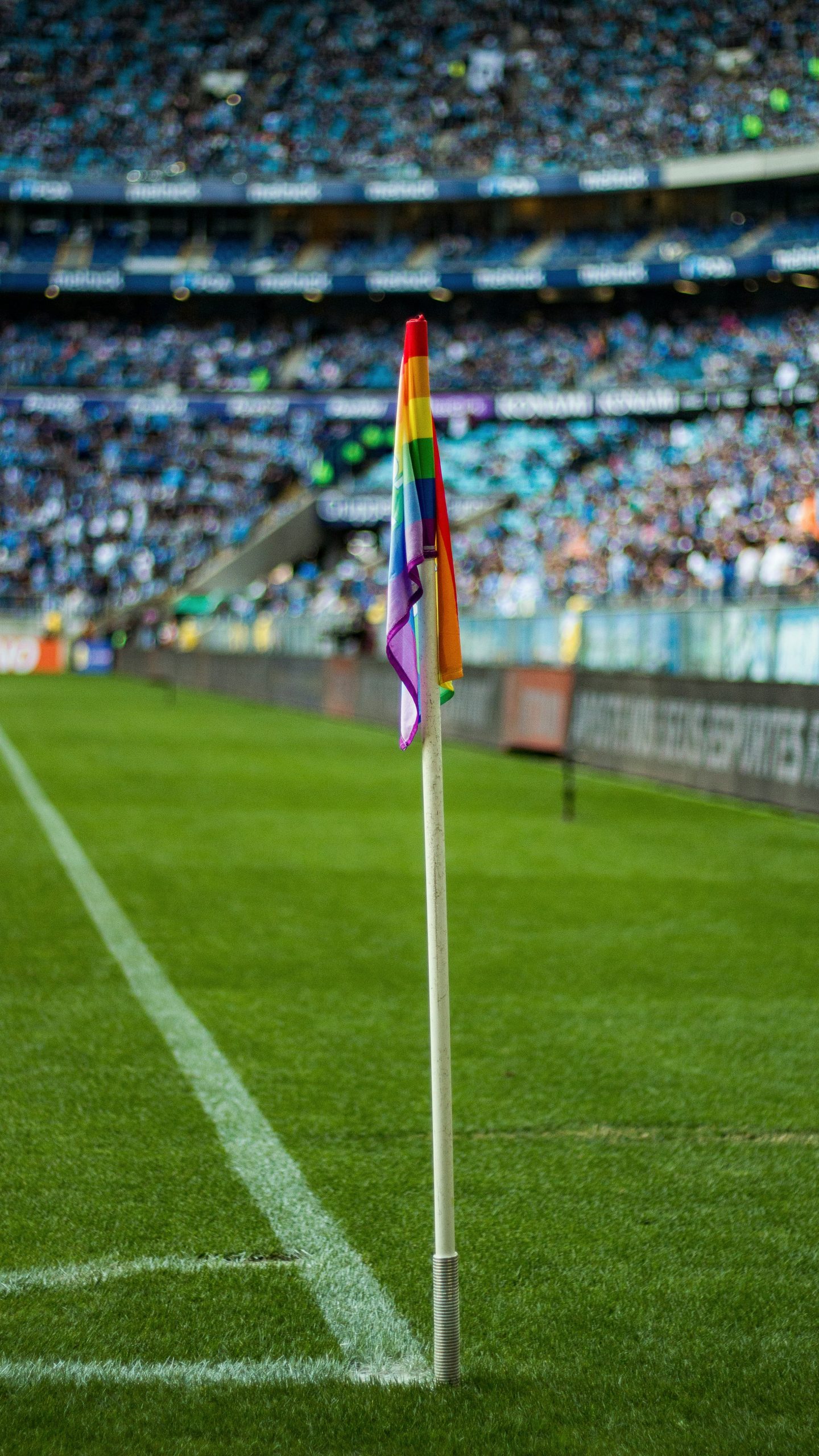
    Photo by Wesley Fávero on Unsplash

    During a match against Sevilla in January, Borja Iglesias was the subject of horrific homophobic abuse. Opposition fans weaponised the striker’s creativity by making derogatory references to his painted nails. In a powerful stand against this discrimination, Celta Vigo players and supporters wore nail polish in the following game against Rayo Vallecano to show solidarity with their player and also to demonstrate that homophobia has no place in football. Rainbow flags were also waved in the stands. After the game, Celta posted a picture of their players with their nail art with the caption: “Against Hate, Together.” This is significant because it demonstrates that football clubs can redirect something negative into something positive.

    Iglesias has painted his fingernails for years. In past interviews, he has said that he began doing it to highlight important social issues and stand against injustice and intolerance in society. The fact that something as small and simple as nail polish provoked such hostility highlights just how fragile and archaic ideas of masculinity are within football and, more broadly, sports culture. Since its inception, football has been characterised as a sport for men that demands toughness and aggression. 

    These are traits that are typically viewed as masculine. For decades, these rigid expectations excluded women from playing the game and also men who do not act in accordance with hyper-masculine norms. Football continues to confine anyone who attempts to step outside of the very narrow ideas of masculinity and gender norms. Whilst there have been attempts to eradicate these stereotypes and welcome the LGBTQ+ community, these have mainly been symbolic rather than transformative.

    Campaigns such as rainbow laces are symbolic acts that do well to signal awareness and discussion of the issue, but they often fail to confront the deeper cultural attitudes that are strongly ingrained within fan behaviour, locker room norms and footballing institutions. They have not done enough to change the narratives within football. The positive response of the Celta Vigo supporters and players shows that, in some instances, symbolic acts can become acts of resistance, reshaping the narrative by challenging entrenched ideas of masculinity in football. 

    A week before the Celta Vigo incident, Josh Cavallo, the first man to come out as gay while playing elite football, accused his former club Adelaide United of “internal homophobia” before his exit in 2025.  In a statement, he wrote: “It’s hard to swallow when I realised my own club was homophobic. I was angry because people thought I was sidelined based on injuries, when in reality, it was internal homophobia that kept me on the bench.” A spokesperson for the club said it “categorically rejects” these claims. 

    However, the fact that this was how he was made to feel is significant in itself. It illustrates that even when institutions publicly align themselves with inclusion and equality, the internal structures of these institutions prohibit any real progress. It also highlights that homophobia in football is not simply limited to chants in the stands. Football is supposed to be a unifying sport that brings people together, but instead, we still see attempts to keep those who do not confine themselves to traditional ideals of football culture pushed out. 

    The abuse that Borja Iglesias was a victim of only reinforces this. Its institutions and cultures often reproduce the same exclusionary politics taking place in society, showing that sport doesn’t escape politics, it reflects and magnifies it. As football is a microcosm for society, it reflects the wider political and cultural shift which has seen progress stalled for a return back to a more fixed, traditional social order where conformity is rewarded and difference is treated as a threat rather than something to be celebrated. 

    In the past few years, across Europe and America, there has been a significant rise in right-wing populism. Appeals to traditional social norms have marked this. Policies and rhetoric from these growing movements have framed LGBTQ+ rights as a threat. The effect of this has been seen through fan behaviour and institutional hesitation. Recent years have seen backlash to rainbow armbands, hostility toward women’s football gaining legitimacy, and abuse toward players who don’t fit hyper-masculine norms. The rise of the right doesn’t just influence what governments do; it shapes what is socially acceptable, who is celebrated and who is marginalised, on the pitch, in stadiums, and across the global fanbase.

    A cultural shift is unlikely if powerful institutions do not challenge this, and if inclusion continues to be treated as a symbolic performance rather than astructural necessity. Moments like Celta Vigo supporters painting their nails in solidarity show that progressive politics is still an option. Until governing bodies and institutions move beyond risk-avoidance, progress will continue to be uneven and vulnerable to backlash.