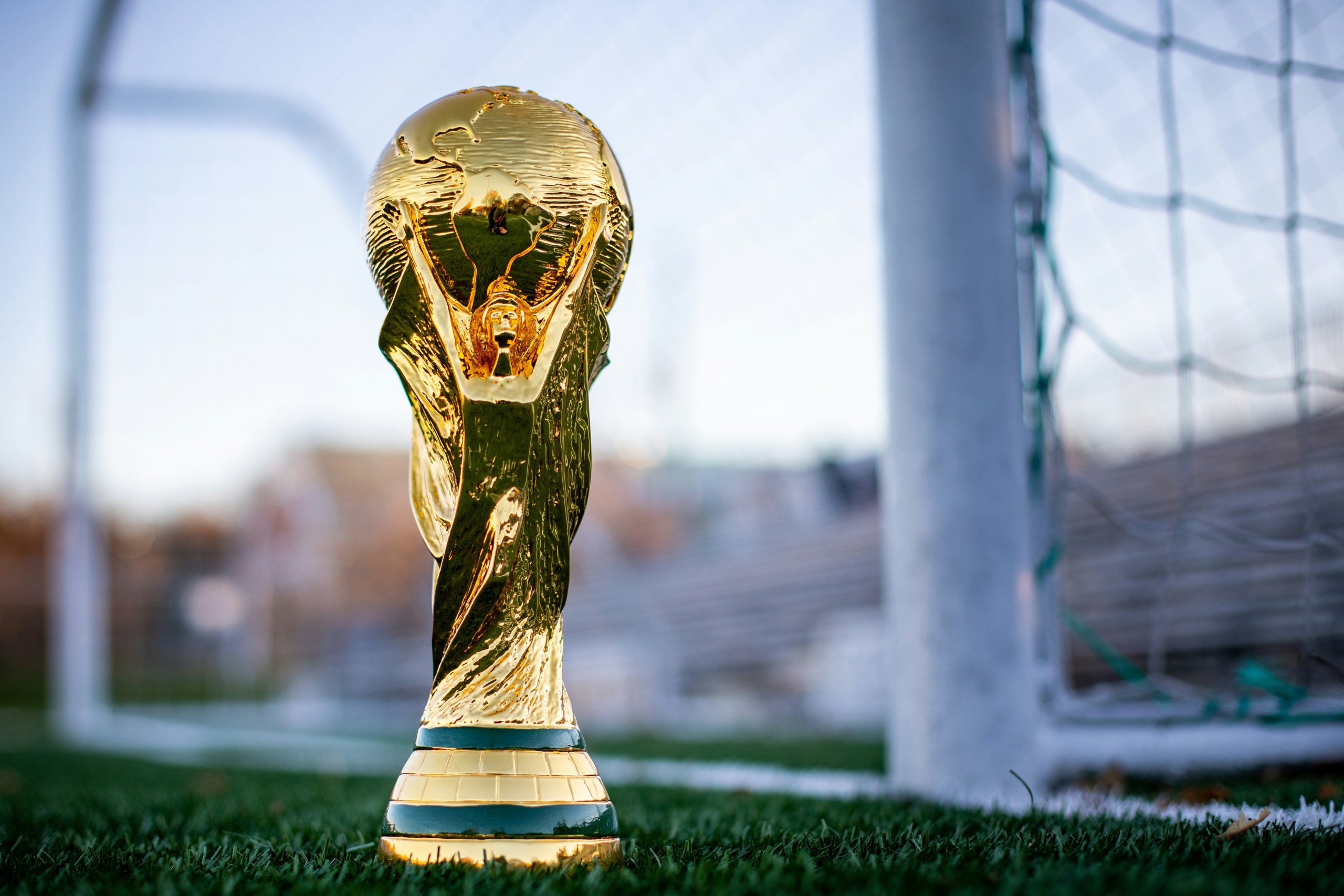
When it was announced that the United States would host the 2026 FIFA World Cup alongside Canada and Mexico, many football fans were particularly enthused because the previous two tournaments were hosted by Russia and Qatar, countries whose human-rights records and governancehad drawn intense scrutiny.
The tournament went ahead in 2018 despite Russia annexing Crimea four years earlier. Russia also stood accused of cyber attacks, meddling in Western elections and carrying out the Novichok nerve agent attack in Salisbury. In 2022, Qatar’s hosting of the World Cup was heavily criticised because of the country’s alleged violations of human rights, and specifically migrant worker rights. Also, in Qatar, homosexual acts are illegal because they are considered immoral under Islamic Sharia law, and so LGBTQ+ visitors faced significant risks of arrest and persecution.
The United States bid, therefore, looked like a breath of fresh air, at least on the surface. The United States is widely perceived as a Liberal democracy with constitutional protections of free speech, civil rights and press freedom. It is seen as a significantly more tolerant society than Russia and Qatar, with progress in rights for women and LGBTQ+ people. Given that it was a joint bid with Canada and Mexico, it also symbolised regional cooperation.
However, recent events under the current Trump administration have highlighted that the United States’ commitment to these democratic ideals is facing significant strain. Some have argued that the US is slipping into authoritarianism. Consequently, just like the previous two World Cups, politics and morality have come to dominate the conversation. Circumstances off the pitch rather than on the pitch appear to be the main topic of discussion, something that FIFA, football’s global governing organisation, won’t be too pleased about.
FIFA has long insisted that football should be divorced from politics. Historically, players have been prohibited and discouraged from expressing their political opinions, and host countries have been told that their domestic politics do not concern world football. Political protest has not been tolerated. However, FIFA was forced to shift this entrenched position after the murder of George Floyd in the US in May 2020, which sparked a global movement for racial justice and equality. FIFA embraced inclusiveness and equality as new principles, endorsing anti-racism campaigns, advancing women’s football and signalling support for diversity and LGBTQ+ rights.
Given that US President Donald Trump and his administration have, on several occasions, been accused of violating these principles, FIFA President Infantino’s continued support for Trump raises serious questions about the organisation’s authenticity. Rather than demonstrating the moral leadership it claims to embrace, FIFA appears inconsistent. On the one hand, they champion progressive politics, but on the other, they award a ‘peace prize’ to a political leader who has a record on human rights and democratic norms that contradict ideas of ‘peace’.
Ultimately, this demonstrates that the separation between football and politics is becoming increasingly untenable. Extortionate ticket prices alongside Trump’s domestic and foreign policy have only reinforced this. The political climate in which the World Cup is set to take place has become impossible to ignore. The idea that football can exist in a vacuum, untouched by its surrounding context, appears more aspirational than realistic. The United States is currently experiencing deep political polarisation, under a President who has faced accusations of racism, threatened military action against a European ally, been accused of violating international law, imposed entry bans affecting supporters of competing nations, and overseen a violent immigration crackdown, which has resulted in the killing of two Americans by federal agents in Minneapolis.
It is no surprise, therefore, that there have been increasing calls to boycott the 2026 World Cup. The German football federation vice-president, Oke Göttlich, told the Hamburger Morgenpost, “The time has definitely come to seriously consider and discuss” a boycott of the 2026 World Cup. In January, a motion signed by more than two dozen left-leaning MP’s in the UK’s Parliament called on FIFA to mandate the exclusion of the U.S. national team from the tournament along similar grounds to its barring Russia, arguing that the Trump administration’s “conduct undermines the rules-based international order.”
A boycott at this stage is unlikely, especially considering that there was no large-scale or institutional action in 2022 despite significant uproar and criticism of Qatar. However, it is still worth revisiting the specific reasons why a boycott of this year’s tournament would be understandable. Firstly, the extortionate ticket prices have inhibited many fans from attending the tournament. When ticket details were announced in December 2025, it was revealed that the cheapest tickets for the final would cost over £3,000, with total costs to follow a team for nine games potentially exceeding £5,000.
Whilst these prices are the norm for major sporting events in the US, in Europe, this is unheard of. Many European fans believe FIFA have changed their priorities. Rather than catering to loyal supporters, the pricing strategy seems aimed at maximising revenue from affluent consumers and corporate sponsors. Football fans from other nations do not even have to worry about expensive tickets, as they have been banned from attending the tournament altogether due to Donald Trump’s robust immigration policies.
In December last year, the Trump Administration announced a range of travel restrictions on dozens of countries, including Senegal, the Ivory Coast, Iran, and Haiti, which all have qualifying teams. A full ban was imposed on Haiti and Iran, meaning fans will not be able to attend matches held in the US. Ivory Coast and AFCON champions Senegal also have partial travel restrictions. The State Department said a Fifa Pass appointment does not allow people “who are otherwise not eligible” to be issued a visa, meaning fans from those four countries appear unlikely to be able to travel to the US for this summer’s tournament. This is, ultimately, a World Cup where the whole world is not welcome.
And in more ways than one. Donald Trump’s recent action of reposting a racist video depicting Barack and Michelle Obama as apes reinforces the idea that certain groups of people are not welcome in America and, consequently, at the World Cup. The dehumanisation of black people in this way is something that has occurred for hundreds of years. White supremacists use it to justify slavery and continue to use it to characterise black people as inferior. Whilst the President has attempted to downplay this recent action, its significance cannot be ignored. When a president or major political figure circulates or endorses imagery that compares Black people to animals, it normalises racism for the public. It legitimises abuse from fans, and it tells players, “Your humanity is conditional”. With the World Cup just months away, this does not send a positive message.
Calls for a boycott of the tournament have also followed the fatal incidents involving the U.S. Immigration and Customs Enforcement (ICE) and the Trump administration’s intensified immigration crackdown. High-profile incidents, such as the fatal shootings of Renée Good and Alex Pretti by ICE agents, have fuelled widespread outrage and heightened fears among fans and visitors about safety and human rights violations.
Despite video evidence showing otherwise, senior governmental figures claimed that Renee Good and Alex Pretti were “domestic terrorists”. This blatant disregard for the truth by the Trump administration is dangerous because it normalises the spread of misinformation. Commentators have argued that a country where safety is under threat from federal violence on the streets is not fit to stage the world’s biggest sporting event.
Trump’s foreign policy has also led to calls for a boycott. At the beginning of the year, he carried out a controversial military operation in Venezuela, which resulted in the capture of Nicolás Maduro and his wife, Cilia Flores. Following this, President Trump renewed calls for the US takeover of Greenland. This was of particular concern given Greenland is an autonomous territory within the Kingdom of Denmark, who are a European ally of the US. This raised questions about the future of NATO and the rules-based international system that has facilitated global cooperation since the end of World War II.
As recently as Saturday, the US attacked Iran as part of a joint, ongoing operation with Israel, sparking retaliatory strikes across the Middle East. This conflict has raised questions about Iran’s participation in the tournament. The Iran Football Federation has reportedly threatened to withdraw from the 2026 FIFA World Cup.
For so long, the United States has presented itself as a global champion of democracy, of freedom, of human rights. But recent events suggest the opposite is true. We are witnessing what increasingly resembles the very regimes America claims to liberate the world from. Initially, a World Cup hosted in the United States, following tournaments in Qatar and Russia, appeared to signal a return to a more politically uncontroversial setting. However, it is clear now that this is not the case. Deep political polarisation, contentious foreign policy decisions, and mounting criticism of the current administration have complicated the narrative, raising questions about whether this World Cup will escape the political scrutiny that overshadowed previous tournaments.