Tag: democracy

  • Local Election Results: Why Reform UK’s Local Success Is Not a National Certainty

    Local Election Results: Why Reform UK’s Local Success Is Not a National Certainty

    Much of the discussion that has followed last week’s local elections has centred on Reform’s staggering success. The party’s increased support saw them win 1453 councillors and take control of councils from Labour, including Barnsley, Wakefield, Sunderland and Gateshead.

    For many of Reforms critics, these results are discouraging. To them, it indicates that the UK is moving towards a dangerous path of far-right politics characterised by exclusion and intolerance. Several of the elected Reform candidates are already under fire due to racist, Islamophobic, and anti-Semitic comments and social media posts.

    While the results were an enormous feat for the party, a closer look at these results paints a picture that not enough people are talking about.

    Within hours of the polling stations closing, multiple media outlets were declaring victory for Reform. They were suggesting even more potential success at the next general election. In an interview about Reform’s electoral success, Sky News’s Beth Rigby even asked Farage if he sees himself as a Prime Minister in waiting.

    These results are favourable for the Reforms’ hopes of forming a government. However, leaving it at this conclusion is somewhat of an oversimplification of the results. To properly understand these results and what they mean, we first need to understand what local elections are and how they work.

    How do the local elections work?
    Local councils provide the facilities and services in your area. The type of council you have, and the responsibilities they have, vary depending on where you live. Local councillors oversee the council’s work, setting the strategies and priorities. Things such as council tax, local services, planning, local climate change commitments, and policing commitments are all overseen by the local council. Within this are issues such as roads, potholes, maintaining public spaces, affordable housing, bin collection, etc., and these tend to be the most concerning issues for voters at these elections.

    Boroughs across the country are divided into areas called wards, and in each ward, residents can vote for as many council seats as are contested. The candidate you vote for does not have to be attached to a political party, and you can vote for a mix of candidates. In most London boroughs, the council leader is chosen by the political group with the most councillors. In the five boroughs—Croydon, Hackney, Lewisham, Newham and Tower Hamlets— residents can also vote for a mayor as well as their ward councillors.

    If a party dominates the seats in one borough, it takes control of the council; if there is no outright majority, then the borough has no overall control, and coalitions are formed.


    Turnout at local elections tends to be lower than in general elections because voters’ priorities differ. A vote for a particular candidate in a local election does not guarantee a vote for the party they represent in national elections.

    ‘Get Starmer Out’
    This particular local election revealed misconceptions surrounding local elections and how they work. This is something that Nigel Farage and his party took advantage of. The central messaging of Reforms campaign was to oust Prime Minister Keir Starmer and to take control of illegal immigration.

    According to YouGov, Reform voters were the exception when it came to the typical local issues that tend to be most important to voters, with immigration being their number one local issue. Immigration, however, is typically a national issue, and so major changes can only be made through the national government. There were even some Reform voters left confused when they did not see Farage on their ballots. Reform UK were therefore able to successfully campaign on national issues to mobilise voters at the local level. Perhaps this is because they aren’t delivering on their promises for the local councils already in their control, and so stoking fear over national issues was a more beneficial tactic.

    How are Councils Already Under Reforms Control Faring?
    Despite promising to cut council tax, the Reform-led council in Kent voted through a 3.99% council tax increase, one percentage point under the limit before a referendum is required.

    In Derbyshire, the Reform-led council planned to shut eight care homes, but it was eventually abandoned following backlash. In West Northamptonshire, there has been a sharp increase in complaints about potholes since Reform took power.

    In the past year, the party has lost more than 70 of its elected local councillors, according to research by Liberal Democrat peer Mark Pack, with some being sacked or forced to resign.

    It appears that cracks are already forming, and there is a chance that the party will self-implode. Their local success puts pressure on them because they are now expected to deliver, and if they don’t, the blame may shift towards them. Their present success may have long-term consequences. As of now, there are still 3 years until the next general election, and so failure at the local level could cause resentment nationally.

    Farage’s ‘Cause for Concern’
    Furthermore, the local election results show that a large majority of the population did not actually vote for Reform. In the overall vote share, Reform received around 26%.

    Pollster Peter Kellner said that, despite the significant gains, there is cause for Nigel Farage to be “privately worried”.

    In an article on Substack, Kellner wrote that: “In last year’s local elections, Reform won 41% of all seats contested across England.

    “On the basis of the overnight figures, this year’s tally is around 33%.

    “If there were no polls, and there had been no elections last year, this year’s figure would be astonishing.

    “But we do have the record on recent polls and elections, and it seems clear that Reform has peaked.”

    He added, “Under first-past-the-post, this matters. Our voting system helped Reform last year, when it won a much higher proportion of seats than votes.

    “Its support is now at the point where that bonus has started to shrink. If more voters desert the party, it could suffer badly – falling short in many councils and parliamentary seats that it would have won last year.”

    Additionally while Reform dominated the number of seats won, Labour still had the most overall control of the councils with 28. In contrast, Reform had 14, more than the Conservatives with 9 but less than the Liberal Democrats with 15.

    Therefore, as it stands, if there were a general election, Reform would fail to win a majority, resulting in a hung parliament. In this outcome, they would have to enter a coalition.

    Historic Strides for Greens not Just Reform
    The downward trend in support for Reform indicates a potential ceiling, whereas the Green Party’s gains suggest a burgeoning political force.

    The Greens didn’t see the numbers that Reform did. Some experts have even said they didn’t do as well as expected. However, they have taken great strides and can continue to build upon their success. Unlike Reform’s politics of exclusion and division, the Green Party is offering hope to voters, a genuine alternative to Labour, and this can be seen through their results.

    Polling expert Sir John Curtice said the Greens had recorded their “best-ever performance”, with their projected national vote share being 18% as he revealed the projected national share of the vote for Britain, behind Reform but ahead of Labour and the Tories, who were both on 17% and the Liberal Democrats on 16%.

    Winning 587 seats, they took control of Norwich, Hastings and the London borough of Waltham Forest, as well as winning the mayoral contests in Hackney and Lewisham—former Labour strongholds— for the first time.

    Speaking after the Hackney mayoralty victory, Green Party Leader Zack Polanski said: “Two-party politics is not just dying, it is dead, and it is buried.

    “And actually, whether it’s here that Labour have been rejected, or whether we’re seeing around the country, it’s very clear that the new politics is the Green Party versus Reform.”

    Another incredible statistic for the Greens from this election is that they received 1.95 million votes (excluding mayoral votes). This is approximately 1 million more than their best record in 2023. It also means that more people voted for them at this year’s local elections than at the 2024 general election, which is a remarkable outcome.

    It is clear to see that the picture hasn’t been fully completed yet; there is still a long way to go until the next election, and so much can happen in that time. Starmer may very well be ousted, but that would result in a Labour Party leadership contest rather than a general election. There are positives that Reform can take from this election, but the pressure is now on them to deliver for their residents. Looking at the results at face value can feel somewhat demoralising for those fearing Reform’s rise. However, a closer look reveals that their future national electoral victory is nowhere near guaranteed, and there is still room for hope to prevail.

  • A Look Ahead At The Local Elections With Young Councilor Cylcia Manwa

    A Look Ahead At The Local Elections With Young Councilor Cylcia Manwa

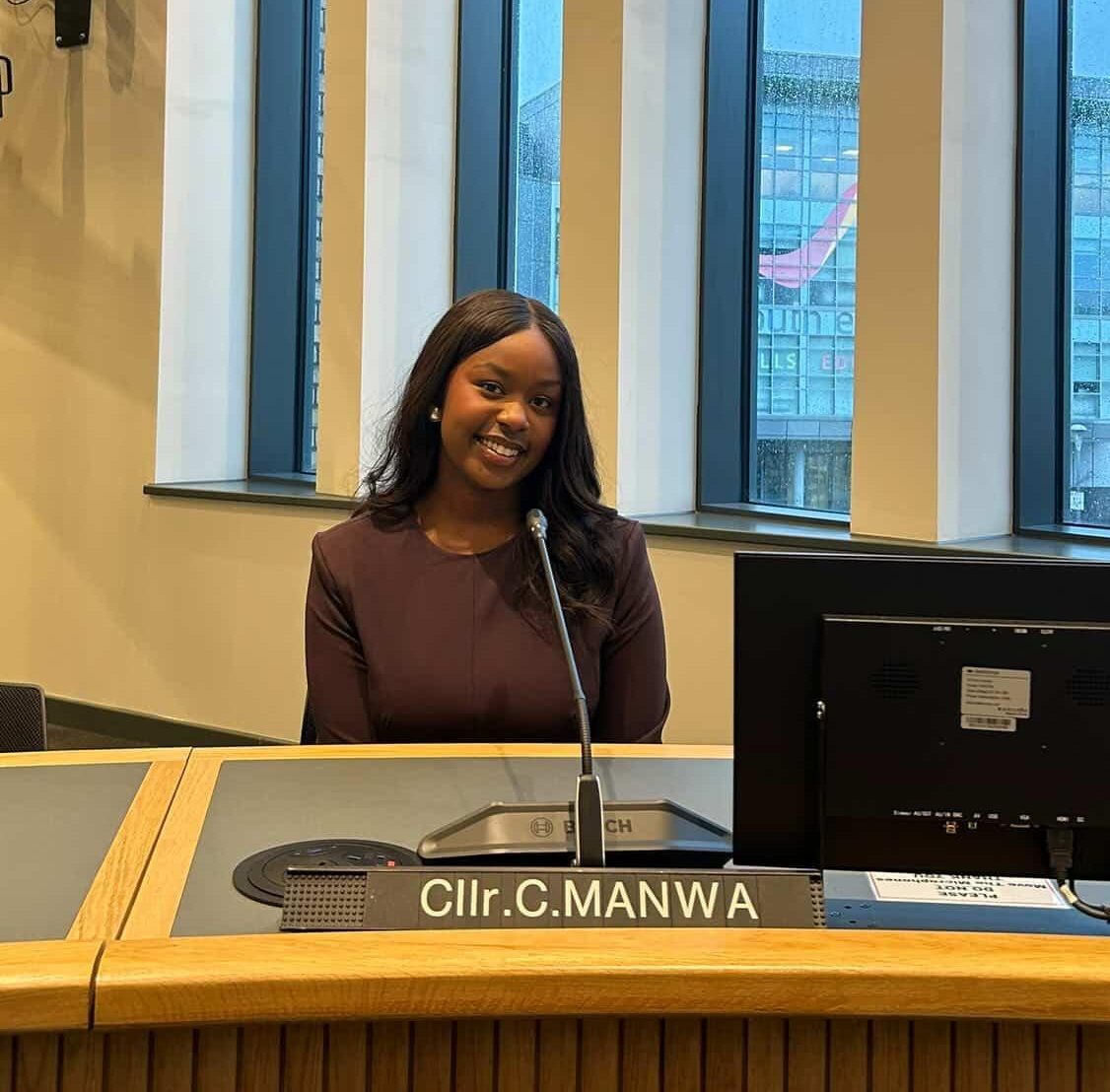
    The local elections are taking place today, and with the pending results, it can be easy to get wrapped up in the party politics of it all. However, given the importance of representation in politics, it is important to remember that there are many individual candidates within these parties looking to represent the people in their area. And so I decided to speak with Cylcia Manwa, a 22-year-old councillor for Thurrock, who is running for re-election, to get her unique perspective on what it’s like to be a young councillor and how she hopes to build on her achievements and further deliver for the residents of Thurrock. 

    I started by asking Cylcia about her campaign and what she thinks are the biggest issues facing Thurrock.

    To this, she replied: “I think the biggest issue facing people in Thurrock is one that we are seeing across the country – the cost of living crisis. With soaring fuel prices, bills and the price of everyday items rising too, that’s definitely a challenge for people across the borough.  For our campaign, we are focusing on getting everyday services right for people, and reducing the council’s debt”.

    Being so young, it can be intimidating to enter such an intense space of politics. Given the issues her residents face, it may be easy to underestimate her ability as a young councillor. However, Cylcia cites her age as one of her unique strengths.

    “I think being a young candidate means you can get underestimated at times, as some people use my age to suggest I’m not capable of doing my role as a councillor. But I think my age is actually my strength – I’m able to connect and represent a demographic that doesn’t always get a say in our local government, and I know that age is by no means a determining factor for competency. I think my record over the past few years is proof enough that young people can hold positions of leadership, and do a good job at it, too!”

    In her role as a councillor, she has also worked on projects that centre on young people and help their development. She proves to be a stellar example of the importance of young people in politics, given that their concerns can often be overlooked in a space where their representation is the exception.

    “I’ve supported the building of a local Youth Zone, which should be completed by early next year – it will give young people in our community access to state-of-the-art sports facilities, extracurricular activities and a space where they can safely enjoy themselves and make new friendships. That’s something I’m really excited about”.

    Looking back on all her achievements so far she shares what she hopes to continue doing if she is chosen by voters once again.

    “In the 3 years I have served, I have sat on several committees advocating for the community, held surgeries and spoken to residents, and helped residents through casework. I bring a fresh perspective as a young person in the borough, and I hope to continue doing that, should I be re-elected”. 

    “I want to continue being a champion for underrepresented communities, and especially with the rhetoric of the far right seeping into our politics, I want to lead with a vision of hope that unites our local community instead of dividing it”.

    No matter their result, it is clear that Cylcia is an inspiration to young people, especially young black women and girls seeking political careers. She has done so much for someone so young and will only continue to do greater things as her career progresses.

  • Could the Local Elections be the End for Starmer?

    Could the Local Elections be the End for Starmer?

    Sir Keir Starmer’s premiership has been anything but smooth sailing; if anything, he has been tiptoeing on the edge of his demise for a large majority of it. It does, however, feel as though the end could be near for him, as the local elections that are set to take place this week may be the final nail in the coffin.

    What do the polls say?

    The polls for the upcoming elections do not paint a pretty picture for Labour, with several expected losses. Pollsters have predicted that the party could lose an astonishing 1850 council seats.

    A potential outcome of such a loss of seats is the party losing control of the Welsh Parliament, the Senedd, which it has dominated since its creation in 1999.

    Polling shows Labour’s vote share in Wales falling by more than half. This would push them into third place with Reform and Plaid Cymru competing for first.

    Starmer already has the poorest local election performance of modern prime ministers, losing 66% of seats in 2025. This year could be even worse, with projections suggesting a 74% loss of seats. Such a catastrophic result will put immense pressure on the PM and raise several questions about the future and viability of his leadership.

    Rumblings of a Leadership Contest

    There have already been rumblings around the Labour Party that candidates are lining up to take the Prime Minister’s place. According to the Telegraph, Health Secretary Wes Streeting is ready to launch a leadership contest, having secured the 81 MPs needed to trigger a contest.

    The PM was reportedly made aware of Streeting’s potential plans after a staff member accidentally texted details of his plans.

    Streeting denied these plans, reportedly dismissing them as a “fishing expedition” by journalists in a WhatsApp chat of Labour MPs.

    Additionally, a spokesperson for the Health Secretary told the Telegraph, “Wes has said repeatedly that he supports the Prime Minister.

    “He is completely focused on his job, in which he has cut waiting lists to their lowest level for three years and got ambulances arriving faster than for half a decade.”

    Additionally, Angela Rayner and Andy Burnham are emerging as potential opponents.

    There have been reports that Burnham is preparing another attempt at securing a Commons seat to oust Sir Keir Starmer as Labour leader.

    Why is Starmer so Unpopular?

    Starmer’s 2024 landslide was a paradox: a major electoral victory built on a weak foundation of public popularity. Furthermore, he has only continued to fall further out of favour due to several controversies, most notably his appointment of Peter Mandelson, the former Labour Party politician, lobbyist and diplomat who had continued his friendship with the infamous convicted child sex offender Jeffrey Epstein.

    A YouGov poll shows that as of April this year, 70% of adults in the UK believe that Starmer is doing badly as Prime Minister.

    Alongside Starmers’ growing disapproval, there has been growing approval for Reform UK and the Green Party. The Green Party has seen a historic increase in membership under Zack Polanski’s leadership. Nigel Farage’s approval has decreased since 2024, but the party remains in a strong position to take several seats from Labour.

    Notably, there is a general lethargy towards Starmer because he has trapped himself in a centrist corner. A lot of people find him quite boring and do not know what he stands for, and so there is no enthusiasm towards him. His respective competitors, however, have a much clearer spot on the political spectrum. Love or hate what Zack Polanski and Nigel Farage stand for, but they very clearly stand for something, and this is proving to be a major advantage.

    It would be historic levels of success for what we traditionally refer to as ‘minor parties’ and signal the growing disillusionment with the two-party system. It is a peek at the future of the British government and even the potential outcome of the next general election. For example, Reform is estimated to win 2,260 councillors, and if they do, the potential for a Reform government is no longer unfathomable. 

    For so long, the two-party system has held steadfast. It has been hard to envision its end. As a result, for years, people have tactically voted for the two main parties to keep the other out of power because that was the only way the system could operate. 

    However, we now have a situation where people are so fed up with the system that they are willing to take a risk and abandon it. As a result, Reform and the Greens are likely to be very successful, and it will be Starmer who bears the consequences for Labour.

  • Hungary’s Democratic Transition and the Limits of EU Action on Palestine.

    Hungary’s Democratic Transition and the Limits of EU Action on Palestine.

    Written by Fatmah Alotaibi

    The veto that survived

    On 12 April 2026, Péter Magyar’s Tisza party, a conservative, centre to centre-right, pro-European populist party, won a major victory in Hungary’s parliamentary elections, bringing Viktor Orbán’s 16 years in power to an end. Magyar pledged to restore the rule of law, rebuild democratic institutions, and reintegrate Hungary into the European mainstream. One policy was left untouched. The day after his victory, Magyar told reporters he would block EU proposals to sanction Israel. Days later, he invited Benjamin Netanyahu to Budapest, a gesture sharpened by the fact that Netanyahu remains the subject of an International Criminal Court (ICC) arrest warrant and that Magyar has separately pledged to reverse Orbán’s withdrawal from the Court. Hungary is changing direction on almost everything. It is not changing direction on Israel.

    Orbán’s veto shield

    Fidesz, the Christian nationalist party led by Viktor Orbán, was re-elected in 2014. Following that re-election, the Ministry of Foreign Affairs was restructured and renamed to the Ministry of Foreign Affairs and Foreign Trade. A new vice-undersecretariat covering ‘the South’, including the Middle East, Africa, and Asia, was given the same organisational weight as the entire Euro-Atlantic portfolio. Roughly 70% of the ministry’s staff were replaced with young, inexperienced recruits, a majority of whom were regarded as loyal to Fidesz. Political loyalty and personal ties to the party leadership, rather than diplomatic skills or technical expertise, became the currency of advancement. This was a foreign policy apparatus that answered to the party rather than to the professional diplomatic service or to the norms of the EU’s Common Foreign and Security Policy.

    The instrument Orbán fashioned from this apparatus was, above all, a veto. Under the Common Foreign and Security Policy unanimity rules, any single member state can block collective EU foreign policy action. Hungary used this power systematically to shield Israel from EU accountability: blocking sanctions on settlers implicated in violence against Palestinians in the West Bank, obstructing review of the EU-Israel Association Agreement under its Article 2 human rights clause, and, in April 2025, Hungary announced its planned withdrawal from the ICC on the same day Netanyahu, who was subject to an ICC arrest warrant, arrived in Budapest. As the European Council on Foreign Relations analysis observed, Hungary stood as ‘the main exception’ to a gradually consolidating European consensus on differentiating between Israel and its settlements: that is, on treating settlement activity and settler violence as conduct the EU will not underwrite.

    As the Heinrich Böll Stiftung’s study of Orbán’s alliance building concluded, these relationships were tied to parties, and political actors selected on grounds of interest and ideology rather than to durable state-to-state architecture. There is no pact or permanent bilateral mechanism that would outlast the government that created it, and many loyalist staff in the Ministry of Foreign Affairs and Trade hold their positions at the party’s discretion. A new government would keep Hungary’s formal EU veto power under unanimous decision-making in foreign policy, but it would not necessarily share the same political intent or supporting staff to use it in Israel’s favour. As a result, the effectiveness of that veto depends largely on Orbán remaining in power.

    What changes and what does not

    Magyar’s retention of the Israel veto is not an ideological inheritance but a low cost position within an existing coalition. The Arab Reform Initiative categorises Austria, the Czech Republic, Germany, and Hungary as states that have backed Israel unconditionally, against a second group including Belgium, Ireland, and Spain pressing for stronger EU action on Palestinian self-determination. Magyar’s position is not isolated; he has signalled alignment with Germany rather than continuation of Orbán’s disruptive posture. The absence of a domestic cost is itself a product of the Orbán years: more than a decade of alignment with Netanyahu made pro-Israel positioning the Hungarian political default rather than a contested choice, and the regime’s own outlets framed it as part of a broader civilisational project against what Orbán has called ‘Wokeism and mass migration’. No Hungarian opposition formation, Tisza included, campaigned against that framing. Maintaining the veto brings no reward for Magyar, but it also incurs no cost.

    Magyar’s broader position supports this interpretation. He has pledged to reverse Orbán’s decision to withdraw from the ICC, bringing Hungary back under the Court that issued the arrest warrant for Netanyahu, and has also invited Netanyahu to Budapest. The division is clear: on international accountability institutions, Magyar appears to be moving closer to the European mainstream, but this is not matched in Hungary’s wider EU positioning. If the veto were a matter of principle, these positions would shift together, but they do not. This suggests the veto is driven more by political positioning, which continues to bring benefits.

    Orbán used Hungary as a disruptive force in the EU, including on Israel-related issues. This is unlikely to continue under a government that wants to align more with EU rules, meaning Hungary would act less independently and more in line with other member states.

    For those who wanted stronger EU action on Palestinian rights, there is little cause for optimism. Removing Hungary from the blocking coalition changes the balance but does not break it. Even under qualified majority voting, the Czech Republic, Germany, Hungary, and Italy together represent roughly 36% of the EU’s population, which is enough to prevent collective measures. Remove Hungary from that grouping, and the remaining states still command significant blocking weight. Meanwhile, settlement expansion and settler violence in the Gaza Strip and West Bank continue to deepen, moving faster than the EU can respond.

    The lesson for the Arab world

    EU’s paralysis on Israel-Palestine predates Orbán and will outlast him; Hungary’s veto was symptomatic of that paralysis, not its cause. The temptation will be to see Magyar’s return to the EU’s mainstream position, rejoining the ICC, and a more moderate spoken tone as evidence that European policy on Palestine is changing. What is shifting is the tone. As the Al-Shabaka roundtable on the 2024-25 wave of European recognition of Palestinian statehood argues, European symbolic actions have often served as substitutes for real policy changes rather than leading to them. Arab governments can work with the EU as a whole and with member states that have gone beyond symbolic recognition.

    The clear conclusion from Orbán’s departure is that a very visible obstacle has gone, but a deeper structural limit has become more visible. The period after Orbán is likely to be calmer, but based on current evidence, it will not bring a real change in EU policy on Palestine.

    References

    Hawari, Y. and Buttu, D. (2025) Statehood without liberation: Europe’s response to genocide. Al-Shabaka: The Palestinian Policy Network, 14 August. Available at: https://al-shabaka.org/roundtables/statehood-without-liberation-europes-response-to-genocide/

    Arab Reform Initiative (2025). ‘Paralyzed into Irrelevance: How Divisions on Palestine Eroded the EU’s Normative Claims’. Available at: https://www.arab-reform.net/publication/paralyzed-into-irrelevance-how-divisions-on-palestine-eroded-the-eus-normative-claims/

    Dworkin, A. and Barnes-Dacey, J. (2020). ‘Promoting European strategic sovereignty in the southern neighbourhood’. European Council on Foreign Relations. Available at: https://ecfr.eu/publication/promoting-european-strategic-sovereignty-in-the-southern-neighbourhood/

    Faro Sarrats, M. (2025). ‘Hold the line: EU actions must counter Orban and Netanyahu’s defiance of the ICC’. European Council on Foreign Relations. Available at: https://ecfr.eu/article/hold-the-line-eu-actions-must-counter-orban-and-netanyahus-defiance-of-the-icc/

    Greilinger, G. (2026). ‘Hungary Replaced Orbán – But Can It Replace His Foreign Policy Legacy?’. Review of Democracy (CEU). Available at: https://revdem.ceu.edu/2026/04/16/hungary-replaced-orban/

    Heinrich Böll Stiftung / Political Capital (2023). ‘The building of Hungarian political influence – The Orbán regime’s efforts to export illiberalism’. Available at: https://cz.boell.org/en/2023/01/20/building-hungarian-political-influence-2

    Hungarian Conservative (2026). ‘The Strategic Significance of Hungary’s Israel Policy in Europe’. 10 January. Available at: https://www.hungarianconservative.com/articles/politics/strategic-significance-hungary-pro-israel-policy-europe/

    Lovatt, H. (2020). ‘The end of Oslo: A new European strategy on Israel-Palestine’. European Council on Foreign Relations. Available at: https://ecfr.eu/publication/the-end-of-oslo-a-new-european-strategy-on-israel-palestine/

    Müller, P. (2022). ‘Populist Capture of Foreign Policy Institutions: The Orbán Government and the De-Europeanization of Hungarian Foreign Policy’. JCMS: Journal of Common Market Studies. Available at: https://onlinelibrary.wiley.com/doi/10.1111/jcms.13377

    Mustafa, T. (2025). ‘Expansion in the shadows: The dangers of Israeli aggression in the West Bank’. European Council on Foreign Relations. Available at: https://ecfr.eu/article/expansion-in-the-shadows-the-dangers-of-israeli-aggression-in-the-west-bank/

    The National (2026). ‘Hungary to stick with veto on EU Israel sanctions following Orban election defeat’. 13 April. Available at: https://www.thenationalnews.com/news/2026/04/13/hungary-to-stick-with-veto-on-eu-israel-sanctions-following-orban-election-defeat/

    The Times of Israel (2026). ‘Hungary’s PM-elect vows return to ICC, but stresses “special relationship” with Israel’. 13 April. Available at: https://www.timesofisrael.com/no-time-to-waste-pro-eu-magyar-vows-new-era-in-hungary-after-ousting-orban/

  • Opinion: The UK’s Two-Party System Is Fragmenting

    Opinion: The UK’s Two-Party System Is Fragmenting

    One can no longer say, with absolute certainty, that the UK maintains a strong two-party system. The Conservative-Labour dominance that has been a staple feature of post-war British politics has never looked weaker. In recent years, we have seen the fragmentation of the two-party system as people have become increasingly apathetic and disillusioned towards the two mainstream parties. Smaller, less established parties have moved to the forefront of British politics. This rejection of the status quo was further reinforced by the Gorton and Denton by-election result last week. 

    The Green Party, which has gained significant momentum since Zack Polanski became leader, won the by-election with more than 40% of the vote. Hannah Spencer garnered 14,980 votes, Reform UK’s Matt Goodwin came second with 10,578, while Labour’s Angeliki Stogia was third with 9,364. This win by the Greens is extremely significant and historic because the seat had been held by Labour for nearly 100 years, making it one of Labour’s safest seats. In the 2024 General Election, Labour took the Greater Manchester seat with more than 50% of the vote. By winning the seat with 40% of the vote, Hannah Spencer overturned a massive 13,000-vote Labour majority. It is the first time that candidates from two parties other than Labour and the Conservatives have taken both first and second place in a Westminster by-election in England.

    Safe seats have long helped entrench the two-party system. The UK’s winner-takes-all, first-past-the-post electoral system means that larger, more well-established parties are rewarded as they have more concentrated support. With their support concentrated, they can secure seats with only a plurality of the vote. Smaller parties tend to have dispersed support spread too thinly across constituencies to translate into strong parliamentary representation. It is because of this that only Labour and the Conservatives have consistently been able to form governments. The Gorton and Denton result, however, suggests that this order is dwindling.

    The Green Party overturning a safe seat in such dramatic fashion signals great dissatisfaction with the Labour Party and suggests that Britain’s move toward a more fragmented, multiparty political landscape can no longer be dismissed or ignored.

    The signs of these seismic shifts were evident in the 2024 election results. While the Labour Party won an extremely significant majority, they only obtained 34% of the national vote share,  meaning that roughly two-thirds of voters opted for other parties. This was one of the lowest vote shares for a majority government in British history. It was also the most disproportionate election ever. The result, therefore, highlighted that even though large, established parties enjoy a structural advantage under the electoral system, they are not as dominant as they once were. Their ability to govern was down to the mechanics of the electoral system rather than securing majority support from the electorate. While Labour achieved decisive institutional power, the relatively low vote share signalled a weaker voter base and a more divided and volatile political landscape. The by-election confirmed this message, as it showed that two of the key foundations of Labour’s traditional electoral coalition have crumbled. 

    Angela Rayner, the former deputy leader of the Labour Party, said the result was a “wake-up call” that illustrated the party needed to be “braver”. She seemed to voice that Labour needs to move more to the left. Arguably, the Labour Party has lost itself in its attempts to neutralise the threat of Reform UK. Reform UK continues to lead the polls with a policy platform focused on immigration. Labour’s attempts to counter Reform UK have involved adopting elements of its opponent’s agenda and rhetoric. When the Labour government announced its immigration proposals, around 40 Labour MPs raised concerns about the impact they would have on migrants already living here, describing the retrospective approach as “un-British” and “moving the goalposts”.

    Labour’s approach, therefore, has contributed to shifting the Overton window, normalising ideas that were once considered fringe and creating political space for Reform UK’s platform. This has left many long-time Labour voters feeling disconnected from the party. The by-election confirmed this as the result shows that the Greens, who position themselves as the progressive left, can mobilise ethnic minorities and more left-wing Labour voters who feel politically homeless in Starmer’s Labour. Ultimately, Labour’s core voter base has been on the decline, but this recent result only reaffirmed this. 

    Exclusive polling following the election shows the Green Party have leapfrogged Labour in voting intention polls, as the second most popular UK party. The Greens, like Reform, are emerging as a serious, seat-winning electoral force. The old left and right no longer define politics – cultural issues are now a key factor. This further reinforces the UK’s shift towards a multiparty system. In a letter to his MPs, the Prime Minister said that the Green Party was no longer made up of “harmless environmentalists”. He recognises the electoral threat Labour now faces from both sides of the political spectrum. Despite this loss of a party stronghold and calls for him to resign, the Prime Minister pledged to“keep on fighting”.

    The Conservatives are faring even worse than the Labour Party, as they are struggling to maintain support. With several high-profile defections to Reform UK, it appears that the traditional political order, long defined by the Conservatives as the dominant right-wing party, is clearly eroding. There is still time for both parties to regroup before the next general election, but current trends suggest they cannot solely rely on their traditional bases. The threat of the minor parties is very real. Ultimately, the Gorton and Denton by-election is an urgent signal of the need to prepare UK democracy for a multi-party future. Many agree that a new electoral system is needed to reflect this new political reality.