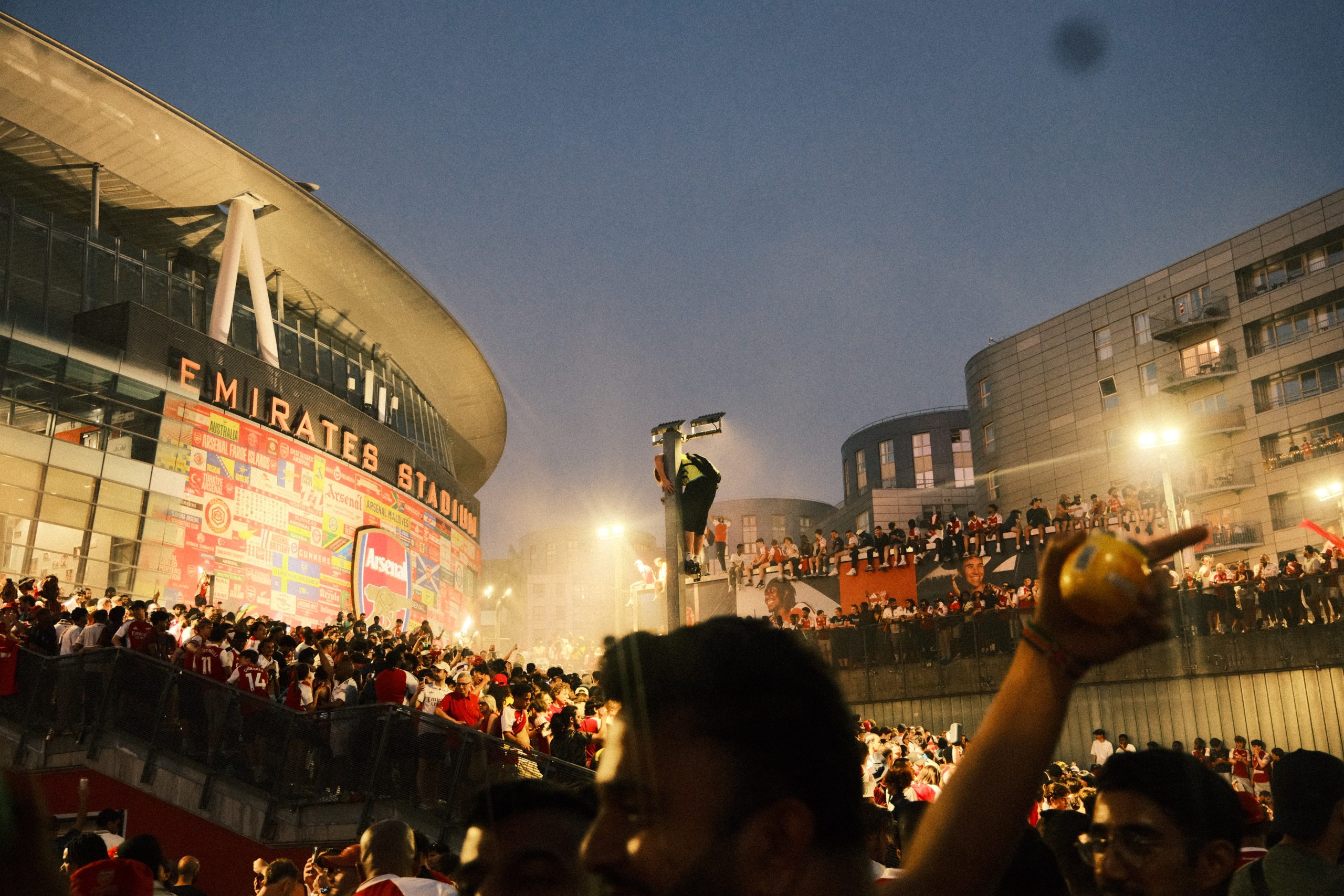
On May 19th 2026, Arsenal Football Club’s agonising wait for a Premier League title officially came to an end. After their closest challengers, Manchester City, failed to beat AFC Bournemouth, Arsenal were crowned champions of England. The last time those words were associated with Arsenal was in 2004 – 22 years prior – when they became the first and, to this day, only team to end the Premier League campaign as champions without a single defeat. Dubbed “The Invincibles”, that team remains one of the most iconic teams in English football history.
After such a historic campaign, few could have imagined that the Gunners’ next Premier League title would come more than two decades later. But after 22 years of heartbreak, rebuilding, and near misses, Arsenal have finally returned to the summit of English football. Beyond a simple sporting achievement, this title win has served as an important reminder that football has a unique ability to transcend differences, strengthen communities, and unite people through a shared sense of hope and belonging. This is especially important given the political climate we find ourselves in, where division and uncertainty often overshadow a sense of shared identity and togetherness.
As soon as the full-time whistle blew at Bournemouth, confirming Arsenal as champions, it is estimated that around 100,000 Arsenal supporters spontaneously descended upon the Emirates and the streets of North London to celebrate. Young and old, from every race, background, and walk of life, fans gathered in scenes of pure jubilation. Strangers hugged strangers. Fireworks and flares lit the sky and voices harmonised into chants that echoed in the streets.
This massive and diverse gathering showcased London at its best: a multicultural and cosmopolitan city where cultures coexist and differences are celebrated rather than feared. It served as a significant contrast to the “Unite the Kingdom” rally held days prior, which had been widely condemned by politicians and rights groups for encompassing inflammatory rhetoric and division.
Organised by far-right activist Tommy Robinson, a highly controversial figure accused of promoting anti-Muslim sentiment, the rally was symbolic of the political polarisation that is at the forefront of public discourse. Whilst organisers claimed that millions had attended his “unite the kingdom” rally, police estimated the number of demonstrators to be at about 60,000. Not only was this significantly below the organisers’ claims, but it was also lower than the estimated 100,000 Arsenal supporters who gathered around the Emirates Stadium and across North London to celebrate their club’s Premier League triumph.
The scenes across North London were not surprising considering Arsenal’s status as the ‘culture club’ in England. Arsenal have created a strong identity as one of English football’s most multicultural and globally supported clubs. The celebrations were not confined to North London. Across the world, in places like Kenya, New York and Ethiopia, streets were painted red with Arsenal Supporters. In an era of rising racial and social fragmentation, Arsenal’s victory can be viewed as an anchor for multiculturalism. It can be seen as a reminder that despite our differences, cohesion and community is possible.
For decades, Arsenal have embodied the diversity that defines modern London. They have been pioneers of the women’s game, giving their women’s team significant visibility by celebrating their women’s team and adopting a one-club mentality. They have also been a pioneering force for diversity. Before the English game became diversified with foreign talent, it was Arsenal that led the charge in changing what football looked like.
In the 1970s and 1980s, racism in English football was overt and deeply embedded. Black players were victims of abuse from the stands and the media, and monkey chants, bananas and racist chants were the norm. Institutions within football offered little to no protection for these players. Black supporters were alienated from attending football matches as it was not a safe atmosphere for them.
Arsenal soon became the antithesis of this. This is because, under Arsène Wenger, Arsenal disrupted the traditional makeup of English football. The former Arsenal manager brought in French, black, and African players, creating one of the most diverse squads in English football at the time. In 2002, Arsenal became the first club to field nine Black players in a Premier League starting XI. Many people across the globe became Arsenal fans because they could see themselves represented in the team. Through the shared love of Arsenal, therefore, different cultures and backgrounds were able to unite under one single identity.
Black players have been key protagonists in Arsenal’s history. Thierry Henry holds the club’s all-time scoring record with 228 goals. His lethal finishing spearheaded the “Invincibles” unbeaten season, one of the greatest feats in English football history. Alongside him were Sol Campbell and Patrick Vieira, who also played vital roles in this historic campaign. In 1989, when Arsenal needed to score 2 goals at Anfield to win the league, it was Michael Thomas who scored the second goal in the final seconds of the match, ending Arsenal’s 18-year wait to be crowned champions. Alongside Michael Thomas, David Rocastle became an instrumental component of George Graham’s title-winning side, playing in every single league match of the legendary 1988–89 campaign.
Before Thierry Henry, Ian Wright obtained the club’s all-time goalscoring record. Nicknamed “Wrighty”, he became a cultural and sporting icon whose charisma and authenticity made him a beloved figurehead for Arsenal’s multicultural fanbase. For many supporters, particularly young Black fans growing up in London, Wright represented visibility, pride, and possibility. The success of players such as Wright and Henry did not emerge in isolation. Their rise was built upon the foundations laid by trailblazers who challenged barriers and expanded representation within English football. Brendon Batson became the club’s first Black player when he made his debut in 1971, paving the way for decades of representation.
Viv Anderson was signed by George Graham in 1984, and he was the first Black man to play for the England senior national football team. Paul Davis was a vital midfielder who made over 400 appearances and won two league titles during the 1980s. Together, these figures helped shape not only Arsenal’s identity on the pitch but also its image off the pitch as a club that celebrates people from different backgrounds. Arsenal have created a global fanbase that has brought millions of people together under a shared identity, and this was more than evident in the title celebrations. In times of political polarisation and division, it is refreshing to see moments that still bring people together.