Category: Culture & Art

  • Opinion: Vinícius Júnior And The Fight Against Racism In Football

    Opinion: Vinícius Júnior And The Fight Against Racism In Football

    There is and never will be any justification for racist abuse towards black people in society. Often dubbed the beautiful game, football brings millions of people together in celebration of a shared love. Yet its beauty has always existed alongside something deeply uncomfortable. Like most things, football is a microcosm of society; even the beautiful game is plagued by political, social, and cultural tensions that create division and conflict. Despite football being a global and diverse sport, racism and discrimination remain embedded in the sport. This reality was made extremely clear during yesterday’s Champions League clash between Real Madrid and Benfica, where there was a 10-minute stoppage after Vinícius Júnior alleged racist abuse. 

    After scoring a sensational goal that put his team one-nil up, Real Madrid forward Vinicius Junior danced in the corner of the Estádio da Luz. In celebration and in the confrontations that followed, Benfica’s Gianluca Prestianni said something to him while covering his mouth. Vinícius immediately ran to the referee, François Letexier, who stopped the match and crossed his arms to signal that he was activating the anti-racism protocol. A Real Madrid statement said Vinicius told the referee he had been racially abused by the Argentina winger.

    In an interview after the match, Kylian Mbappé, who witnessed the ordeal, stated: “I’m going to explain what happened, Vinícius scores a goal, a goal of the host, he’s going to dance and then people whistle is something normal, and then number 25 has said 5 times monkey to Vinícius, you have to explain it calmly.” All throughout his career, Vinicius Junior has faced racist abuse. It is something that has come to define his football career. In 2021, when he was only 20 years old, fans at Camp Nou were recorded shouting “Macaco” (Monkey) at him near the touchline. 

    It is important to note that this comes just a couple of weeks after Donald Trump, the President of the country holding the 2026 FIFA World Cup, reposted a video depicting the Obamas as Gorillas. Black people have long been compared to animals and primates. This dehumanising trope was used to justify the violent processes of colonialism and slavery. In the nineteenth century, scientific racism promoted the false notion that Black people were biologically inferior and animalistic. 

    The suffering and subjugation of black and brown people seemed less ethically important because, in the eyes of white supremacists, they were animals, not humans. When figures in very powerful positions circulate or amplify that imagery, even indirectly, it normalises and signals to some people that such depictions are acceptable in public discourse. Whilst these two incidents are not directly related, they exist within the same wider cultural context where racism is increasingly becoming once again normalised.

    Vinícius Júnior has consistently been vocal about his experiences of racist abuse. However, whenever he has, a troubling narrative has persisted- that he provokes the racism he receives. This illogical idea that his celebrations and personality invite such horrific treatment completely shifts responsibility away from the perpetrators and onto the victim. This rhetoric resurfaced again yesterday in the commentary by Mark Clattenburg, who said Vinicius Junior hasn’t “made it difficult”, and by Benfica manager José Mourinho, who gave his response to the chaos that had unfolded during the match.  In an interview after the game, Mourinho said, “Vini Jr’s goal should be the main thing about the game. But when you score a goal like that… you should celebrate in a respectful way. But I will be independent; I will not say I believe Prestianni or Vini, I was not there. Prestianni denies it, but I will not pick a side. The biggest legend in this club is Eusebio. This club is not racist.”

    For Mourinho to suggest that, by celebrating in the way that he did, Vinicius Junior provoked a racist reaction is completely unacceptable. Celebrating in front of opposition fans is not something that was invented yesterday; it is a part of the game, and players should not have to suffer racist abuse for it. Given that Mourinho himself is well known for his antagonising celebrations on the touchline, he is the last person who should be dictating to a player how to celebrate. Dancing by the corner-flag should not be seen as controversial. Some of the most iconic goal celebrations have come in this way. By perpetuating this lazy narrative, it diverts attention away from the real issue of racism, which isn’t just a football problem but a wider societal problem. 

    Also, what’s even more outrageous is Mourinho saying the club cannot be racist because their biggest legend is a black player. It’s the sporting equivalent of saying, “I can’t be racist, I have Black friends.” Just because an iconic black figure has been celebrated and elevated does not mean that discriminatory behavior, biased structures, or the lived experiences of other players and fans have been completely erased. Benfica players and fans are not immune to racism simply because they have a statue of a black player outside of their stadium. Ultimately,  representation at the top does not automatically equal equality throughout the institution. Admiration for an exceptional individual does not dismantle bias. In fact, in some instances, it perpetuates bias. 

    This is because if that player fits the mold of what is “acceptable”-being humble, hardworking, and quiet- they are celebrated, and the underlying structures that allow discrimination to persist go unchallenged. Meanwhile, Black players like Vinícius Júnior, who are outspoken and expressive, are judged more harshly and subjected to abuse. Former Manchester United midfielder Paul Pogba was treated in a similar way, particularly from sections of the British media, for being different and outspoken. 

    He was often compared to N’Golo Kanté for his actions off the pitch as well as on the pitch. The difference between the two players fundamentally lies in how closely they conformed to socially comfortable and acceptable stereotypes. Kanté was often portrayed as humble and uncontroversial. His reserved personality and lack of public political statements contributed to a media image that was “acceptable” and non-threatening to mainstream audiences. The difference in the reception of these players highlighted that black athletes are more readily celebrated when they fit a narrow mold of quiet excellence rather than being outspoken and different. This could not be clearer today when we look at how Vini is treated.

    In recent years, there have been several anti racism campaigns by football’s governing bodies, but it is evident that more needs to be done. Punishments for racist abuse need to be stricter, and more education is needed. It is not enough to signal awareness. The deeper cultural attitudes and unconscious biases need to be confronted, and people need to face serious consequences for their actions. Kylian Mbappe has called for Prestianni to be banned from playing in the Champions League. While some may see this as extreme, perhaps this is precisely the kind of punishment that is needed to send a clear message that there is no room for racism in football.

  • The 2016 Nostalgia Trend: Why Gen Z’s Internet Throwback Reflects Political Anxiety in 2026

    The 2016 Nostalgia Trend: Why Gen Z’s Internet Throwback Reflects Political Anxiety in 2026

    Since the beginning of the year, the internet has been flooded by 2016 nostalgia. From rose-tinted filters to viral Musical.ly sounds and users sharing personal 2016 photos, a strong desire to return to the past has dominated digital platforms. This trend is not limited to Gen Z; people of all ages and backgrounds have participated, underscoring how widely this sense of nostalgia isfelt. 2026 marks a decade since 2016, so it is understandable why people are looking back and reminiscing. However, the scale of this nostalgia trend was not seen last year,  when a decade had passed since 2015. This suggests that what appears at first to be a harmless internet trend may reflect something deeper. Widespread nostalgia often signals dissatisfaction with the present and a longing for a mythic past. It suggests that something has gone wrong in our current reality.

    Scrolling through social media feeds, amid videos and pictures referencing 2016, it has been hard to escape more serious content depicting ICE brutality in the US, widespread protests in Iran and even discussions of Trump potentially invading Greenland. Many people around the world live in constant fear and uncertainty, so it makes sense for them to retreatto a time when life felt better. When people are nostalgic, often, what they remember is not the full historical reality of that year, but how life felt. Many people participating in this trend were younger at the time and so, more shielded from economic instability, rising living costs, climate anxiety, digital overload, and constant exposure to global crises through social media. Therefore, life felt a lot easier for them.

    However, 2016 was, in many ways, the beginning of the political reality we are living in today. 2016 was the year Donald Trump won his first U.S. Presidential election, an event widely viewed as the catalyst for the intensification of the political polarisation that’s plaguing America today. Through his divisive rhetoric and politicisation of nostalgia, he mobilised millions of voters by framing the present as a decline and the past as something that needed to be restored. He promised to “Make America Great Again” by building a wall to curb migration levels. However, given America’s deeply contested history marked by slavery, Jim Crow laws and gender inequality, many commentators questioned what period this “greatness” referred to. 

    2016 also had major political implications in the UK. This was the year of the Brexit referendum, which resulted in the UK leaving the European Union after 52% of the country voted to “take back control”. The leave campaign, like Trump, also used the tactic of politicising nostalgia, as they framed EU membership as a loss of national sovereignty, promising a return to an earlier period of independence and control. For some individuals, this period is remembered as a time of greater cultural familiarity and less visible diversity. The leave campaign exploited this sentiment by strongly emphasising immigration.

    This recent trend seems to have forgotten this, instead focusing only on the positives of 2016. This is significant because it highlights that, if overindulged, nostalgia can produce a paradise that never has and never will exist, but that is pursued at all costs, taking away all joy and potential from the present. The danger of nostalgia, therefore, lies in its ability to move politics away from solving current issues towards attempting to recreate a mythic past. When this happens, progress is framed as decline, and so societies become more vulnerable to divisive rhetoric, exclusionary policies, and authoritarian leaders who promise to “restore” rather than “reform”. 

    Whilst this recent wave of nostalgia has mainly been felt by young people focusing on internet culture and memories of childhood, rather than something as explicitly political as national history, the underlying sentiment can align with wider political narratives. The past becomes a symbol of comfort and safety, while the present is the opposite and something we need to leave. This feeling can be manipulated into making people believe that society has moved in the wrong direction. Consequently, instead of a politics of progress and democratic debate, we get a politics of division and democratic decline.

    If we look through history, we can see that authoritarian and fascist movements have often drawn on similar emotional dynamics. Leaders of these movements employ nostalgic rhetoric to highlight their country’s past greatness for their own political gain. This past greatness is often characterised by economic stability and cultural purity, which fascists/ authoritarian leaders promise to restore if given power. Fascist parties leverage this nostalgia to mobilise the working and middle classes by appealing to a shared sense of loss, exploiting cultural anxieties and economic insecurities. Walter Benjamin argued that fascism invokes a mythical past not to genuinely recover it, but to reframe the present in ways that justify oppressive policies.

    In emphasising the greatness of the nation in the past, fascist nostalgia is selective and ignores significant moments in the history of the nation. Things such as colonial violence, gender and racial inequality and class exploitation are omitted from the narrative of the nation’s past, instead presenting a homogenous society that never existed in reality. By manipulating cultural memory, fascism seeks to align popular discontent with its agenda, diverting anger away from the capitalist system and toward fabricated enemies of the state, such as immigrants or different cultural influences. The rise of far-right politics across Europe and America has coincided with an increase in this political tactic. 

    The 2016 nostalgia trend is an important reminder that a longing for the past can be exploited and manipulated for political gain. What begins as a desire for old trends and memes can evolve into a broader belief that the past was inherently better than the present. History illustrates how easily this feeling of longing can be redirected toward exclusion, blame, and promises of national restoration. Nostalgia itself is not a dangerous emotion to feel. It reflects humans’ natural desire for stability and security. The risk arises when these desires are directed toward chasing a version of the past that never truly existed.

  • From Abuse to Activism: Celta Vigo Tackles Homophobia and Toxic Masculinity in Football

    From Abuse to Activism: Celta Vigo Tackles Homophobia and Toxic Masculinity in Football

    Photo by Wesley Fávero on Unsplash

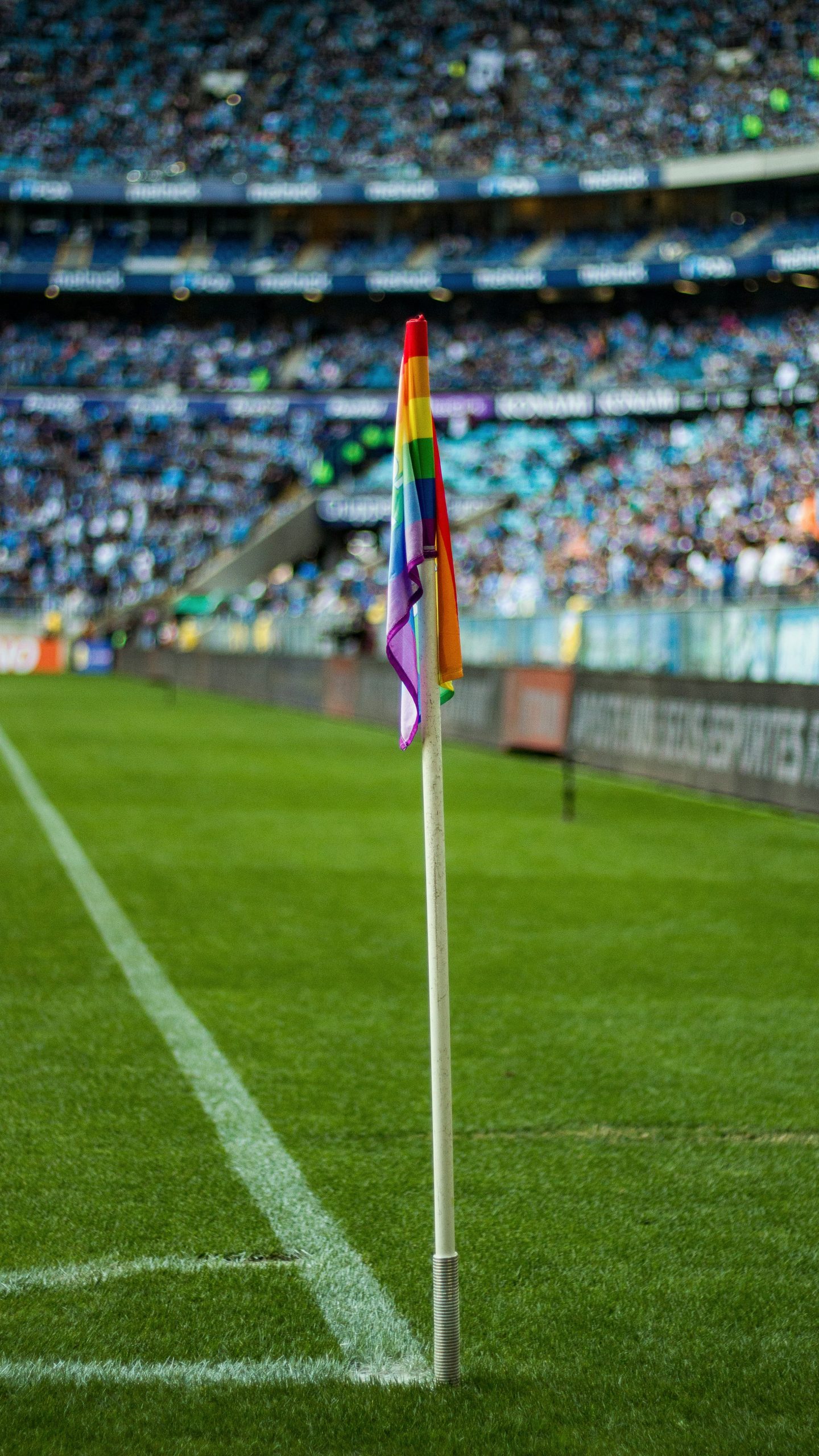
    During a match against Sevilla in January, Borja Iglesias was the subject of horrific homophobic abuse. Opposition fans weaponised the striker’s creativity by making derogatory references to his painted nails. In a powerful stand against this discrimination, Celta Vigo players and supporters wore nail polish in the following game against Rayo Vallecano to show solidarity with their player and also to demonstrate that homophobia has no place in football. Rainbow flags were also waved in the stands. After the game, Celta posted a picture of their players with their nail art with the caption: “Against Hate, Together.” This is significant because it demonstrates that football clubs can redirect something negative into something positive.

    Iglesias has painted his fingernails for years. In past interviews, he has said that he began doing it to highlight important social issues and stand against injustice and intolerance in society. The fact that something as small and simple as nail polish provoked such hostility highlights just how fragile and archaic ideas of masculinity are within football and, more broadly, sports culture. Since its inception, football has been characterised as a sport for men that demands toughness and aggression. 

    These are traits that are typically viewed as masculine. For decades, these rigid expectations excluded women from playing the game and also men who do not act in accordance with hyper-masculine norms. Football continues to confine anyone who attempts to step outside of the very narrow ideas of masculinity and gender norms. Whilst there have been attempts to eradicate these stereotypes and welcome the LGBTQ+ community, these have mainly been symbolic rather than transformative.

    Campaigns such as rainbow laces are symbolic acts that do well to signal awareness and discussion of the issue, but they often fail to confront the deeper cultural attitudes that are strongly ingrained within fan behaviour, locker room norms and footballing institutions. They have not done enough to change the narratives within football. The positive response of the Celta Vigo supporters and players shows that, in some instances, symbolic acts can become acts of resistance, reshaping the narrative by challenging entrenched ideas of masculinity in football. 

    A week before the Celta Vigo incident, Josh Cavallo, the first man to come out as gay while playing elite football, accused his former club Adelaide United of “internal homophobia” before his exit in 2025.  In a statement, he wrote: “It’s hard to swallow when I realised my own club was homophobic. I was angry because people thought I was sidelined based on injuries, when in reality, it was internal homophobia that kept me on the bench.” A spokesperson for the club said it “categorically rejects” these claims. 

    However, the fact that this was how he was made to feel is significant in itself. It illustrates that even when institutions publicly align themselves with inclusion and equality, the internal structures of these institutions prohibit any real progress. It also highlights that homophobia in football is not simply limited to chants in the stands. Football is supposed to be a unifying sport that brings people together, but instead, we still see attempts to keep those who do not confine themselves to traditional ideals of football culture pushed out. 

    The abuse that Borja Iglesias was a victim of only reinforces this. Its institutions and cultures often reproduce the same exclusionary politics taking place in society, showing that sport doesn’t escape politics, it reflects and magnifies it. As football is a microcosm for society, it reflects the wider political and cultural shift which has seen progress stalled for a return back to a more fixed, traditional social order where conformity is rewarded and difference is treated as a threat rather than something to be celebrated. 

    In the past few years, across Europe and America, there has been a significant rise in right-wing populism. Appeals to traditional social norms have marked this. Policies and rhetoric from these growing movements have framed LGBTQ+ rights as a threat. The effect of this has been seen through fan behaviour and institutional hesitation. Recent years have seen backlash to rainbow armbands, hostility toward women’s football gaining legitimacy, and abuse toward players who don’t fit hyper-masculine norms. The rise of the right doesn’t just influence what governments do; it shapes what is socially acceptable, who is celebrated and who is marginalised, on the pitch, in stadiums, and across the global fanbase.

    A cultural shift is unlikely if powerful institutions do not challenge this, and if inclusion continues to be treated as a symbolic performance rather than astructural necessity. Moments like Celta Vigo supporters painting their nails in solidarity show that progressive politics is still an option. Until governing bodies and institutions move beyond risk-avoidance, progress will continue to be uneven and vulnerable to backlash.