Category: Analysis

  • Iran protests slow after brutal crackdown by the regime 

    What has happened?

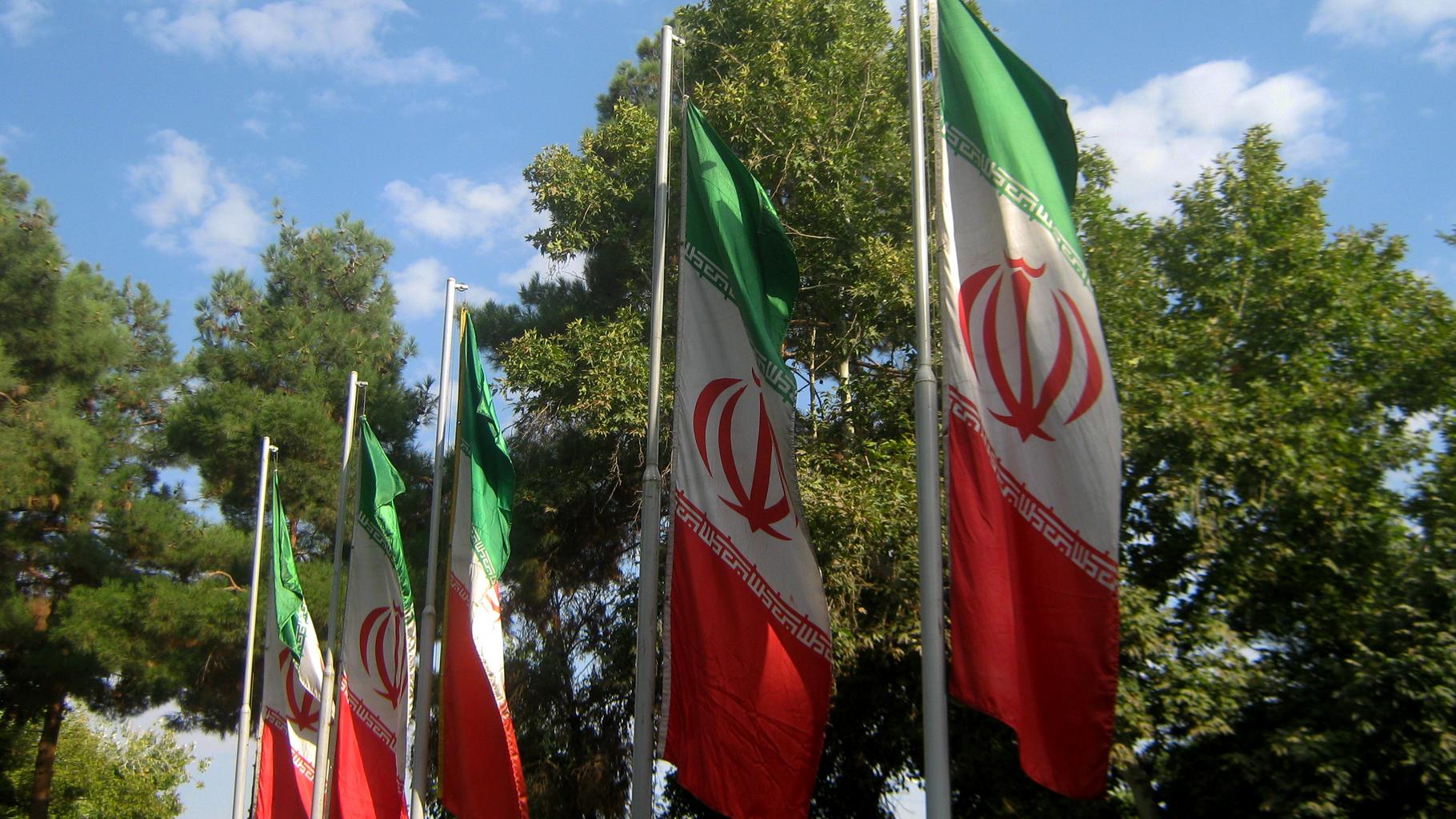
    Since 28 December 2025, Iran has been marred by unrest, as a series of protests, aimed at the Islamic Republic Government, erupted across the country. Whilst it is now being reported that protests have slowed, it is important to recognise that this is due to the callous crackdown, as opposed to citizens having their voices heard and demands met. 

    According to the US-based Human Rights Activists News Agency, more than 3000 people have been killed in the regime’s violent response to anti government protests. This brutal response has suppressed many Iranians, silencing dissent through fear and force, while leaving their grievances unresolved. This ruthless attack on freedom of expression underscores the authoritarian character of the regime and highlights the urgency needed to address the country’s deep social and political issues.

    Protest and uprising have been prominent features of Iran, shaping the political structure that it acquires today. The Islamic Revolution that occurred in 1979 is fundamental for understanding Iran’s current political landscape. This revolution was a widespread uprising against the Western backed autocratic monarchy of Shah Mohammad Reza Pahlavi. After successfully removing Pahlavi, Iran became an Islamic theocracy led by Ayatollah Ruhollah Khomeini. This significantly changed Iran’s political structure and ushered in decades of clerical rule and significant geopolitical shifts. 

    Why are Iranians protesting?

    Decades on from this, Iran finds itself in another unstable political climate. The recent protests have been described as the most serious bout of unrest the government has faced since the 1979 revolution. But what sparked such a movement in the first place? As with any large scale uprising, there are a multitude of factors that intersect to cause it. The catalyst for this movement, however, has strong roots in economics. 

    Many Iranians began taking to the streets after a sudden collapse in the value of the country’s currency. Over the past few years Iranians have been suffering with deep economic issues. Their purchasing power has fallen by more than 90 percent and food prices have soared by an average of 72 percent. Due to this, public frustration only intensified further. It is this frustration that culminated in shopkeepers and bazaar merchants in Tehran staging a strike as a response to the Iranian currency hitting an all-time low against the US dollar. These strikes led to the protest movement that has spread to all 31 provinces. These protests initially focused on the economic crisis, but quickly expanded to demand political reform and an end to the rule of Iran’s supreme leader.

    The Iranian government has called the protests “riots” backed by Iran’s enemies. The regime’s response has been marked by a significant scale of violence which has so far succeeded in quashing protests and driving people off the streets. Protesters were met with lethal force and videos of security forces shooting at protestors have been authenticated by the BBC. Many relatives overseas have been slow to find out whether their family members are victims of this abhorrent violence, as the Iranian regime shut down the internet. 

    Why has the regime shut down the internet? 

    The significance of the internet shutdown cannot be understated. It represents a deliberate attempt by the regime to cut off a vital tool that has, in the past, stimulated mass mobilisation, the documentation of power abuse and global solidarity. The Arab spring is often referred to as the “Facebook Revolution” because social media platforms acted as a pivotal tool for organising demonstrations, spreading information and building international awareness of uprisings that were happening. Social media platforms, therefore, remain a vital tool for resistance. The Iranian regime recognised this and imposed a near total internet and communications shutdown to regain control of the narrative and to stop first hand accounts of what’s going on.

    This is not the first time that Iran has adopted this strategy. During the demonstrations in 2019 and 2022 there were nationwide internet shutdowns. Freedom campaigners at Access Now say Iran has consistently used shutdowns as a way to mask mass violence and brutal crackdowns on protesters. However, the current internet blackout has lasted longer than any previous shutdown.

    Will there be US intervention?  

    The events in Iran have been met with significant international scrutiny. In the past few weeks US President Donald Trump has spoken a lot on the matter. He threatened “very strong action” if the Iranian authorities executed 26-year-old protester Erfan Soltani. On Tuesday 13 January, Trump urged Iranians to “keep protesting”, telling them “help is on its way”. Many people suspected that there would be military intervention from the US. However, 24 hours later, the US President told reporters that he had received assurances that planned executions of protesters would not now proceed and so retreated from military intervention in Iran. 

    Despite Trump’s aggressive foreign policy at the start of this year, US intervention works directly against Trump’s promise to not engage the US in new wars. It is important to note that Iran is not Venezuela. Iran has significant military capabilities, allies who are very anti-US and they have already stated that if the US intervenes they will retaliate and target military bases. It also goes without saying that US intervention would not necessarily benefit Iranians as the US has little credibility when it comes to protecting innocent lives in the middle east. Whilst it may be in Trump’s interest to not intervene, many Iranian protestors feel abandoned as killings have continued.

    On Saturday 17 January, Iran’s supreme leader, Ayatollah Ali Khamene, publicly acknowledged the thousands of killings that have occurred during the protests and blamed them on the US. “Those linked to Israel and the US caused massive damage and killed several thousand,” Khamenei said, quoted by Iranian state media. He also labelled the US President a “criminal” for the “casualties, damages and slander he inflicted on the Iranian nation.”

    In Iran, many protesters remain unsure about taking to the streets again. The future of the country remains uncertain. Reza Pahlavi, the son of Iran’s former pro-western monarch, has predicted the fall of the Islamic regime and has claimed he is “uniquely” placed to head a successor government. However, this has been questioned s has not been in Iran since his family fled the country at the beginning of the 1979 Islamic revolution. A wide range of paths exist, from continued stagnation and authoritarian consolidation, to prolonged instability or, eventually, meaningful transformation.

  • TRUMP’S GREENLAND MISSION

    TRUMP’S GREENLAND MISSION

    Home to just 56,000 people, Greenland finds itself at the centre of a geopolitical storm. After carrying out a controversial military operation in Venezuela, which resulted in the capturing of Nicolás Maduro and his wife Cilia Flores, President Trump has renewed calls for the US takeover of Greenland. This has raised questions about the future of NATO and the rules based international system that has facilitated global cooperation since the end of World war two.

    Speaking to NBC News on Monday evening, the US president said “We need Greenland for national security.” He said, “It’s so strategic. Right now, Greenland is covered with Russian and Chinese ships all over the place.” He stated that he is “very serious” in his intent of acquiring the country. The White House has further reinforced this stance, saying that Trump has been discussing “a range of options” to obtain Greenland, including military action. While Trump has previously expressed interest in acquiring Greenland, these latest remarks are being treated with greater seriousness due to his recent actions in Venezuela.

    Greenland is a region that sits off the northeastern coast of Canada, and has more than 80 per cent of its territory lying within the Arctic Circle. It is an autonomous territory within the Kingdom of Denmark, governing its own affairs while Denmark retains control over defence and security. As Denmark is a member of NATO– the intergovernmental military alliance whose purpose is to guarantee the freedom and security of its members through political and military means- Trump’s ambitions are especially concerning. 

    Article 5 of the treaty dictates that “an armed attack against one or more” in Europe or North America shall be considered “an attack against them all”. But what happens if the threat comes from the treaty’s most powerful member? The US explicitly and forcibly challenging the historical sovereignty of Denmark, an ally, would surely signal the US’s departure from, and potentially the end of, the alliance. It would create a highly unstable international system that would only benefit rival powers such as Russia and China. Russia may feel emboldened to make further advances in Europe while NATO is in chaos. The Danish Prime Minister, Mette Frederiksen, has expressed this and has also made it clear that the US has no right to Greenland.

    The Prime Minister stated, “If the U.S. chooses to attack another NATO country militarily, then everything stops, including NATO and thus the security that has been established since the end of the Second World War”. She also said, “the US has no right to annex any of the three countries in ​the Danish Kingdom.” The Danish Prime Minister and Greenland has received the support of several European leaders including French President Emmanuel Macron and United Kingdom Prime Minister Keir Starmer, who issued a joint statement on Tuesday saying that “Greenland belongs to its people. It is for Denmark and Greenland alone to decide on matters concerning Denmark and Greenland”.

    Given Greenland’s small population and relatively low profile in global affairs, some might ask why Trump is so interested in it and why the issue has gained such attention. The answer lies in its strategic location and natural resources, which make it attractive to the US. It is strategically located in the Arctic Ocean, between the US and Russia, in the midst of major shipping routes. Climate change is causing the Arctic ice to melt, potentially creating a Northwest Passage for international trade and reigniting competition with Russia and China. Greenland is also rich in natural resources. It has rare earth minerals that are a key component of mobile phones, computers, batteries and other hi-tech gadgets. As well as this, it has billions of untapped barrels of oil and a vast supply of natural gas that used to be inaccessible but is becoming increasingly accessible due to melting ice sheets caused by climate change. Therefore, this is not solely a matter of national security, but also one of economic security.

    Ultimately, Trump and the US are acting as powerful states traditionally do under realist theory. 

    Realism holds that states are power seeking actors, operating in an anarchic world, with no central authority to enforce rules. This compels states to prioritise survival, security, and the accumulation of power. Whilst there are international organisations that attempt to enforce international norms and rules, as realist theory argues, these institutions remain subordinate to state interests and power politics. Trump’s latest actions and comments reinforce this idea.

    His desire to acquire Greenland reflects a rational attempt to strengthen strategic positioning in the Arctic, secure access to emerging trade routes and resources, and prevent rival powers such as Russia and China from gaining influence. 

    Trump’s behaviour can therefore be understood as a continuation of great-power politics, where strategic advantage outweighs legal norms, alliances, and the rules-based international order.

    It appears that the rules-based international order is increasingly giving way to a system governed more by capability than by law. This shift risks accelerating great-power competition and undermining international security.

  • TRUMP ATTACKS VENEZUALA: Is this the end of the rules based international system?

    TRUMP ATTACKS VENEZUALA: Is this the end of the rules based international system?

    When questioned by a reporter what his new year’s resolution was, President Trump responded “Peace. Peace on Earth”. Three days later he launched an unprecedented attack on Venezuela. On Saturday 3 January, the FIFA peace prize recipient announced a large-scale US strike on Venezuela and the capturing of Nicolás Maduro, and his wife, Cilia Flores. The couple have now been indicted in New York on terrorism and drugs charges. Trump says the US is going to “run” Venezuela “until such time as we can do a safe, proper and judicious transition”. The attack saw at least 40 people, including civilians and Venezuelan soldiers, die. Therefore it appears Mr Trump is going to have to find another new year’s resolution.

    No one will mourn the removal of Nicolas Maduro. In fact, many Venezuelan immigrants in the US and the UK have celebrated his capture, saying “it is impossible not to feel relief”. The Venezuelan leader is seen by many as a dictator as he relied on the secret police, disappearances and persecution to keep his grip on power. He has run an authoritarian state since 2013 with the help of elections widely regarded as rigged and fraudulent. Over seven million Venezuelans fled the country during his rule. So now there is one less dictator in the world terrorising its people. Whilst some people may consider this to be a victory, it cannot be denied that the manner in which he was removed is deeply troubling and raises significant geopolitical concerns about international law and state sovereignty.

    This military operation appears to have little to no legal or constitutional authority. The US has ultimately invaded a sovereign nation without UN authorisation, kidnapped a sitting head of state and has done so acting not on the basis of international law but on its own domestic law. State sovereignty is the principle that a state holds supreme and independent authority over its territory and people, free from external control. The US’s actions, therefore, are a serious cause for concern because it sends a message that as long as you have the military clout you can do what you want, to whoever you want, on the international stage. It highlights the erosion of the rules based international order, where law is increasingly overshadowed by power. The geopolitical implications of this are very dangerous. Other powerful nations such as China may feel empowered to pursue their own territorial and strategic ambitions by force.

    The public justification of this military operation by the Trump administration has been about drugs. Trump has been focused on fighting the influx of drugs – especially fentanyl and cocaine – into the US. He has framed this attack on Venezuela as a broader war on narcotics and has accused Maduro of running a “narco terrorist organisation”. Without providing evidence, Trump has also accused Maduro of “emptying his prisons and insane asylums” and “forcing” its inmates to migrate to the US. From the justification some may argue that Trump is simply acting in the national interest to protect the American population from the alleged flow of drugs and criminal networks linked to Maduro. Framed this way, the operation can be presented as a defensive measure aimed at safeguarding public health and domestic security, rather than as an overtly aggressive act against a sovereign state.

    However, it would be illogical to think that this is the only reason for the attack. In fact, many of Trump’s claims about drugs have been criticised as there is little evidence.

    For example, counternarcotic experts have explained that Venezuela is a minor player when it comes to global drug trafficking. Cocaine is mainly produced in Colombia and most of it is said to enter the US through other routes, rather than Venezuela. Fentanyl, the other drug that Trump has raised concerns about, is mainly produced in Mexico and enters the US almost exclusively via land through its southern border. 

    Therefore, it would appear that the central basis of justification for this attack is very weak. Realist international relations theory teaches us that states are self-interested, power-seeking actors driven by survival in an anarchic world. This means that they will use any means necessary to achieve their aims. In this case, the US has ignored the principle of state sovereignty in order to achieve its objectives. For some, its objectives extend beyond the stated aim of combating drug trafficking. Maduro and political commentators have accused the US of using the so-called “war on drugs” as a pretext to secure access to Venezuela’s vast oil reserves. Venezuela has the largest proven oil reserves of any country in the world, making it an especially attractive target for external influence and intervention. Therefore, it is hard to believe that the rationale behind this military operation was drug-related.

    Analysis from Sky News highlights exactly why Trump may be seeking access to Venezuelan oil. Whilst the US is the world’s largest oil producer, it primarily produces light crude. However, most of its refineries are designed to process heavy oil. Because upgrading refineries would cost billions, the US remains heavily dependent on imports of heavy crude, exporting much of its own oil while importing thousands of barrels daily for refineries in Texas and Louisiana. Venezuela, therefore, is strategically important because it holds some of the world’s largest reserves of heavy oil.

    The significance of oil in this whole situation was reinforced by President Trump during his press conference on Saturday in which oil was referred to more than a dozen times. Trump said Venezuela had “stolen” oil from the US and that it would now be taken back. This belief that the oil had been stolen is based on Venezuela’s nationalisation of its oil industry between the 1970s and the 2000s, forcing most US oil companies out. The president also claimed US occupation “won’t cost a penny” as the country will be reimbursed from “money coming out of the ground”. He explained that he plans to have major American energy multinationals invest “billions and billions of dollars” to rebuild the country’s “rotted” oil infrastructure.

    Clearly, this has never been solely about drugs. The US’s actions therefore set a dangerous precedent. Whilst the fall of a dictator may offer short-term satisfaction, when achieved at the expense of state sovereignty and the rules based international system, it risks contributing to a more dangerous and unpredictable world.

  • What the Opportunity Index Reveals About London’s Real Advantage

    What the Opportunity Index Reveals About London’s Real Advantage

    The Sutton Trust’s Opportunity Index 2025 places London in a category of its own. The capital occupies the overwhelming majority of the highest-ranked constituencies for social mobility, even when levels of deprivation are taken into account. At first glance, this seems to confirm a familiar story. London has stronger schools, better labour markets, more universities, and greater institutional capacity. All of these factors matter. Yet they do not fully explain why London performs so exceptionally when disadvantage is measured using Free School Meal eligibility, the core indicator underpinning the Opportunity Index.

    To understand London’s apparent advantage, it is necessary to look beyond outcomes alone and examine how disadvantage is identified, recorded, and acted upon.

    London’s educational context

    London’s improvement in educational performance is well documented. The London Challenge, launched in the early 2000s, marked a decisive shift in how schools were supported and held accountable. Investment in leadership development, collaboration between schools, and targeted intervention in underperforming areas contributed to rapid improvements in attainment, particularly at secondary level. By the end of the programme, London had moved from being one of the weakest regions educationally to one of the strongest.

    The capital has also benefited from its ability to attract teaching talent. Higher wages, career opportunities, and the concentration of training programmes such as Teach First have helped channel early-career teachers into disadvantaged schools. London’s dense transport network and school choice landscape further widen access to high-performing institutions and post-16 pathways.

    Demographic change has played a role as well. Gentrification has altered school intakes in many boroughs, while immigration has increased diversity. However, research consistently shows that London’s advantage persists even when controlling for ethnicity and background. White pupils in London also outperform their peers elsewhere, indicating that demographics alone cannot explain the scale of the gap.

    The London effect as context dependent

    To establish that London’s stronger outcomes for disadvantaged pupils are not simply a statistical artefact of population composition, it is necessary to look at the literature on the so-called London effect. A major literature review by Macdougall and Lupton (2018) synthesises evidence showing that London’s comparative advantage cannot be explained by demographic composition alone. Instead, the review identifies institutional factors, including school improvement programmes, patterns of resource allocation, and local authority leadership, as central to understanding London’s performance.

    Importantly, the authors frame the London effect as context dependent rather than merely demographic. This means that pupils from similar backgrounds tend to achieve better outcomes in London because of the institutional and policy environment in which they are educated, not simply because of who they are. The relevance of this finding is not that London has eliminated disadvantage or reduced structural barriers, but that place-based systems shape how disadvantage is addressed and translated into outcomes.

    Free School Meals as an administrative measure

    The Opportunity Index measures social mobility using outcomes for pupils who were eligible for Free School Meals at age 16. FSM is a widely used proxy for disadvantage and remains essential for identifying pupils who require additional support. However, FSM is not a direct measure of poverty. It is an administrative status shaped by eligibility thresholds, registration processes, and institutional practice.

    Research from the Education Policy Institute and the Nuffield Foundation shows that eligibility for Free School Meals and the likelihood of being registered vary substantially by place and over time. This means that children with similar levels of underlying poverty are not equally likely to be recorded as FSM eligible in different regions. Yet in analyses of social mobility, FSM status is often treated as a fixed and comparable marker of disadvantage. When registration depends on local administrative practices and institutional capacity, this assumption breaks down. As a result, comparisons of outcomes between FSM pupils across regions risk conflating differences in opportunity with differences in how disadvantage is identified and recorded.

    How FSM operates differently in London

    In London, FSM administration is routinised. Schools deal with large FSM cohorts and have established processes for identifying eligible pupils. Local authorities are more likely to conduct periodic eligibility checks and support schools in registering families. Interaction with public institutions is common across income groups, making registration a routine administrative step rather than an exceptional act.

    By contrast, in many non-London areas, FSM registration relies more heavily on parents initiating applications and navigating systems themselves. Schools often work with smaller FSM populations and have less administrative capacity dedicated to entitlement identification. In these contexts, FSM status is more likely to capture a narrower group of pupils experiencing persistent disadvantage.

    This difference does not imply that London is less deprived. London has high child poverty rates. Instead, it suggests that FSM registration reflects different mixes of circumstances across places, shaped by income volatility, residential mobility, and administrative practice.

    Universal provision and reduced friction

    Recent policy decisions have further altered how FSM functions in London. Since 2023, all state primary school pupils in London have been offered free school meals through mayoral funding. This universal provision does not remove the need for means-tested FSM registration for funding purposes, but it decouples meal access from eligibility.

    As a result, schools can encourage registration by framing it as a mechanism to secure resources rather than a condition for receiving food. This reduces stigma and administrative burden, while allowing local authorities to identify eligible pupils more effectively. The consequence is both substantive and methodological. More children receive support, and FSM data more accurately reflects the population entitled to additional resources.

    What London’s advantage really shows

    London’s position at the top of the Opportunity Index does reflect genuine strengths in schooling, labour markets, and institutional capacity. But it also reflects something more fundamental. London is better at finding disadvantage and acting on it.

    FSM remains an essential indicator. Without it, disadvantage becomes invisible to policy. But the London case shows that how FSM is administered shapes who is counted, who receives support, and how opportunity is ultimately measured.

    If London’s success tells us anything, it is that social mobility begins with identification. Reducing administrative friction, routinising support, and separating help from stigma do not just improve lives. They also change what our data shows us about who is being left behind.

    In that sense, London’s real advantage is not that it has solved disadvantage, but that it has built systems that are better at seeing it.

  • Polling Paradox: Reform’s Lead, Leadership Distrust, and the Search for Credible Change

    Polling Paradox: Reform’s Lead, Leadership Distrust, and the Search for Credible Change

    Recent polling highlights a defining paradox of the current British political moment. In Ipsos’s Headline Voting Intention, November 2025, Reform UK leads national vote share on 33 per cent, roughly 25 points ahead of Labour. Yet in the same month’s Satisfaction with Leaders and the Government polling, dissatisfaction with Reform’s leader ranks among the highest recorded. High electoral support combined with deep leadership distrust reveals a volatile electorate driven more by rejection of the political status quo than by confidence in an alternative governing project.

    This paradox reflects an important shift in voter behaviour. Historically, parties such as UKIP functioned as temporary outlets for Conservative dissatisfaction, with voters often returning to the Conservatives once elections approached and governing choices narrowed. Current polling suggests this dynamic has reversed. Rather than Reform bleeding support back to the Conservatives, it is now Conservative voters who are defecting to Reform. This indicates not a fleeting protest surge but a deeper erosion of Conservative credibility as a governing party.

    This shift is best understood through dealignment rather than ideology. Conservative voters have not moved to Reform because they trust its leadership or policy coherence. Instead, they appear to have disengaged from the Conservatives as a competent vehicle for managing the economy, housing, and public services. Years of political instability and declining living standards have weakened the Conservatives’ reputation for competence. When governing credibility collapses, voters become willing to defect even to parties they view sceptically.

    Leadership dissatisfaction therefore has not constrained Reform’s polling performance because dissatisfaction has become systemic. Ipsos’s November 2025 data show low satisfaction levels across party leaders and government institutions more broadly. In this environment, leadership approval loses its traditional role as a filter. Voters increasingly prioritise expressing frustration over endorsing a trusted leader. Reform benefits from being outside government and outside the established Labour Conservative cycle, even while its leader remains unpopular.

    Importantly, this does not mean the electorate has radicalised in line with Reform’s rhetoric. Polling and voter research suggest that support for Reform is driven by a combination of cultural grievance and economic insecurity, with issues such as migration frequently interpreted through their perceived impact on living standards, housing, and public services. Reform’s appeal lies less in ideological extremism than in its willingness to articulate decline at a time when mainstream parties are perceived to minimise it.

    This dynamic creates space for alternative challengers. The Green Party occupies a notably different position in Ipsos polling. While its overall vote share remains lower, leadership dissatisfaction is comparatively low, and a substantial proportion of respondents select “don’t know” when asked to evaluate Green leadership. In a fragmented political system, uncertainty is electorally softer than rejection. Combined with a gradually expanding support base, this positions the Greens as a potential beneficiary of continued volatility, particularly if dissatisfaction with both Labour and Reform hardens.

    Reform’s relative strength lies primarily in valence politics rather than ideological positioning. Its migration narrative is consistently linked to housing shortages, pressure on public services, and declining wages. These are competence-based evaluations. When parties converge programmatically, voters prioritise who they believe understands and can manage problems rather than who best represents a traditional ideological position. Reform has been effective at owning the diagnosis of decline, even if voters remain unconvinced by its capacity to govern.

    These developments reflect broader structural changes in British politics. The traditional left right divide has weakened, and electoral behaviour increasingly resembles that of a multiparty system, even as institutional structures remain two-party dominated. Labour and the Conservatives are no longer as strongly underpinned by their historical ideologies, although those philosophical roots still shape voter perceptions. Long-standing reputation and experience now function as double-edged swords, signalling competence to some voters while tying parties to past failures for others.

    This helps explain why the Liberal Democrats continue to struggle to translate vote share into broad electoral breakthroughs. Their support is often squeezed by tactical voting under first past the post, with voters reverting to Labour or the Conservatives in marginal seats. Reform and the Greens, by contrast, have benefited from political volatility by offering clearer points of distinction, even if those distinctions do not yet amount to governing credibility.

    The unresolved question is whether any challenger can convert dissatisfaction into durable trust. Reform’s coalition is currently broad but fragile, built on rejection rather than confidence. The Greens’ appeal is softer but potentially more expandable. Until a party or leader can convincingly signal credible change, British politics is likely to remain characterised by high vote shares, high dissatisfaction, and persistent instability rather than ideological realignment.

  • Trump’s National Security Strategy

    Trump’s National Security Strategy

    Trump’s National Security Strategy

    Donald Trump’s approach to foreign policy is often described as erratic or transactional. In practice, it is better understood as selective engagement: cooperative where interests align, distant where they do not, and firmly hierarchical in how the United States situates itself relative to others.

    Nowhere is this clearer than in Trump’s view of Europe. While the administration maintains formal commitments to NATO, the tone toward European partners is noticeably cool. Cooperation exists, but it is conditional. European security is treated less as a shared project and more as a responsibility Europe must increasingly shoulder itself. This outlook helps explain a simultaneous insistence on higher European defence spending and a reluctance to frame Europe as the central pillar of US global strategy.

    NATO itself remains useful, but not sacrosanct. The alliance is increasingly framed as a vehicle for burden-sharing rather than solidarity. Expansion to non-EU members fits this logic. NATO becomes a flexible security architecture rather than a civilisational bloc anchored in Europe. The emphasis is on utility rather than identity.

    Alongside this is a reassertion of the Western Hemisphere as a priority space. The administration’s thinking reflects a modernised Monroe Doctrine. The Americas are treated as a zone where US influence should be uncontested, while engagement elsewhere is more discretionary. This hemispheric focus coexists uneasily with global alliances, producing tension with partners who continue to view US leadership as universal rather than regionalised.

    Economic policy reinforces this hierarchy. In Africa, the administration has promoted a shift away from long-term aid toward trade and investment, arguing that development is better driven by private capital and market access. This marks a departure from earlier aid-centric approaches. However, it has also generated tensions, particularly where funding cuts, including reductions to HIV/AIDS programmes, have raised concerns about public health and political stability.

    China occupies a distinct category. Rather than viewing China’s growth as a shared poverty-reduction success, the administration frames it as a case of strategic exploitation. The argument is that China used access to Western markets to strengthen its state capacity and global leverage without political convergence. This view underpins calls for economic decoupling and tighter controls on supply chains.

    At the same time, the US economy remains deeply dependent on low-cost goods produced abroad, often in the very countries now criticised. Western companies themselves benefited from labour arbitrage, exchange-rate advantages, and weak labour protections. The tension between strategic rivalry and consumer dependence remains unresolved.

    Taken together, Trump’s worldview places the United States not at the centre of a community of equals, but at the apex of a differentiated system. Partners, competitors, and peripheral states are managed according to their immediate utility. Cooperation exists, but warmth is rare. The result is not isolationism, but a colder and more conditional form of engagement with the world.

    For the United Kingdom, the outlook is correspondingly more constrained. The traditional strength of the US–UK relationship has rested on institutional depth, intelligence cooperation, and shared strategic assumptions. Under Trump, those structures continue to exist, but they are no longer sufficient on their own.

    Foreign policy under this administration appears increasingly shaped by personal relationships between leaders. Trump’s evident ease in dealing with Vladimir Putin, and his broader preference for direct leader-to-leader engagement, suggests a diplomatic environment in which personal affinity carries greater weight than alliance norms or historical alignment.

    This shift introduces a degree of contingency into transatlantic relations. Outcomes become less predictable, and less anchored in policy continuity, when diplomatic confidence depends on individual rapport rather than institutional trust. For Britain, influence may hinge not on proximity to Washington as a system, but on alignment with the preferences and perceptions of the president himself.

    The implication is not a rupture, but a thinning. The US–UK relationship persists, yet operates on narrower terms, shaped less by sentiment or shared identity and more by immediate strategic utility and personal alignment at the top.